The Ghost in the Machine: How Mercedes' Start Data Reveals F1's Looming Robotic Future

I stared at the timing sheets from Bahrain, and the numbers didn't just speak, they screamed a silent, mechanical scream. Two drivers. One car. A delta at the start line so vast it could swallow a season's worth of hope. George Russell's admission that Mercedes is "stumbling" over race starts isn't just a team problem. It's the first, clearest diagnostic scan of Formula 1's 2026 patient, and the prognosis is a cold, algorithmic heartbeat. The raw pace of the Mercedes W17 is about to become a museum piece, a beautiful, irrelevant sculpture, if it can't execute the binary, pre-programmed launch sequence now demanded of it.
This isn't about driver error. This is about the system absorbing the driver. And the data from Sakhir is our first, terrifying exhibit.
The Bahrain Split: A Data Set of Two Souls
The facts are sterile, but their implication is volcanic. During practice starts in Bahrain:
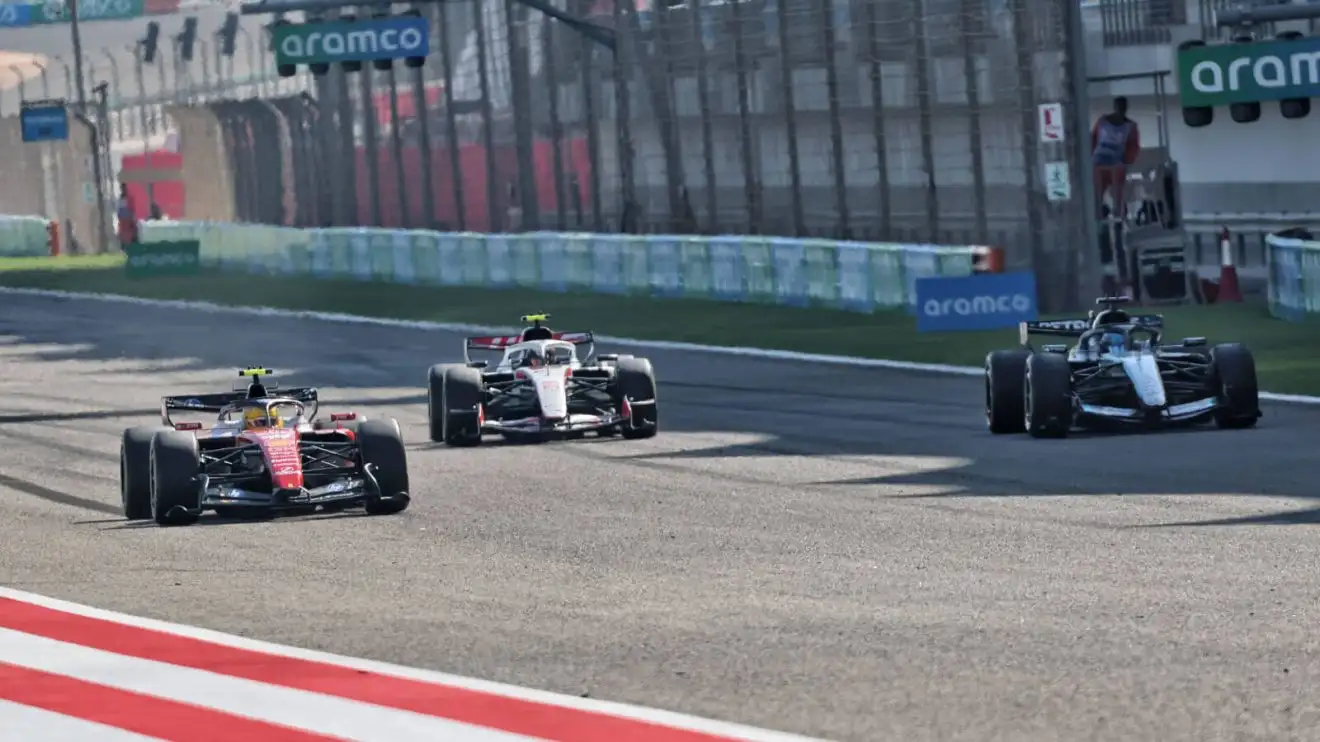
- George Russell experienced one of his worst-ever launches: spinning tires, going sideways, being overtaken by both teammate Lewis Hamilton and the Haas of Oliver Bearman before Turn 1.
- Lewis Hamilton, in stark contrast, executed aggressive practice starts so effectively he simulated launching from fifth to first, overtaking four cars by Turn 1.
A superficial read? Russell had a bad day. Hamilton, the wily veteran, cracked the code. But my perspective, honed on the whetstone of Schumacher's 2004 consistency—where man and machine operated on a shared, almost spiritual wavelength—tells a different story. This spread isn't about talent; it's about adaptability to a new, rigid protocol.
The removal of the MGU-H has introduced pronounced turbo lag at lower revs. The FIA's new procedure, with its flashing blue lights, is a prescribed sequence. This is no longer a reaction; it's a memorized execution.
Hamilton's success suggests a quicker adaptation to a robotic process. Russell's struggle is the sound of a driver's intuition—the feel of the bite point, the instinctive correction for wheelspin—being rendered obsolete by a procedure that punishes deviation. The car isn't an extension of the driver anymore; the driver is an input device for the car's launch software. And the variability in that human input is now the biggest bug in the system.
From Achilles' Heel to Standardized Protocol: The 2026 Blueprint
Why does this matter so profoundly? Because the 2026 power unit changes have done more than alter physics. They've created a perfect petri dish for the sport's data-obsessed culture to eliminate the "human variable" from the race start, the last true moment of beautiful, chaotic collective human reaction.
Oliver Bearman in the Ferrari-powered Haas reported being "very happy" with his starts, noting the procedure is "more complicated" but manageable. He also admitted the "variability between a good and bad start is now much higher." This is the key. In the old world, variability was a spectrum. In this new world, it's a binary pass/fail. You either execute the perfect, data-validated procedure, or you stumble. There is no middle ground, no heroic save. It's why Russell's wording is so apt. You don't "fight" a bad start now. You stumble.
This hyper-focus on optimizing a single, repeatable procedure is the direct precursor to the sterile, robotized racing I've warned about. When the start is this prescribed, how long before the entire race strategy becomes a live-action replay of a simulation, with drivers merely stewards of a pre-ordained plan from the pit wall? We're trading the visceral thrill of the lights-out scramble for the clinical satisfaction of a perfect software deployment.
Think of Leclerc. His so-called "error-prone" reputation is so often the final, visible failure in a long chain of strategic blunders and operational pressures. The data from 2022-2023 qualifiers shows a machine of consistency. But the narrative, the human story, is written by the failures. Now, imagine that pressure applied to a single, make-or-break moment at the start of every race. The data will not care about the tremor in a driver's foot. It will only record the wheelspin.
Conclusion: The Human Heart as the Last Anomaly
Mercedes has a narrow window to fix this. They will throw simulations, practice starts, and terabytes of data at the problem. And they will likely solve it, for both drivers. But in doing so, they will be perfecting the very prototype of the robotic start.
The story here isn't Mercedes' struggle. It's the blueprint it reveals. The 2026 start procedure is a dry run for a future where the car's performance envelope is so narrow and so dictated by energy management and prescribed procedures that the driver's role shifts from warrior to systems manager. The "critical and unpredictable variable" the original article mentions is being systematically designed out.
We are left with a haunting image from Bahrain: Hamilton, perfect in his execution. Russell, wrestling with a new reality. This split is the last gasp of driver-centric feel. The numbers from the coming races will tell us how quickly that gasp is silenced. The sport's emotional archaeology will soon be digging through layers of perfect, identical data, searching in vain for a human fingerprint. I fear we'll find only the cold, clean logic of the algorithm.