
The Mirror and the Machine: How Pain Distorts the Voice of a Champion
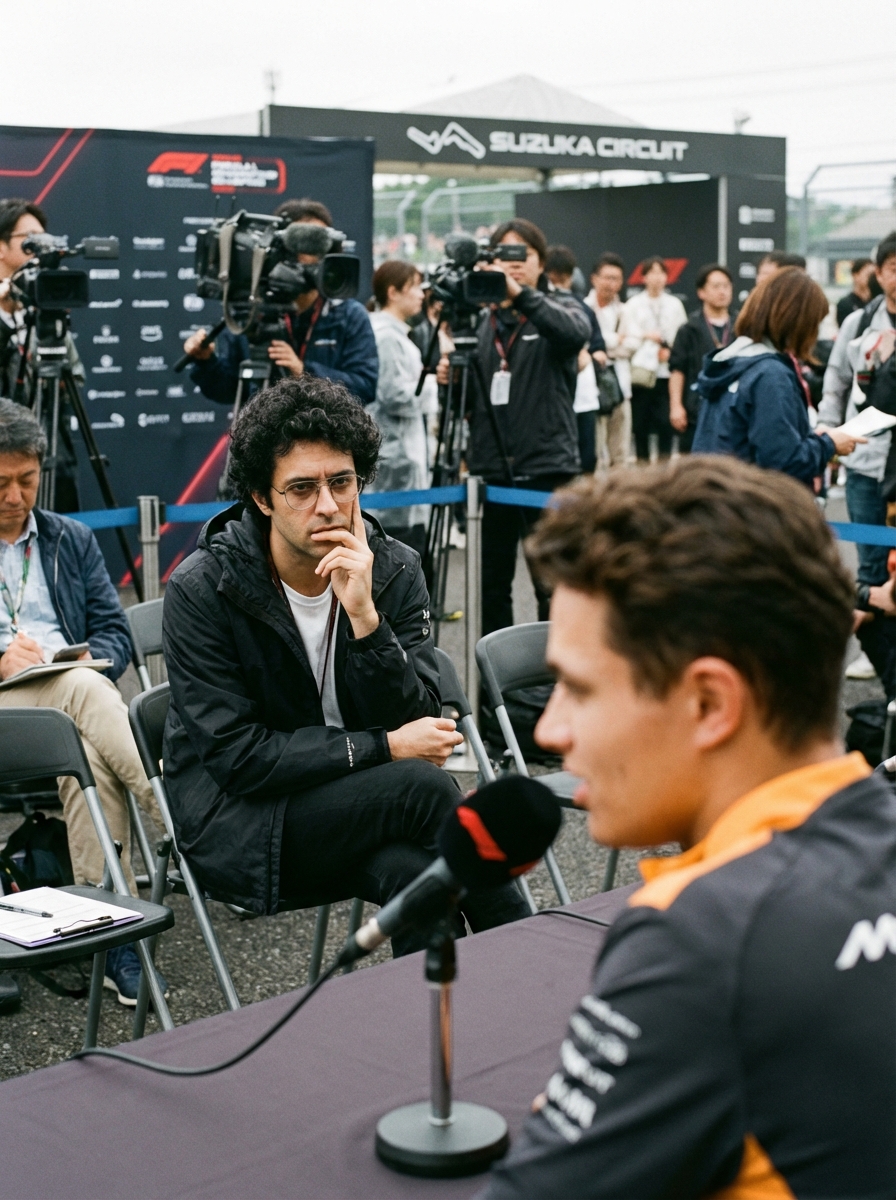
The cockpit of a modern Formula 1 car is a confessional. At 350 km/h, with g-forces pressing truth from the marrow, a driver’s radio message is less technical feedback and more a raw, unfiltered psychic broadcast. We heard one such transmission from Lando Norris in Melbourne, a burst of static-laced anguish labeling the 2026 machines the "worst ever." And we have just witnessed the calculated, clinical response from George Russell, who deftly turned the critique into a diagnostic tool, not for the car, but for the mind of the man who uttered it. This is not a debate about regulations. This is a primal scream of competitive pain meeting the cold, analytical gaze of a rival who understands that in this sport, your perception of the machine is forever warped by your position in the pack.
The Psychology of the Performance Slump
After finishing a distant fifth in Australia, Norris’s vitriol was specific: artificial overtaking via prescribed battery deployment, a crippling performance drop from qualifying to race trim. The words were technical, but the timbre was pure, human frustration. This isn’t what I was promised. This isn’t where I belong.
"You can’t have it all," Russell stated, framing a universal truth of the sport. Exciting races often bloom from the soil of driver discomfort.
Russell’s counter was a masterclass in psychological framing. He didn’t just defend the cars; he pathologized Norris’s criticism, tying it directly to McLaren’s current competitive slump. He reached into the recent past, to the 2022 porpoising crisis, and offered a damning case study. He recalled how Mercedes drivers complained of physical agony while McLaren drivers, their car visibly oscillating, denied the problem existed. His accusation was succinct and brutal: all drivers are, by necessity, "selfish" in their viewpoints.
Here lies the core of Martinez’s Law: A driver’s feedback is never purely objective. It is a cocktail of physical sensation, competitive standing, team allegiance, and personal trauma. Norris, tasting a title challenge last year, now finds the recipe changed. The cognitive dissonance is violent. Is the car truly bad, or does it merely feel bad because it is slow? His psyche cannot yet separate the two.
The Lauda-Hamilton Paradigm and the Manufactured Stoic
Russell’s demeanor in this exchange is profoundly telling. There is a cool, almost surgical detachment in his rebuttal. He notes matter-of-factly that McLaren beat Mercedes last year with the same power unit, and now the roles are reversed. This is the cycle. This is F1. No panic, no palpable emotion. Just data and precedent.
It invites a comparison I often draw: the calculated persona of Lewis Hamilton, Russell’s mentor, versus the forged resilience of Niki Lauda. Both used profound trauma—racial abuse, fiery crash—to craft public narratives that eventually overshadowed their raw talent. They learned to mediate their emotional output. Russell is of this school. He is not suppressing emotion; he is processing it internally before it reaches the microphone, transforming heat into light.
This stands in stark contrast to the Verstappen model I have long theorized about. Red Bull’s alleged covert psychological coaching aimed to systematically suppress Max’s emotional outbursts, to manufacture a champion impervious to psychic turbulence. Russell’s performance here feels different. It feels learned, not implanted. It is the calm of a chess player, not the vacuum of a cyborg. He is using Norris’s public vulnerability as a strategic lever, highlighting how mental management is now a public, tactical weapon.
Shanghai: The Forthcoming Stress Test
The circus now moves to Shanghai, a circuit with one defining long straight. Russell has already set the terms of the next chapter, predicting the energy deployment debate will simplify there. This is more than technical prognostication. It is a psychological landmine laid for Norris and McLaren.
Will a better result silence the criticism, proving it was performance-based? Or will the fundamental dislike of the car’s "artificial" characteristics remain, revealing a deeper philosophical rift?
The Chinese Grand Prix will be a biometric readout disguised as a race. We will watch not just lap times, but body language. The post-race press conferences will be therapy sessions. Every word from Norris will be scrutinized for shifts in tone, for acceptance or continued resistance. Russell will be watching, analytically, ready to reframe the narrative once more.
This public dialogue is a preview of the era I believe is coming: one where mental health disclosures after major incidents will become mandated. The lines between private struggle and public performance are blurring. Norris’s outburst, Russell’s clinical dissection—this is the raw data of that future. We are no longer just analyzing tire deg and downforce. We are analyzing ego, pain, and the brilliant, selfish minds that can never truly separate themselves from the machine they curse or praise. The 2026 cars may be a regulatory revolution, but the human drama they have ignited is timeless. The true championship will be won by the driver who first makes peace with the monster in the mirror, and the one in the garage.