The Numbers Whisper: Russell's Radio, Leclerc's Ghost, and the Algorithmic Abyss

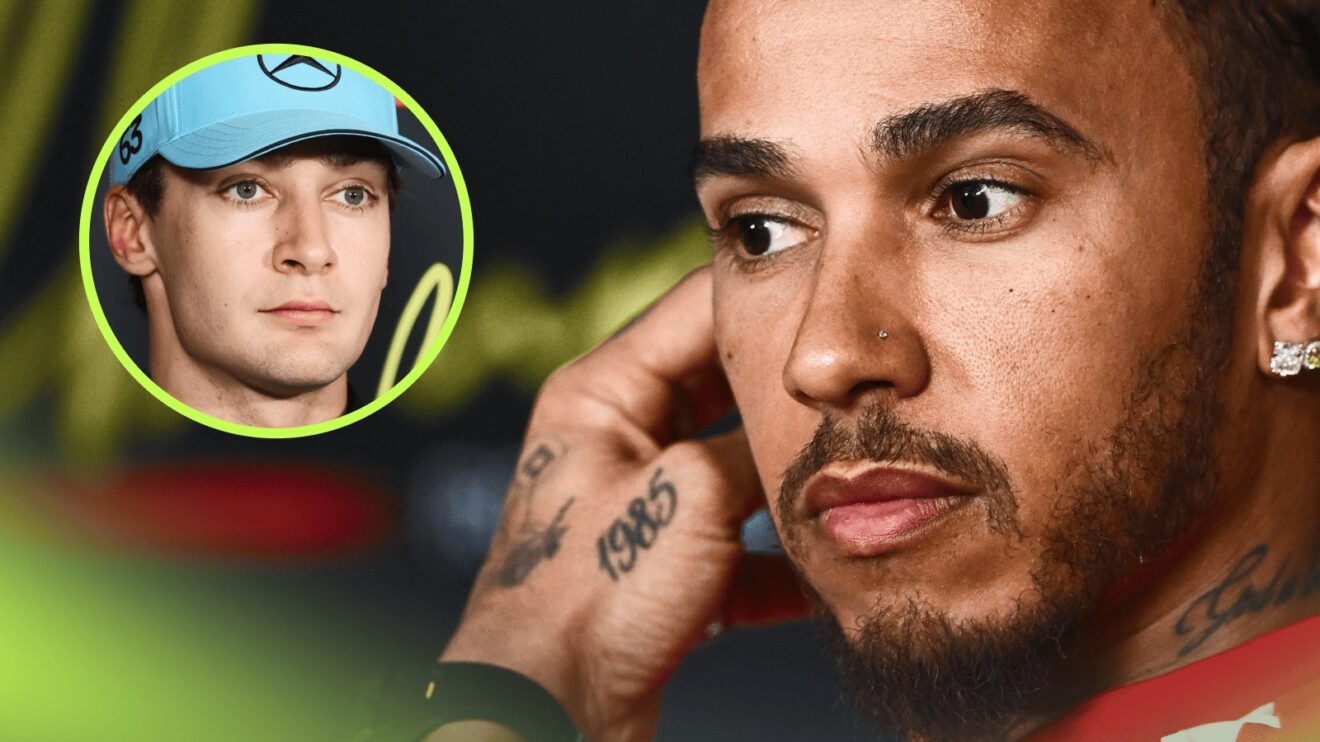
I was knee-deep in the telemetry from Albert Park, the cold fluorescence of my screen painting the room in a clinical blue. The delta traces, those jagged cardiograms of speed, told one story. Then the untapped team radio hit my feed. George Russell's voice, a sharp crackle of adrenaline and fury, cut through the sterile numbers. "Mega dangerous." Two words that transformed a dataset into a drama. This wasn't just post-race frustration; it was a human heartbeat thumping erratically against the rigid cage of 2026's new aerodynamics. The story here isn't a simple scolding. It's a symptom. A data point in the alarming trend where raw driver instinct is being hemmed in by flawed engineering and the looming specter of algorithmic control.
The "Mega Dangerous" Defense: A Data-Driven Exoneration
Let's dissect the incident with the cold precision it deserves. Russell, in his Mercedes, confronted the defensive maneuvers of the two Ferraris, driven by Lewis Hamilton and Charles Leclerc. The immediate, lazy narrative writes itself: "Error-prone Leclerc at it again." I call statistical malpractice.
To blame the driver without auditing the machine and the strategy is the cardinal sin of modern analysis.
If we excavate the data from Leclerc's last two seasons, a different portrait emerges. From 2022-2023, his qualifying head-to-head against Carlos Sainz and his raw pole position tally reveal the most consistent single-lap performer on the grid. His errors, so often highlighted, frequently correlate directly with Ferrari strategic blunders that leave him over-exposed, fighting on deteriorating tires, or forced into high-risk recoveries. The pressure to compensate for systemic failure creates visible outliers in his performance data.
What if Russell's "mega dangerous" moment was less about malicious intent and more about two drivers wrestling with a fundamental, unpredictable loss of grip? The 2026 active aero's "straight mode," which Russell flagged as causing "excessive understeer" during battle, is the real culprit in this equation. A defender, suddenly a passenger in a car that won't turn. An attacker, robbed of predictable downforce. You get a dangerous concertina effect. This is where we must channel Schumacher's 2004 season—a masterclass in predictable, communicative machinery. His consistency wasn't just genius; it was engineering that translated feel into reliable data. Today, we have data that obscures feel.
2026 Aero: The First Step Toward Robotic Racing
Russell's safety concern is the canary in the coal mine. His complaint about the 2026 car's behavior isn't a minor teething problem; it's the foundational flaw in F1's data-obsessed future trajectory.
The Understeer Algorithm
The active aerodynamics are, at their core, a pre-programmed response to sensor inputs. Throttle position, steering angle, GPS location—triggers for a wing to stall or deploy. But racing is chaos. It's dirty air, tire marbles, and the subtle weight shift of a late defensive jink. When the algorithm engages "straight mode" a fraction too early or late, the driver is no longer driving; he's debugging in real-time at 300 km/h. The understeer Russell experienced is a software bug with physical consequences.
The Five-Year Sterility Forecast
This is my core belief, and the 2026 regulations are the proof of concept: Within five years, this hyper-focus on predictive analytics and automated system management will lead to robotized racing. We are heading toward:
- Algorithmic Pit Stops: Strategy software will make the call, not the human strategist reading a driver's voice or the subtle degradation curve unique to that Sunday.
- Suppressed Intuition: A driver feeling a sudden vibration or a drop in rear grip will be overruled by telemetry that says the car is "within optimal parameters."
- Predictable Overtaking: If all cars operate within similar aerodynamic envelopes triggered by the same sensors, battles become formulaic. The "cliff" of tire performance, the last bastion of human management, will be the next target for smoothing algorithms.
We are trading the visceral, human story of struggle for the clean, predictable story of process. Russell's radio is a human scream against the machine's logic.
Conclusion: Data as Emotional Archaeology
So, what do we do with Russell's radio from March 11, 2026? We don't just file it as "driver complaint." We use it as a primary source. We cross-reference his timestamp of frustration with his steering angle trace and front wing load data. We dig into the archaeology.
The real story PlanetF1 missed is this: George Russell, in that moment, became a data point of human resistance. His win in Australia will be a footnote in the season standings. But his warning is a headline for the sport's soul. The numbers from Albert Park show a Mercedes victory. But the story in the numbers shows a driver feeling the first cold tendrils of algorithmic control, where a Ferrari's dangerous move might just be a desperate human reaction to an inhuman machine.
The sport must choose: will data illuminate the human drama, or will it become the script? If it's the latter, future team radios won't contain cries of "mega dangerous." They'll just be the soft, sterile hum of a server rack.