The Ghost in the Machine: How Mercedes' Data Chokehold is Haunting George Russell

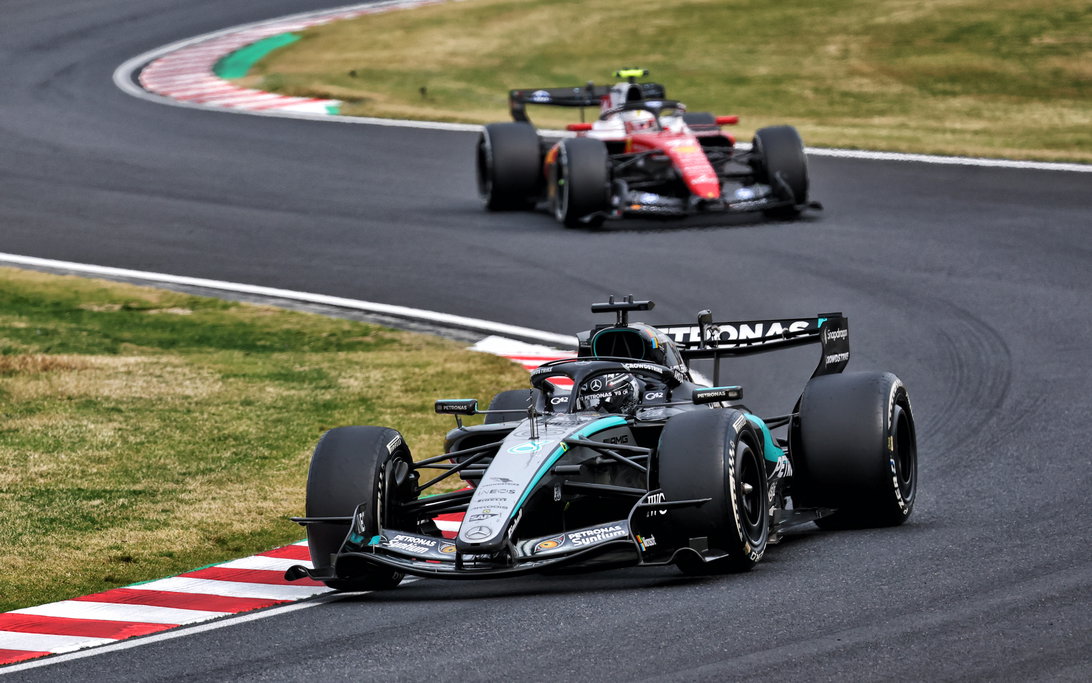
I stared at the Suzuka timing sheets until the numbers bled into waveforms. The story wasn't in the final classification—P4 for George Russell, P1 for Kimi Antonelli. It was in the micro-sectors, the delta traces, the cruel, precise moment the pit lane light went green for car number 63. The data doesn't lie, but it also doesn't feel. And right now, George Russell is feeling everything. His championship lead, dissolved. His car, a Schrödinger's cat of performance—alive in FP3, dead in Q3. His season, becoming a case study in how a team's quest for algorithmic perfection can create its own special kind of hell.
The Illusion of "Bad Luck": A Pattern in the Telemetry
The narrative is convenient: "poor George," plagued by "bad luck." Two consecutive races, two critical qualifying disruptions. But let's scrape the sentiment off the numbers. In China, a technical fault in Q3. In Japan, an unpredictable car between sessions. Random? Perhaps. But the impact is statistically brutal and perfectly targeted.
"It just feels like, at the moment, these last two weekends, every issue we're having is on my side... It’s just how it's panned out."
Russell's quote is the sigh of a man reading a script written by faulty sensors. This isn't the dramatic, fiery failure of old. This is the silent, digital gremlin. The kind that thrives in an era where a thousand data points are worshipped over a driver's single, gut-feel feedback. I can't help but see the ghost of Schumacher's 2004 Ferrari here. That car wasn't just fast; it was knowable. The driver was the final, trusted sensor. Today, when Russell says the car feels "unpredictable," how many layers of data-correction and simulation-bias is that raw feeling filtered through before it's deemed "actionable intelligence"?
The "bad luck" crescendoed with the Safety Car for Bearman's crash. Russell pits, the SC is deployed, Antonelli gains. A coin flip. Yet, this is the exact scenario the mountain of historical data is supposed to model. The probability matrix exists. Did it recommend the stop? Or did it fail to account for the one variable it cannot quantify: chaos?
The Antonelli Paradox: When Clean Data Creates a Champion
Contrast Russell's waveform with Kimi Antonelli's. It's a clean, rising line. Two wins. Capitalizing on "cleaner weekends." This is the dream of the data-driven era: the flawless execution of the pre-ordained plan. Antonelli is the beneficiary, but also potentially the next victim. He is driving a perfectly optimized machine, his success validating the system. But what happens when his car develops a "feeling"? Will his intuition be trusted, or overruled by a telemetry trace that says everything is nominal?
This is the sterile future I fear. One driver struggles with glitches, the other becomes a proof-of-concept for robotic efficiency. The team, scrambling to find a "root cause" in Russell's hardware, might be looking for a physical chip failure when the bug is in the philosophy. They are trying to debug the car, but the problem may be in the code of their own operation.
The intra-team dynamic is no longer just about pace. It's about who best syncs with the digital heartbeat of the car. Right now, Antonelli is in rhythm. Russell is hearing static.
- China Q3: Russell stopped on track. Antonelli took pole.
- Japan Qualifying: Russell limited by unpredictability. Antonelli took pole.
- Japan Race: Russell caught by Safety Car timing. Antonelli won.
The pattern isn't luck. It's a reliability delta. And in a sport where we crucify Charles Leclerc for the occasional error, we're quick to blame "fortune" when a system fails a driver repeatedly. Leclerc's 2023 qualifying consistency was machine-like, yet the narrative is cemented. For Russell, the narrative is pity. The data archaeologist in me sees the same story: a driver's potential being carved away by factors beyond his control, one fragmented session at a time.
Conclusion: The Human Algorithm
With 19 races left, Russell says the team has "what it takes to bounce back." The question is: what is "it"?
If "it" is more data, more simulations, more algorithmic pit-wall calls, they may just dig the hole deeper. The numbers from Suzuka tell a story of a 22.6-second pit stop delta that decided a race. They don't tell the story of the tension in the garage, the weight on Russell's shoulders, the creeping doubt that the machine itself doesn't believe in him.
Mercedes' task isn't just to fix a car. It's to reintroduce a variable they've spent a decade trying to eliminate: human trust. They need to let Russell's fingertips recalibrate their models. They must remember that for all their terabytes, racing is ultimately about a driver, a machine, and a feeling. Schumacher in 2004 had that symbiosis. He was the algorithm.
If they don't, Russell's championship bid won't be lost on track. It will be lost in the noise, somewhere between a sensor glitch and a probability curve, a ghost story told in the language of data. And the sport will slide one step closer to the predictable, robotized procession where the only stories left are of systems, not souls. The timing sheets will be flawless, and utterly empty.