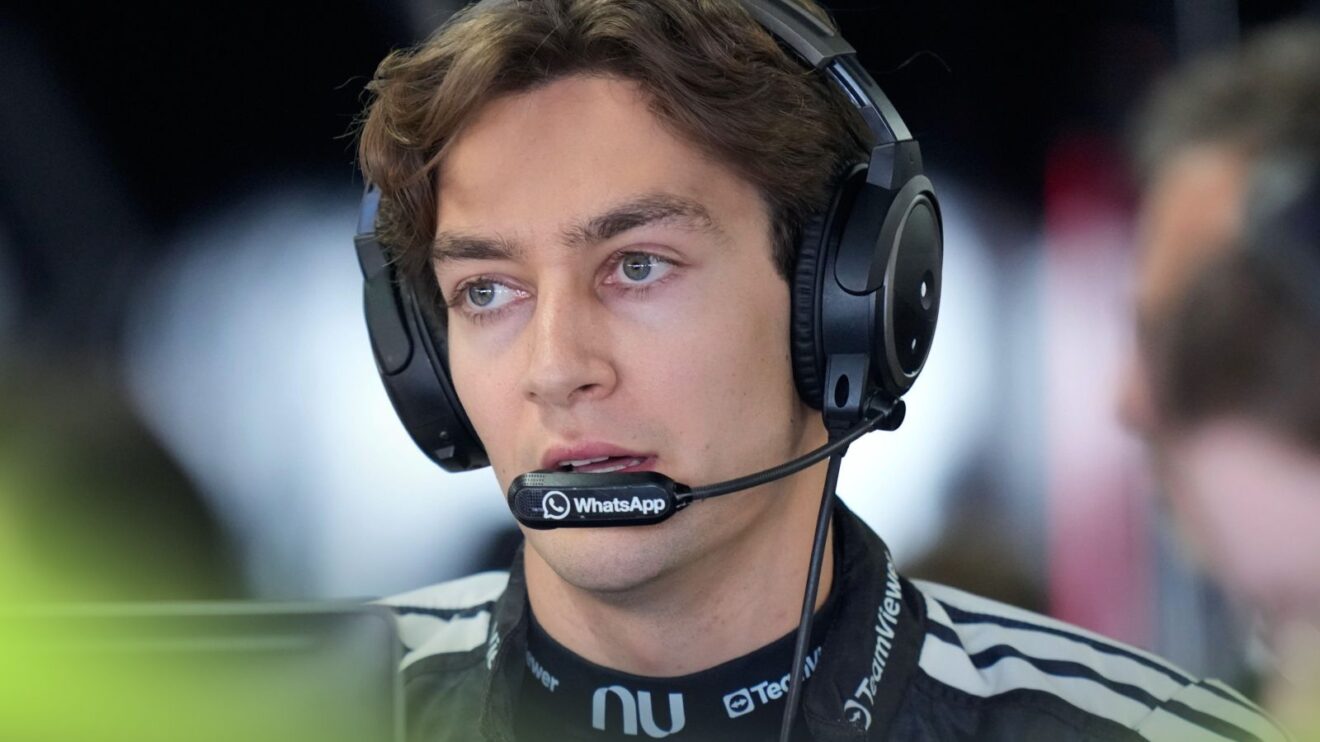
The Ghost in the Machine: How Mercedes' Data Ritual Nearly Buried Russell at Suzuka

I was knee-deep in the sector times from FP3, the numbers humming a song of serene Mercedes dominance, when the Q1 sheets hit my screen. The melody broke. George Russell, P7. A dissonant chord in a previously flawless symphony. The raw data didn't lie, but the story it told was one of self-sabotage. This wasn't a rival's leap forward; this was a team, armed with more real-time telemetry than Schumacher ever dreamed of in 2004, building a digital coffin for its own driver and then handing him a crowbar mid-qualifying. It’s a perfect, chilling case study for my thesis: we are programming the intuition out of this sport, one algorithmic setup change at a time.
The Setup Sin: When Procedure Overrides Perception
The facts, cold and hard from the timing sheets, are these: Before qualifying for the 2026 Japanese Grand Prix, Mercedes made a mechanical setup change to the rear of Russell's W17. The intent, buried in some simulation output, was presumably to unlock a tenth. The result was chaos. The car became a rogue element, particularly through Suzuka's sacred, flowing Esses—a sequence demanding a symbiotic trust between man and machine that no dataset can fully encode.
"The balance felt completely different from practice," Russell stated, a simple sentence that screams of a fundamental breakdown.
The team's response? Not to revert the change, to undo the error. No. They chose to layer a "massive" front wing adjustment on top of it, a digital-age band-aid. They attempted to solve a rear-end problem by hacking the front. This is the "robotized" pitfall in real time: a slavish devotion to a pre-ordained procedure or simulation outcome, even when the driver—the only biological sensor in the loop—is reporting a critical failure. They treated Russell not as the final authority of feel, but as a faulty data node to be worked around.
- The Critical Timeline: Russell was languishing in P7/P8 after initial Q1 runs. The front-wing fix was a panic move, an in-session scramble.
- The Investigation: Mercedes is probing whether "an incorrect procedure was followed." My analysis? The incorrect procedure was prioritizing a simulated gain over the driver's lived reality.
- The Pattern: Russell’s admission that the "last two qualifying sessions have been tricky" isn't a driver issue. It’s a systemic tremor. This is how execution decays when feel becomes a secondary input.
Emotional Archaeology: Reading the Pressure in the Deltas
Let's dig into the human story the numbers are whispering. Recovering from P7 to P2 is a monumental mental feat. We can't measure the cortisol spike, but we can infer it from the lap-time progression. The initial runs were a scramble for survival, the car an unpredictable animal. Then comes the reset, the wing change, the three laps to rebuild an entire relationship with a 1000-horsepower machine at one of the world's most demanding circuits.
This is where we must channel the ghost of 2004. Schumacher’s consistency wasn't just about skill; it was about a foundational stability. The Ferrari beneath him was a known quantity, race to race, session to session. His intuition and the car’s behavior were in a permanent, trusted dialogue. Russell had that dialogue severed minutes before the most important hour of the weekend. His recovery isn't just impressive driving; it's a desperate, brilliant act of emotional and technical recalibration under extreme duress.
It makes me consider Charles Leclerc. His so-called "error-prone" reputation is so often a direct function of Ferrari handing him a strategic or mechanical hand grenade. Russell today was given a different kind of grenade: a setup one. The raw pace data—the only unbiased judge—shows both drivers extracting performances that the machinery, in its compromised state, had no right to deliver. We punish the driver for the team's narrative, while the timing sheets tell a truer, more generous story.
"It's not ideal," Russell said of his compromised race setup. This is the heartbreaking data point. Securing P2 should be a triumph. Instead, the numbers foretell a Sunday of adaptation and mitigation, not attack.
Conclusion: The Sterile Future is a Choice
So, what’s next? The race will be a live experiment. Can Russell’s patched-up car, a monument to a procedural misstep, hold off the McLarens and Ferraris that the data said were beaten? The team’s internal investigation will likely focus on a "who" or a "what" in the chain of command. It should focus on the "why."
Why did the driver's feedback in the garage not trigger an immediate reversal? Why is the default to complicate rather than simplify? We are at a crossroads. The 2004 model was about engineering a perfect, responsive tool for the driver's genius. The 2026 model, as seen today, risks reducing the driver to a biological actuator for the strategy computer's latest whim.
Mercedes salvaged a front-row lockout. Kimi Antonelli took a pristine pole. But the story is in Russell’s sector times, in the jagged, recovering heartbeat of his session. The numbers tell a tale of a team that nearly lost itself in its own digital reflection. They got away with it today. But in a title fight, you don't get many crowbars. And eventually, the coffin seals shut. The sport must choose: will it be a symphony of human and machine, or just a sterile playback of a pre-written algorithm? Suzuka, and George Russell’s wing, gave us a warning.