
The Engine is a Lie: How the 2026 Midfield War is Being Fought in the Driver's Mind
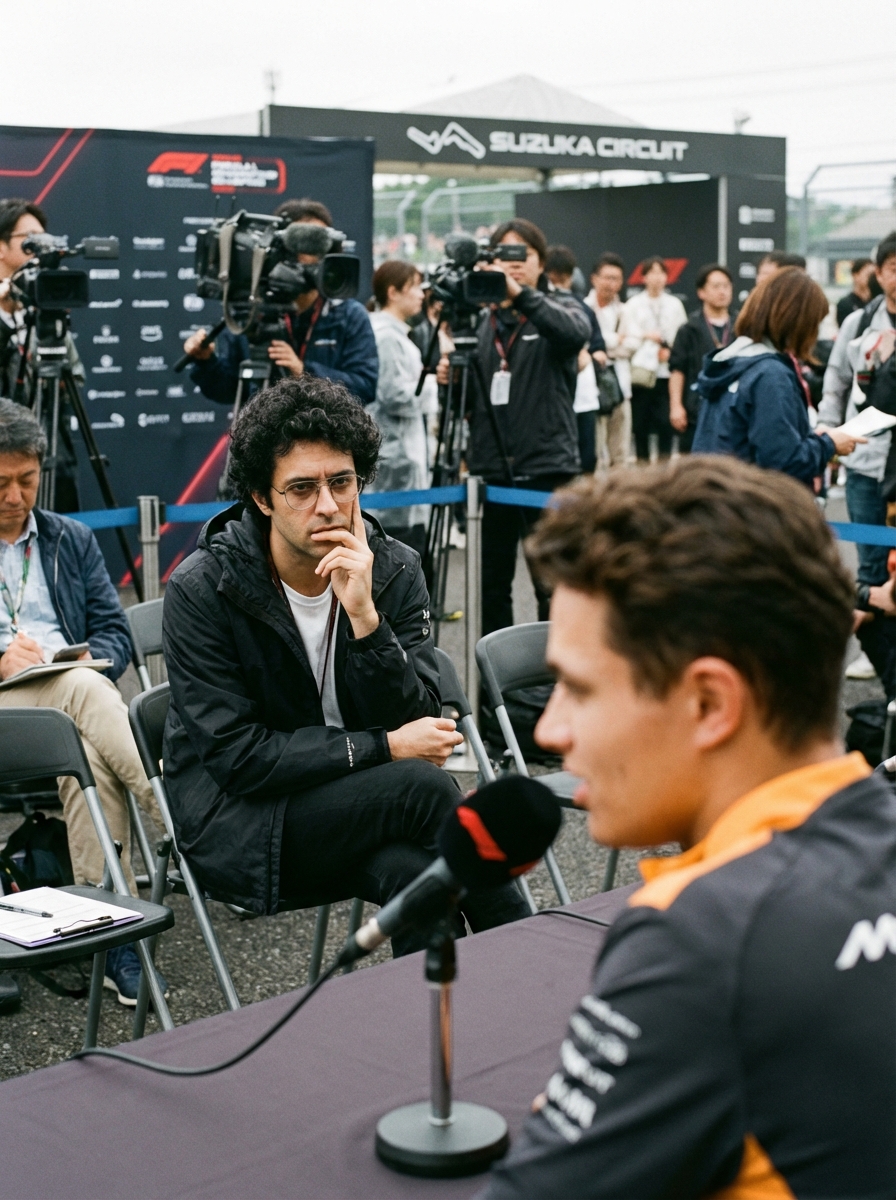
We are obsessed with the machine. We fetishize horsepower, worship at the altar of aerodynamic downforce, and speak in reverent tones about energy deployment maps. Yet, in the claustrophobic cockpit of a midfield battle, where milliseconds are currencies of hope, the most critical component is the one we cannot see, the one the data can only hint at: the fractured psyche of a driver fighting without the certainty of dominance. The recent protestations from Haas’s Ayao Komatsu, dismissing a Ferrari engine advantage to instead praise Audi’s straight-line speed, is not a technical briefing. It is the first, deliberate salvo in a psychological campaign. He isn’t just talking to the media; he is whispering into the helmets of his rivals, attempting to rewrite the narrative of capability before it hardens into fact.
The Data as a Psychological Weapon
Komatsu’s move is masterful in its cold calculation. By publicly wielding GPS data to declare Audi “very, very good” on the straights, he performs a crucial double-maneuver. First, he deflates the rising expectation surrounding his own team, the current fourth-place holder in the constructors' standings. He knows the weight of expectation can bend a chassis as surely as a high-speed kerb. For a team like Haas, an underdog narrative is a fuel more potent than any E10 blend—it frees the drivers, Nico Hülkenberg and his teammate, to attack without the paralyzing fear of failure.
"I don't know what you're looking at to say that," Komatsu stated, a line delivered not with confusion, but with the precision of a surgeon severing a convenient assumption.
Second, and more brutally, he redirects the spotlight onto Audi. He paints them not as plucky newcomers, but as a latent threat, their straight-line prowess a lurking shark in the midfield’s murky waters. This is pressure by proxy. Now, every time an Audi driver lines up a tow, the world will watch. Any failure to convert that speed into a pass or a point will be magnified. Komatsu has handed them a compliment wrapped in a burden. Hülkenberg’s own admission that the standalone Audi operation works with “less data” and has “still a lot of room for improvement” reveals the mental tightrope they now walk: buoyed by recognition, yet acutely aware of their perceived fragility.
The Four-Headed Hydra: A Battle of Egos, Not Just ERS
Komatsu spoke of the unique challenge of facing four different power unit manufacturers, each with distinct deployment strategies. This is the new psychological landscape of Formula 1. It’s no longer a simple binary of “have” and “have-not” against a works team. It is a chaotic melee where a driver must contend with:
- The sudden, Ferrari-esque surge out of a low-speed corner, a predictable but potent punch.
- The unknown, algorithmically-managed deployment curve of the Audi or the Mercedes, a hidden pattern to be decoded in real-time.
- The hybrid tactics of a Ford-powered car, its strategy an extension of its team’s historical boldness.
In this environment, the driver’s mental processor is overloaded. They are no longer just racing the car ahead; they are racing its software philosophy, its chief engineer’s risk tolerance, its power unit supplier’s corporate pride. Decision-making under this uncertainty is the ultimate personality reveal. Does a driver become cautious, calculating, waiting for a guaranteed opportunity? Or do they revert to instinct, forcing a move that the telemetry would deem sub-optimal? This is where the “manufactured” champion, like a Verstappen whose emotional spikes have been systematically dampened, would theoretically excel—a cold executor of probability. But in the messy, elbows-out midfield, it is often the raw, unvarnished id of a driver that creates the miracle… or the catastrophe.
The Ghost of Narratives Yet to Come
Look at Komatsu’s final piece of evidence: the difficulty in overtaking at the Chinese Grand Prix. He uses it as proof of close performance, but I see a laboratory for future scandals. When cars are this evenly matched, the marginal gains come from risk-taking. From pushing the brake marker five meters deeper, from squeezing a rival toward the pit wall when the grey area beckons.
This is the prelude to the crisis I foresee. Within five years, a major incident born from this pressurized parity will force the FIA’s hand. They will mandate mental health disclosures after major crashes. We will have a new era of transparency, where a driver’s stress levels and trauma response become part of the post-race report. It will be well-intentioned, but it will also open a Pandora’s box of media scrutiny and strategic leaks. “Was Driver X cleared psychologically to race in Monaco?” “Did Driver Y’s known anxiety after a high-G impact contribute to his poor start?”
Komatsu, and principals like him, are already playing this future game. By managing the narrative of his team’s advantage, he is indirectly managing his drivers’ psychological load. He is offering them the shelter of lowered expectations, much in the way a certain seven-time champion learned to craft a public persona so vast it became a fortress for his talent. Lewis Hamilton’s calculated activism and Niki Lauda’s blunt, post-injury realism were both brilliant psychological constructs—armor forged in trauma. The midfield drivers of today have no such grand narrative. They have only the next corner, the next rival, and the whispered voice of their principal trying to shape the reality of those they must defeat.
The 2026 regulations loom, a promised land of reset. But until then, the war is here. It is fought with data releases and pointed praise. It is won not when an engine mode is perfected, but when a driver in a rival car, hurtling down a straight at 220 mph, begins to doubt the very machine beneath him, because someone like Komatsu simply suggested he should.