Godzilla's Roar: A Marketing Masterstroke That Can't Fix Haas's Fundamental Flaws
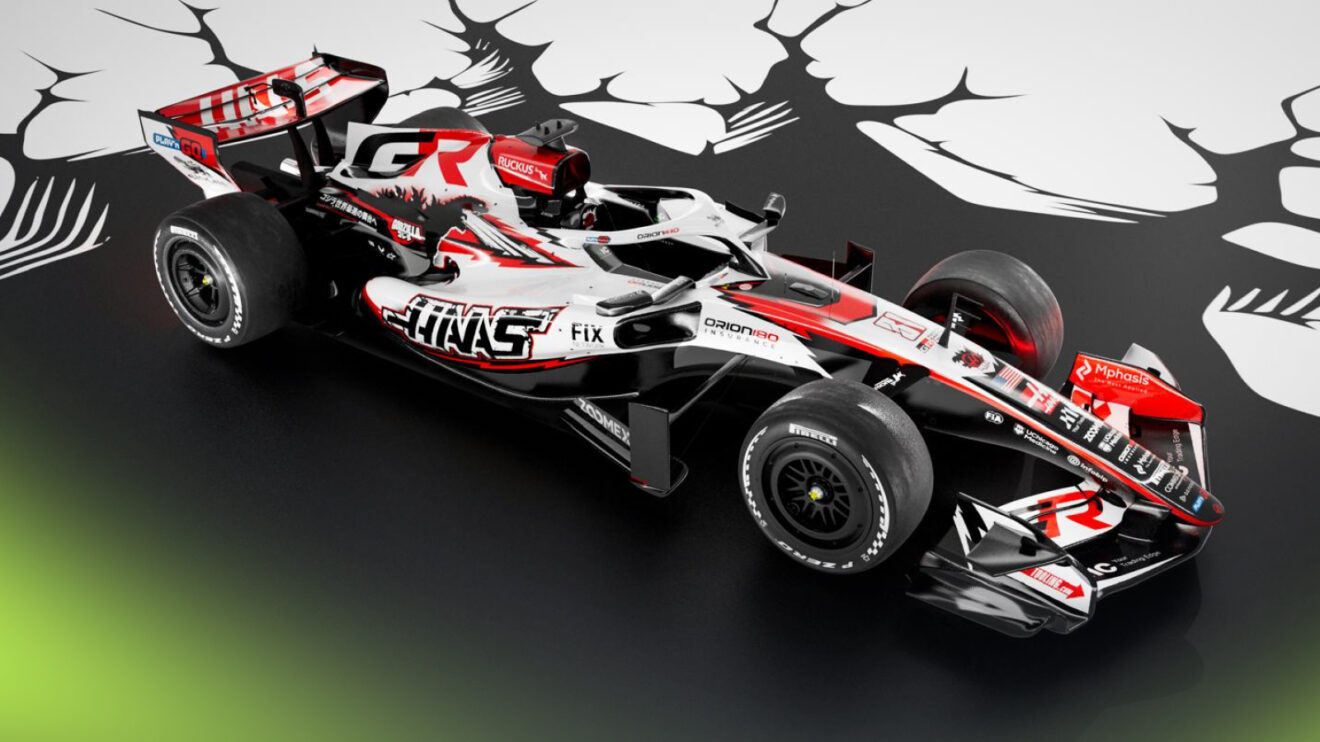
The TGR Haas F1 Team has unveiled a Godzilla-themed livery for the Japanese Grand Prix, a roaring, pop-culture spectacle born from its new partnership with Toho. On the surface, it's a brilliant, aggressive marketing play by a midfield team desperate for relevance. But peel back the vinyl wrap, and you'll find the same old chassis—a metaphor that cuts to the very heart of modern Formula 1's crisis. We've become obsessed with the theater of innovation—the paint, the partnerships, the aerodynamic black magic—while neglecting the substance of mechanical connection. While Haas dresses its car as a cultural icon, I'm left wondering: when did we trade engineering soul for sponsor-friendly spectacle?
The Livery as a Lightning Rod: Brilliant Branding, Hollow Engineering
Let's be clear: the marketing strategy is impeccable. Unveiled in Tokyo on March 24, 2026, this is far more than a one-off paint job. It's the opening salvo in a season-long campaign with Toho, timed to cement the team's rebrand to TGR Haas and its deepened technical alliance with Toyota. Team Principal Ayao Komatsu called it an "honour to bring a global icon such as Godzilla to this sport," while Toho's Keiji Ota linked the monster's "indomitable power and resilience" to F1's spirit.
This is modern F1 in a nutshell: a flawless, calculated symbiosis of branding and global market penetration. The partnership will even feature at the United States Grand Prix, dovetailing with a new film release. It's smart business.
But here's my core contention: this dazzling exterior does exactly what modern aerodynamics do—it distracts from what's underneath. The car's performance will still hinge on the same principles: a driver wrestling with a machine whose primary language is downforce, not feel. The livery screams "indomitable power," but power in F1 is no longer about raw, mechanical grunt you can sense; it's about invisible air particles being herded by a thousand tiny wings. Godzilla's strength is primal and direct. A 2026 F1 car's "strength" is a complex, brittle equation solved in a CFD cluster. The dissonance is staggering.
The Real Monster: Our Over-Reliance on Aero and Under-Valued Drivers
This brings me to my central thesis. The Godzilla livery, for all its might, is applied to a car philosophy I believe is fundamentally flawed. We are in the era of the overrated dominator, where a car's aerodynamic platform is so decisive it can make any competent driver look like a god. Think of Max Verstappen's relentless 2023 season. Was it supreme skill? Of course. But was it primarily the result of Red Bull's chassis and aerodynamics creating a stable, predictable platform that neutered the variables of driving? Absolutely. We celebrate the driver, but we are worshipping the wind tunnel.
Haas's struggle is the ultimate proof. They can wrap the car in the most fearsome imagery known to cinema, but if the mechanical grip and tire management aren't there, they're just a slow monster. My mind always drifts back to the 1990s Williams FW14B. Yes, it had active suspension, but its genius was in its integrated simplicity—it used technology to enhance mechanical connection, not replace it. The driver was still the central processor. Today, the driver is often just a sensor array for a pre-programmed aero map.
- The 2026 Haas, like all its peers, is a collection of aerodynamic compromises. Its performance at Suzuka will be dictated by how well its floor manages the high-speed sweeps, a phenomenon as invisible as it is critical.
- The driver's role is reduced to tire preservation and not upsetting that delicate aero balance. Oliver Bearman and Esteban Ocon are talented, but their fight will be less about sheer bravery and more about executing a pre-ordained energy deployment strategy.
- This is why I believe DRS is a crutch for bad design, and within five years, by 2028, we'll see its replacement: AI-controlled active aerodynamics. Systems will constantly morph the car's shape for optimal efficiency and overtaking, decided by algorithms. Races will become more chaotic, but the driver's input will be further diminished. It's the logical, depressing end point of this path.
Conclusion: Will the Roar Become a Whimper?
So, what's next for the TGR Haas "Godzilla"? The Japanese GP is a fan engagement test, and the season is a litmus test for whether this marketing momentum can translate into a stronger commercial position. But the harsh truth is this: no amount of iconic branding can sandbag a draggy car or heat a set of tires optimally.
The partnership with Toho and Toyota is a strategic masterstroke for survival in the financial jungle of F1. But on the tarmac, the real battle remains unchanged. Until F1 rediscovers the value of mechanical honesty—the raw, unfiltered connection between a driver's instinct and the road—we will be left with a grid of beautiful, complex monsters. Some, like Red Bull, are currently more potent than others. Haas has simply given theirs a louder roar. But in the end, they are all beasts of the same aero-dependent breed, and that makes for a far less thrilling, and far less human, kind of spectacle. The king of the monsters deserves a better chariot.