The Monster in the Mirror: Haas's Godzilla Livery and the Psychological Theatre of a 'Home Race
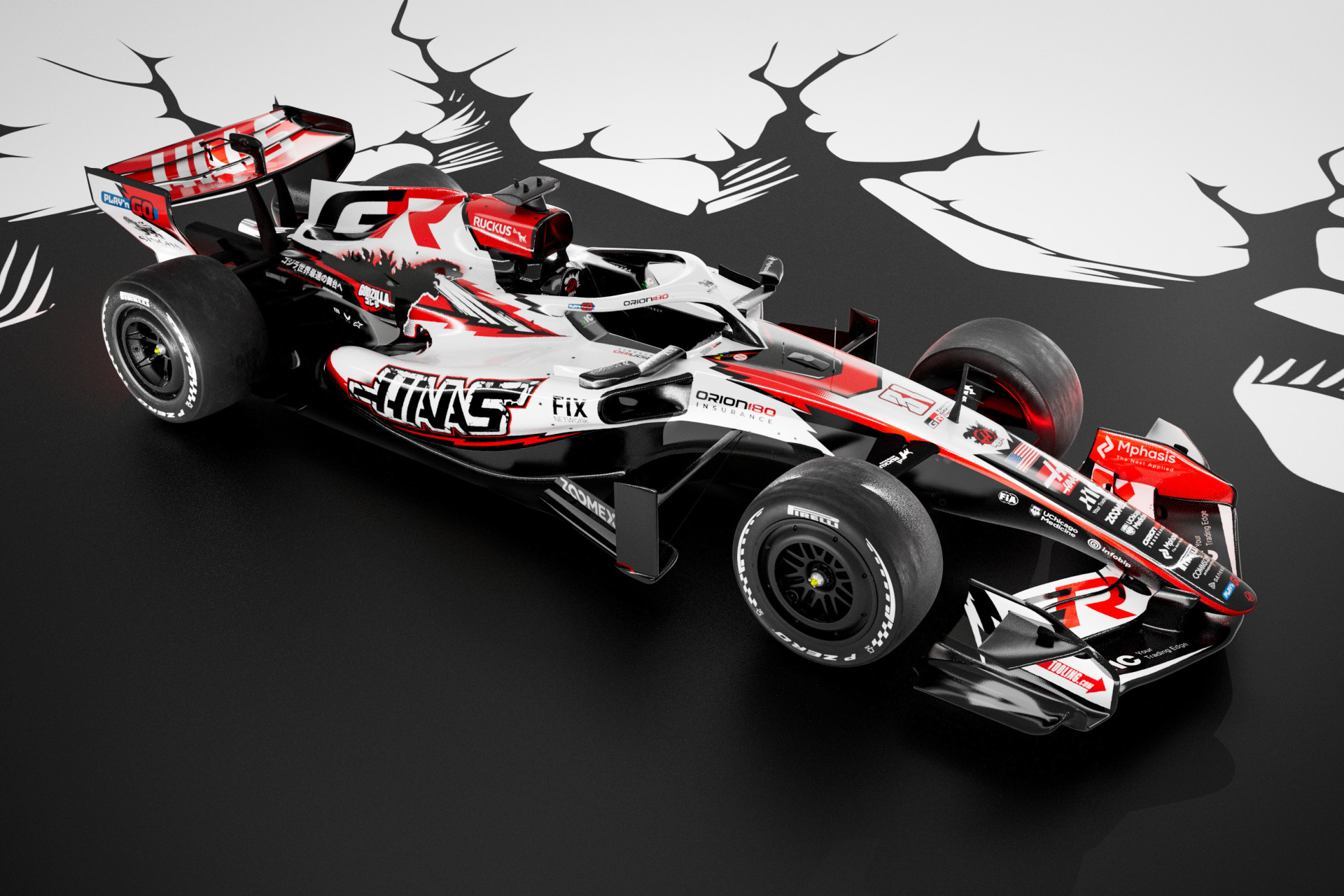
The most revealing moment at a Grand Prix is not the pole lap, nor the podium. It is the silent walk from the garage to the car, when the driver is alone inside his helmet with the creature he has been told to become. This weekend at Suzuka, Esteban Ocon and Ollie Bearman will not walk towards a machine of carbon fibre and paint. They will approach a myth. The TGR Haas F1 Team has draped their VF-26 in the scales of Godzilla, a collaboration with Toho that is far more than a marketing stunt. It is a profound, perhaps unintentional, piece of psychological theatre. For what is a driver in a modern Formula 1 car, if not a controlled monster? A force of nature whose raw, emotional eruptions are systematically suppressed by the complex machinery of the team around him, until only a relentless, efficient points-scoring entity remains. This livery is a mirror, and in its reflection, we see the entire sport's fraught relationship with power, identity, and the human psyche.
The Livery as a Psychological Proxy
Unveiled in Tokyo on March 24, 2026, the Godzilla scheme is a masterclass in narrative. Team Principal Ayao Komatsu called the Japanese GP "another one of our home races," leveraging the Toyota Gazoo Racing partnership to forge a tribal connection. But a 'home race' is a double-edged sword. It applies a unique, suffocating pressure—a demand to perform not just for a team, but for an entire culture that claims you. For Ocon and Bearman, climbing into the Godzilla car is an act of symbolic possession.
"I feel that partnering with Godzilla is something only Haas could do, we do things our way," said Ollie Bearman.
Bearman’s quote is telling. At fifth in the championship, the young Briton is in the midst of a career-defining surge. His unconscious mind may be embracing the Godzilla archetype—the outsider, the disruptor, the unexpected force that topples established order. Yet, the team’s "way" is precisely the system that will now work to contain that very monster. His performance will be managed, his radio communications calibrated, his post-race emotions filtered through PR. This is the Red Bull model perfected with Verstappen: take a phenomenal, emotionally volatile talent and build a psychological cage so seamless he mistakes it for his own skin. Haas, with this livery, is flirting with that same dynamic. They are celebrating the beast while the engineers in the garage work tirelessly to put it on a leash.
The Weight of the Suit
- The driver does not wear the livery; it wears him.* At Suzuka, a circuit Ocon rightly calls "the best on the calendar," every glance from a fan, every camera shot, reinforces the myth. The driver must reconcile two identities: the calculated athlete executing a plan, and the cultural icon roaring down the S Curves. This cognitive load is immense. We have seen how Lewis Hamilton’s meticulously crafted persona—a narrative of activism and style as potent as Niki Lauda’s of resilience—can become a source of both immense power and exhausting performance. For Bearman and Ocon, the Godzilla suit is a one-weekend version of this. Can they use it as fuel, or will it distort their focus?
Suzuka: The Circuit That Reads the Soul
If the livery provides the costume, Suzuka provides the stage. This is where my core belief is laid bare: driver psychology trumps car aerodynamics in wet conditions. While the forecast may be clear, Suzuka’s essence is one of relentless, high-speed uncertainty. The Degners, the Spoon Curve, the white-knuckle commitment of 130R—these are not just corners. They are a series of high-stakes decisions that reveal core personality traits engineers can't design around.
- Esteban Ocon thrives on a very French, calculated aggression. His excitement for Suzuka is genuine, but it is the excitement of a tactician presented with a perfect puzzle. His challenge will be to inject the instinctual, monstrous pace the livery implies into his methodical approach.
- Ollie Bearman’s meteoric rise has been built on preternatural composure. But Suzuka, under pressure, asks a different question. When the car snaps at the exit of the high-speed Esses, does the driver’s mind go to technical data—rear wing angle, throttle map 7—or to a primal, survival-level reaction? The latter is the territory of the true greats, and of unchecked monsters.
Komatsu’s target is to get "both cars into double points." This is a rational goal from a principled leader. But it is a goal that requires suppressing the very "Godzilla" spirit the livery invokes. Points are earned through consistency, not cinematic destruction. The team’s success hinges on this paradox: convincing their drivers to feel like unstoppable forces of nature while acting like precise surgeons.
The Data Behind the Drama
The 2026 season’s new regulations have shuffled the pack, giving Haas a surprising platform. Bearman’s fifth in the standings is not a fluke; it is a data point in a psychological profile being written in real time. How he handles the added cognitive load of the "home race" mythos will be a critical chapter. Will his biometrics show elevated stress during the pre-race rituals, or a focused calm? The telemetry through Sector One will tell us more than any post-race interview. It will show us if the man is driving the monster, or if the monster, for a few fleeting seconds, is driving the man.
Conclusion: The Monster We Create
The Haas Godzilla livery is a brilliant spectacle. But for those of us who watch the humans, not just the cars, it is a profound metaphor for modern F1. We build these spectacular creatures—both machine and man—and then we ask them to perform within strict, invisible boundaries. We celebrate Verstappen’s dominance while ignoring the psychological architecture that made it possible. We will, within five years, mandate mental health disclosures after crashes, forcing a new transparency about the cost of this dance, even as the media scrutiny amplifies the very pressures we claim to mitigate.
As the two green-and-black cars fire up in the Suzuka pit lane this weekend, listen closely. Beneath the roar of the hybrid V6, you might hear the faint echo of a more primal sound. It is the sound of the human spirit, momentarily costumed as a kaiju, before the system—beautiful, relentless, and merciless—clicks in and directs it to turn a series of perfect, points-scoring laps. The true race is not for the podium. It is for the soul of the driver inside the monster suit.