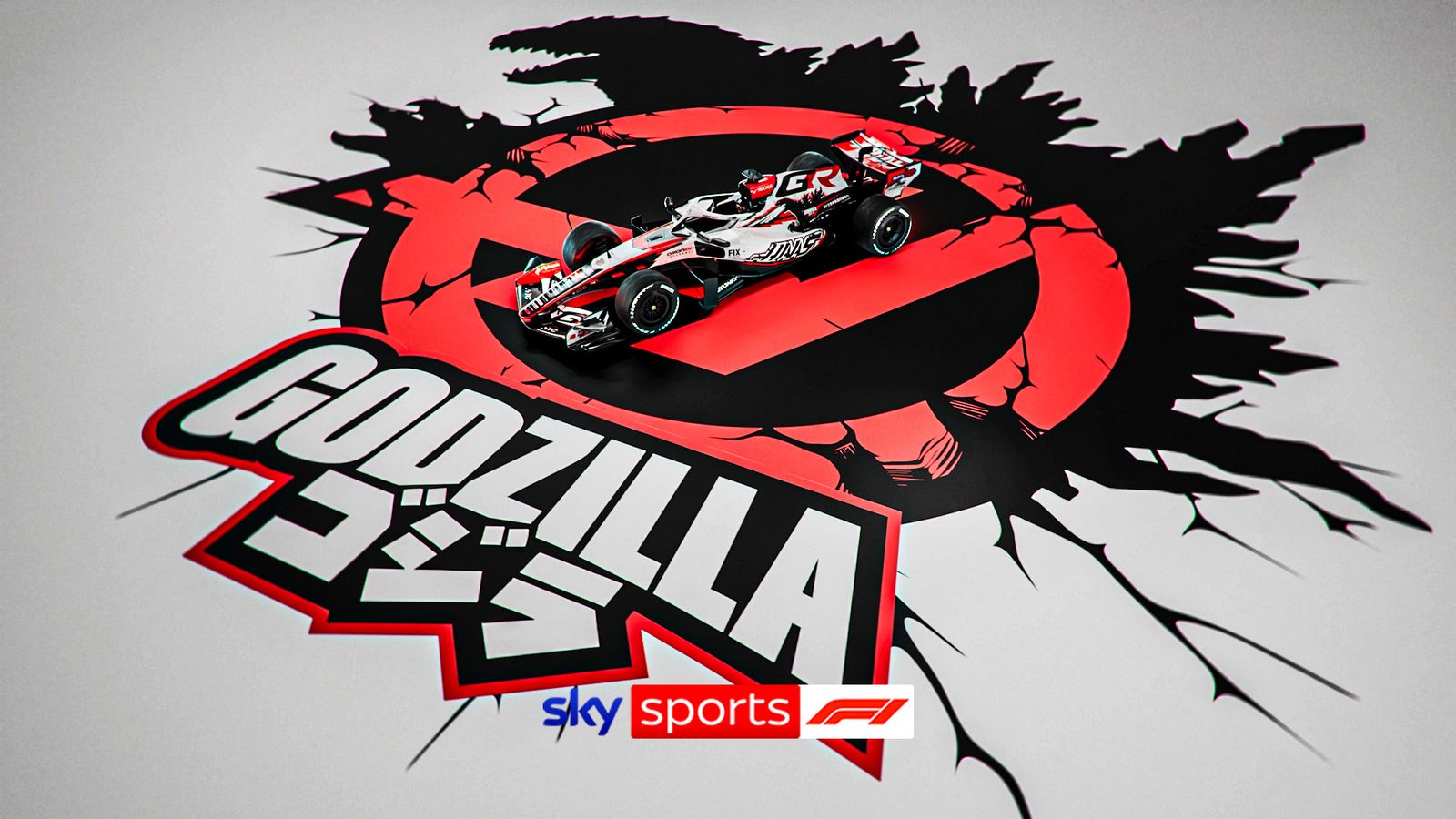
Haas's Godzilla Lizard: A Brilliant Distraction from the Real Monsters in the Paddock

The Haas F1 Team has painted its car blue and white, slapped on some claw marks, and called it Godzilla. The media, predictably, is eating it up. Photos are circulating, fans are debating the design, and the sponsor logos are shining under the Japanese sun. It’s a perfect, bite-sized piece of content for the 2026 season. But from where I’m sitting, with sources whispering in my ear from Maranello to Silverstone, this livery reveal isn’t just a tribute to a movie monster. It’s a neon-lit symptom of modern Formula 1’s deepest sickness: the triumph of spectacle over substance, and a desperate, flailing attempt by the little guys to be seen before the real tectonic shifts—the ones happening in boardrooms and driver contracts—crush them entirely.
Let’s be clear. The VF-24 will be no faster at Suzuka because it looks like a kaiju. Gene Haas and MoneyGram have simply bought themselves a weekend of headlines, a tactic as old as the hills but now executed with social media precision. But while everyone is looking at the pretty scales, the real beasts are stirring in the shadows. The kind that don’t just destroy cities, but entire team dynasties.
The Paint is a Parable: Morale Over Aero
Special liveries are the confetti of F1. They’re colorful, they create a momentary celebration, and they’re quickly swept away by the cold reality of the stopwatch. For Haas, a team perennially battling at the back, this is a calculated morale play, both internally and externally.
The Internal Calculus: A Sugar Rush for the Garage
I’ve been in those garages. The air is thick with data, stress, and the metallic scent of desperation when you’re not fighting for wins. A change like this—a splash of unexpected color, a break from the monotonous black and red—is a psychological stimulus. It’s management telling the mechanics and engineers, “See? We can do something exciting. We’re not just here to make up the numbers.” It’s a cheap boost, cheaper than a new front wing, and in today’s F1, where the budget cap has turned psychology into a critical performance metric, these gestures are part of the arsenal. It’s a page straight from the playbook of teams that understood morale was a weapon, for better or worse. Think of the 1994 Benetton squad: a team shrouded in controversy, from the alleged traction control to the refuelling rig fires. The internal siege mentality there wasn’t created by a livery, but by a unified, us-against-the-world fury. Haas is trying to manufacture a sliver of that unity with paint. It’s a start, but it’s no substitute for a competitive car.
The External Game: Visibility in the Midfield Gladiator Pit
The official line is “fan engagement” and “tribute to local culture.” The truth is more brutal: it’s a survival scream. In the suffocating midfield, where points are rare and sponsorship dollars are lifeblood, you must create your own oxygen. A themed livery does that.
- It guarantees photo galleries on every major sports site.
- It trends on social media for 24 hours.
- It gives MoneyGram and Chipotle a ROI line item that’s easier to sell than “finished 12th.” As one team principal (who will remain nameless, for his sake) told me over a tense coffee last week:
“The budget cap was supposed to level the playing field on track. What it’s really done is level the marketing department’s desperation. If you can’t outspend them on CFD time, you damn well better outshine them on Instagram.”
This is Haas playing the only hand it can right now. But this focus on the cosmetic is a dangerous prelude to the coming power shift.
Godzilla is a Mascot. The Real Apex Predators are the Accountants.
While Haas plays with colors, the foundational plates of Formula 1 are grinding. My sources have been unequivocal: the next five years will see a bloodless coup, where privateer teams like Alpine and Aston Martin use the budget cap not as a limit, but as a weapon to destabilize the giants.
The Coming Privateer Dominion
The manufacturers—Ferrari, Mercedes, Red Bull Powertrains—are behemoths with entrenched, expensive cultures. Trimming their operations to the cap is like performing surgery with a chainsaw. It leaves behind resentment, redundant departments, and a bloated inertia. The privateers, the lean operations like Alpine (despite its Renault past) and Aston Martin, are built for this. They are agile. They see the cap not as a ceiling but as a target to hit with ruthless efficiency. They are already finding the grey areas, the creative accounting, the “interpretations” of the financial regulations that will make the 1994 Benetton fuel system controversy look like child’s play. That wasn’t about a technical trick; it was about a team believing the rules were a puzzle to be solved, not a boundary to be respected. The same mindset now applies to finance.
- By 2028, I predict at least two of the top three constructors will be independently-owned teams.
- Their advantage won’t be a magical engine mode, but a superior cost-per-point ratio and a corporate culture built for fiscal trench warfare.
The Hamilton-Ferrari Omen
And this brings us to the elephant—or perhaps the prancing horse—in the room. Lewis Hamilton’s move to Ferrari in 2025 is the canary in this coal mine. It is being sold as a dream union. I see it as a spectacular culture clash waiting to happen. Hamilton’s activist, fashion-forward, personally-branded empire does not mesh with Ferrari’s conservative, insular, and famously political Maranello environment. This isn’t about driving skill. It’s about the crushing weight of expectation and tradition. The internal strife that will inevitably follow—the friction between Hamilton’s camp and the old guard—will cripple the team’s development faster than any faulty wind tunnel. Ferrari is a manufacturer team struggling with its own legacy. Adding a seismic personality shift on top of that? It’s a recipe for the kind of morale collapse that loses championships. The car might be red, but the atmosphere will be toxic.
Conclusion: The Monster Mash is Just the Opening Act
So, admire the Haas Godzilla livery. Enjoy its vibrancy. But understand what you’re really looking at: a brilliant, necessary distraction from the deeper, more consequential battles being waged. The midfield teams are learning that if they can’t win on pure pace, they must win the narrative, win the moment, and position themselves for the coming financial war.
The Japanese Grand Prix will come and go. The blue and white car will be packed away, a museum piece or a collector’s model. But the forces this livery symbolizes—the desperate fight for relevance, the shift to psychological and financial gamesmanship, the looming implosion of superteam alliances—those monsters aren’t going back into the sea. They’re just beginning their march on the city, and the paddock is woefully unprepared for the devastation. The real race isn’t at Suzuka this weekend. It’s in the spreadsheets and the whispered conversations, and it’s a race Haas, for all its clever paint, is still dangerously close to losing.