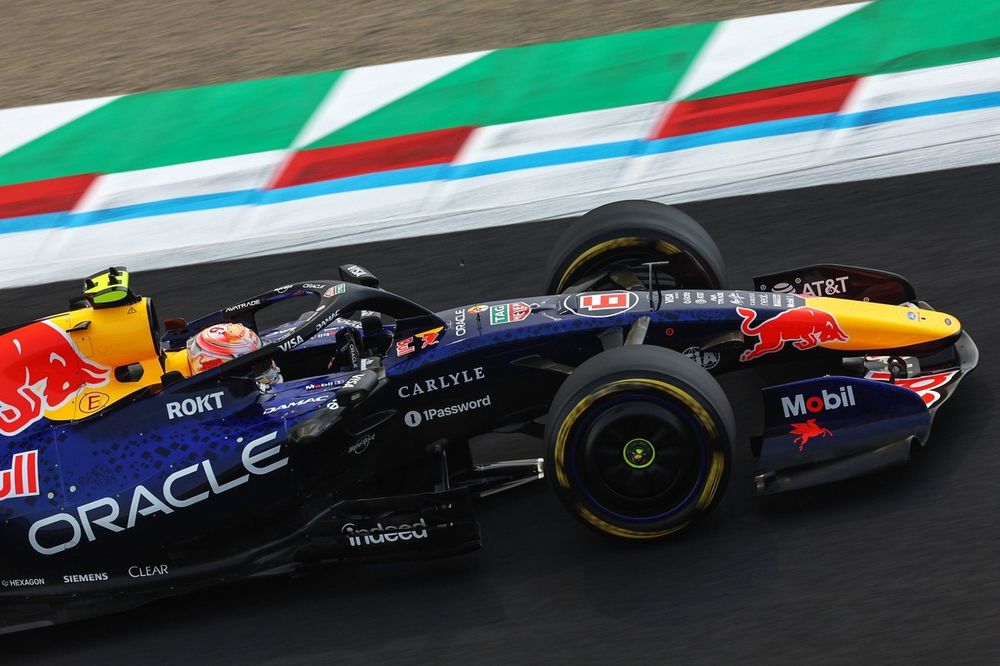
The Numbers Don't Lie, But They Do Scream: Hadjar's 'Dangerous' Red Bull and the Ghost in the Machine

I pulled up the sector times from Suzuka, and my screen didn't show a race trace. It showed a cardiogram in flatline decay. Isack Hadjar’s lap times weren't just slow; they were the erratic, pulseless spasms of a machine fighting its pilot. When a driver uses the word "dangerous," it's not just emotion. It's a data point. The most critical one on the sheet. It translates to unpredictable peak lateral G-force variances, to steering trace inputs that look like seismic readings. This isn't about losing. This is about a fundamental fracture in the covenant between driver and car, and Red Bull, the data-obsessed titan, is staring at the smoking crater of its own philosophy.
The Schumacher Standard: When Feel Was the Ultimate Algorithm
Let's rewind. 2004. Michael Schumacher, Ferrari. 13 wins from 18 races. The telemetry from that season is a masterclass in consistency, but you know what the old engineers whisper? That Schumi’s genius was in the three laps he’d run in FP1, come back, and tell them exactly what spring and bar change to make, down to the click. The car was an extension of him. The data verified his feel, not the other way around.
"The only positive right now is that I can drive the car fast. But we have no lead on how we can make the car fast."
Hadjar’s post-race quote is a damning indictment in the modern context. He’s stating a terrifying paradox: the performance exists in his hands, but it is utterly unrepeatable by the team's engineering logic. This is the antithesis of the Schumacher model. Michael knew how to make it fast, and the engineers could trace that knowledge back through the numbers. Hadjar is adrift in a sea of telemetry that apparently contains no answers. He qualified a promising eighth. The raw, one-lap pace is in the package. But over a race stint, the car transforms, becoming, in his words, "really, really undriveable." This points to a dynamic instability so severe it bypasses engineering intuition. The numbers are there, but they tell a story nobody at Red Bull can yet read.
The Sterile Future: Hadjar as the Canary in the Data Mine
This is where my deepest skepticism blooms. We are racing headlong toward a future where the driver is a bio-sensor, an actuator for a pre-ordained strategy algorithm. Hadjar’s ordeal is the violent birth pang of that era. Consider his race:
- An early critical battery problem that destroyed his strategy.
- A poorly-timed pit stop just before a Safety Car.
- A fundamental lack of race pace that was "worse than earlier in the weekend."
The first two are operational errors, the kind that plagued Leclerc at Ferrari—strategic blunders that amplify a driver's "error-prone" reputation when in fact they are victims of systemic failure. But the third item is the existential threat. The car's performance degradation is nonlinear and unpredictable. In a robotized racing future, the algorithm expects a predictable decay curve. What does it do when the model shatters? It would likely call the driver a variable to be minimized, not the source of the solution.
Hadjar battling Arvid Lindblad's Racing Bull, a car from the same stable, and finding his own machine uniquely "dangerous," is a controlled experiment gone wrong. It isolates the variable to his specific chassis or setup. The data between the two cars should be a Rosetta Stone, yet Red Bull seems linguistically lost. They have four points from three rounds for Hadjar. That’s not a points tally; that’s a correlation coefficient showing zero relationship between their simulation and reality.
Emotional Archaeology: Reading the Pressure in the Lap-Time Scatter
So, let's do some archaeology. The story isn't in the 12th-place finish. It's in the delta. The scatter plot of his lap times, especially after the battery issue and the botched stop, tells a story of mounting desperation. Each attempted push lap, each failed overtake (like the one on Nico Hulkenberg he later ceded), is a psychological data point. The car isn't just slow; it's untrustworthy. A dangerous car doesn't just cost tenths; it costs confidence. It makes a driver brake 2 meters earlier, turn in with a millisecond of hesitation—micro-events that telemetry captures but often dismisses as "driver variance."
Where is the team's empathy variable in their model? Where is the metric for shattered morale? Schumacher’s 2004 dominance was built on a foundation of ironclad trust in a car that responded to his will. Hadjar is describing a car with a will of its own, and a malign one at that. The upcoming five-week break is not a holiday. It's an autopsy. Red Bull must dig into numbers that look like noise and find the signal of failure. They must listen to the human screaming from inside the data stream.
Conclusion: The Intuition Gap
The verdict is clear. Red Bull has built a car that only its lead driver, through sheer otherworldly talent, can occasionally tame. For the other side of the garage, it's a rogue algorithm. Hadjar’s "dangerous" label is the most human of data points, a qualitative truth that quantitative analysis has failed to predict or solve. This is the risk of the sterile, data-tyrannical future I fear: when the machine’s logic fails, it has no fallback to driver intuition. It just spits out an "undriveable" verdict.
The numbers from Suzuka tell a story of a team at a crossroads. Will they use this break to recalibrate their sensors to listen to their driver’s fear, or will they simply try to drown out the scream with more data? History—and the ghost of Schumacher’s feel—suggests which path leads back to the top. The other leads to a permanent, perilous midfield existence, wondering why all their perfect numbers keep finishing twelfth.