The Algorithm's Grip: How 'Super-Clipping' is the Logical Endpoint of F1's Data Obsession

I felt a familiar, cold knot in my stomach watching the telemetry trace from Verstappen’s FP1 run. The speed curve didn't look like a driver wrestling a beast at 320 kph. It looked like a perfectly executed subroutine. A steep, aggressive climb, then a sudden, artificial plateau—a flatline in the data where the human instinct to push should live. They’re calling it ‘super-clipping,’ this phenomenon where the car harvests energy at full throttle, robbing 50 kph of speed. But I don't see a new problem. I see the inevitable conclusion. This is the sport holding its breath, waiting for a machine to tell it when to exhale.
The Data Point That Swallowed the Driver
The numbers are stark, undeniable, and for a purist, heartbreaking. Max Verstappen’s Red Bull, a car capable of visceral, raw speed, was neutered by its own logic. The onboard footage from Suzuka’s 130R is not a sporting highlight; it’s a diagnostic tool. 320 kph on approach, then a 50 kph hemorrhage through the corner and onto the straight. The system decided the battery needed filling more than the driver needed to attack.
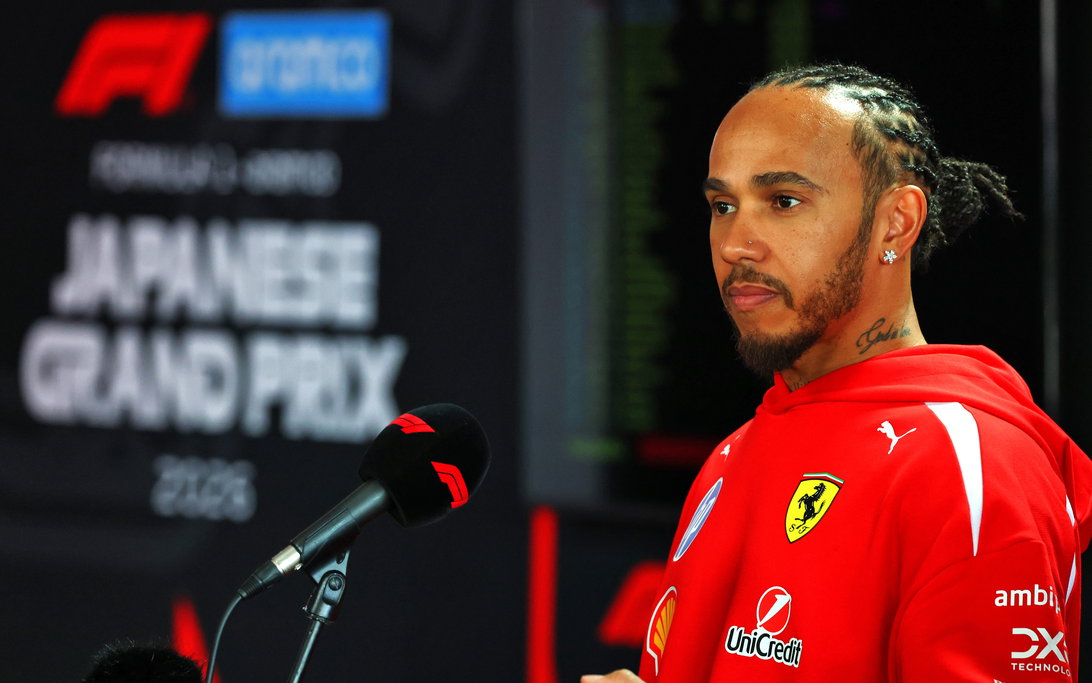
"It is definitely not great when you have super-clipping. You arrive in some places, and you're kind of coasting in because you've got no power."
Hamilton’s complaint is the human cry against the machine. “Coasting.” What a devastating word for a Formula 1 driver. It’s the antithesis of racing. This isn't about managing fuel or tires through feel; it’s about an immutable algorithm deciding, mid-corner, that the throttle input is a suggestion, not a command.
- The Verstappen Footage: A visual proof of concept for robotic racing. Speed: 320 kph. Directive: Harvest. Result: 270 kph. The driver is a passenger to the energy schedule.
- The Regulatory Patch: The FIA cutting usable energy in qualifying from 9MJ to 8MJ is a band-aid on a bullet wound. It acknowledges the symptom—too much management—but worsens the disease by making the calculation even more precious, more dominant.
- Hamilton’s Handicap: His identification of a four-tenths loss to McLaren on the straight into Turn 1 is a data point that tells a story of frustration. The battle isn’t Hamilton vs. Norris in that moment. It’s Mercedes’ deployment algorithm vs. McLaren’s. The driver is merely the narrator of his own power deficit.
Schumacher’s Ghost and the Atrophy of Instinct
Let’s talk about 2004. Let’s talk about Michael Schumacher at Ferrari. The F2004 was a monster, but its consistency came from a sublime, almost psychic connection between man and machine. The feedback loop was Schumacher’s hands, his backside, his intuition, translating to micro-adjustments. The team provided a tool he could feel. Today, the feedback loop is digital. The driver reports a sensation, and the engineer checks the 5000 data points per second to see if he’s “correct.”
This is where my skepticism hardens into dread. We are systematically building a sport that suppresses driver intuition. Super-clipping is the ultimate expression of this:
- The driver’s primary skill—modulating throttle to balance speed and car behavior—is overridden by a battery state-of-charge.
- The “spectacle” becomes the execution of a pre-programmed energy map, not a spontaneous, skill-based duel.
- The narrative shifts from “Hamilton outbraked Verstappen” to “Mercedes’ clipping algorithm was 0.2MJ more efficient in Sector 1.”
We label drivers like Charles Leclerc “error-prone” when they push beyond the limits the data says are optimal. We forget that the raw, unaided consistency of his qualifying laps in 2022-2023 was a form of genius. But in this new world, that genius is a bug, not a feature. Why would you need a driver who can feel a three-tenths advantage, when the system will simply clip him back to the prescribed delta?
Emotional Archaeology: What the Speed Trace Hides
My job is to let numbers tell the story. And the story this speed trace tells is one of diminishment. The 50 kph loss isn’t just a performance metric; it’s an emotional void. What happens in the cockpit during that flatline? The frustration Hamilton vocalizes is a data point we rarely capture. The deflation. The surrender. This is where data should serve as emotional archaeology.
Imagine correlating these sudden, system-induced performance drop-offs with a driver’s radio silence, with a subsequent aggressive, over-compensating move. The pressure doesn’t come from the rival in the mirrors; it comes from the silent war with your own steering wheel, which has stopped being a conduit of your will and started being a display for the algorithm’s decisions.
The path we’re on is clear. Within five years, without a philosophical revolt, we will have fully robotized racing. The driver will be a highly skilled system monitor, a biological component for corner entry and fan engagement. Strategy, energy deployment, tire management—all will be centralized, algorithmic, predictable. The sterile beauty of perfect execution will replace the messy, glorious chaos of human competition.
Conclusion: The Choice Ahead of 2026
The tweak to 8MJ for Suzuka is a confession. The FIA knows this is a problem. But tinkering with energy quotas is rearranging deck chairs. The 2026 power unit regulations loom not as a mere technical change, but as a fork in the road.
Do we continue down this path, where the hybrid system’s management becomes the dominant championship factor? Or do we have the courage to design regulations that make the hybrid system a transparent, responsive tool for the driver, rather than a domineering governor?
Hamilton’s complaint is the canary in the coal mine. The “least enjoyable” experience he describes is the direct result of prioritizing system optimization over sporting contest. The numbers from Verstappen’s car don’t lie. They show a story of speed sacrificed at the altar of efficiency. The question is whether we, as a sport, still believe the driver’s heartbeat should matter more than the battery’s state of charge. The data I’m looking at suggests we’re choosing the battery. And I fear that story has a very predictable, and very dull, ending.