
The Engineered Mind and the Fracturing Soul: F1's 2026 Crucible
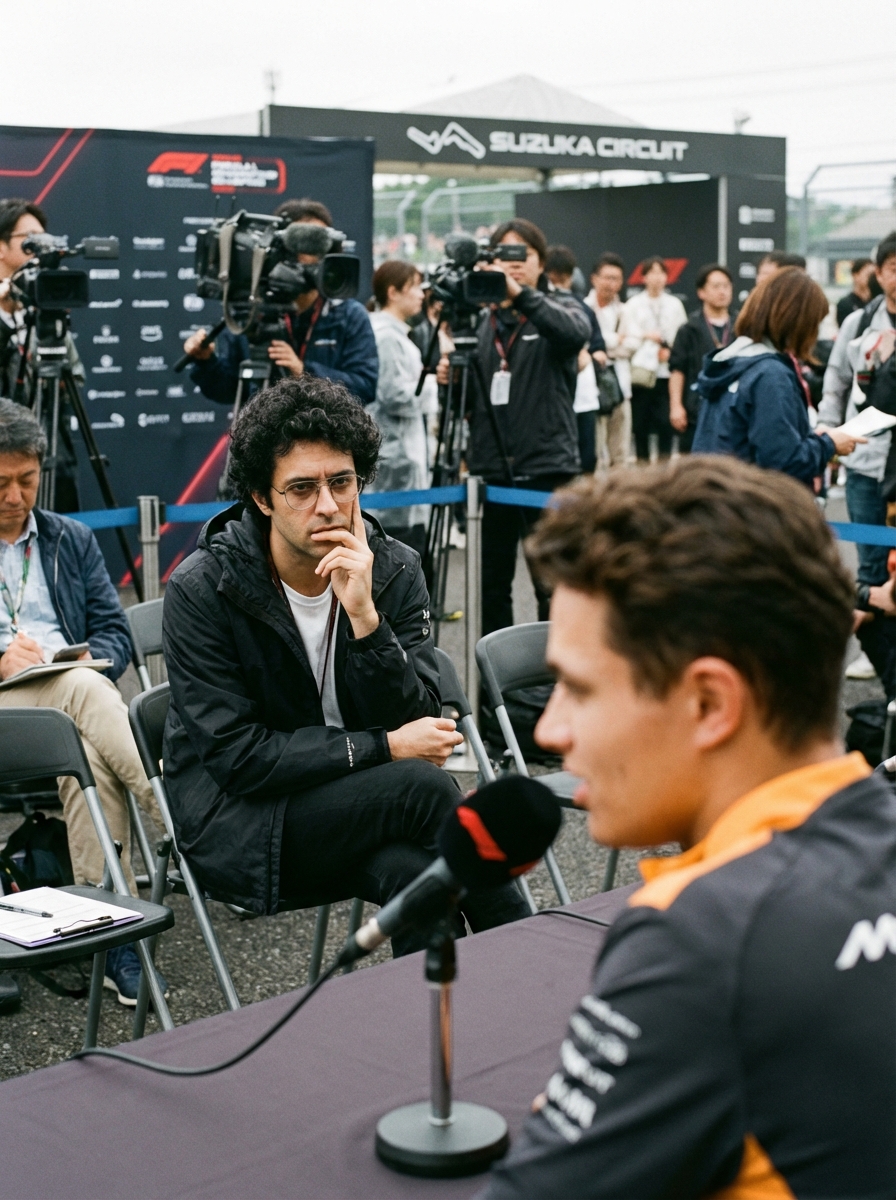
The cockpit of a modern Formula 1 car is a biometric confessional. Every spike of cortisol, every flutter in heart rate, every micro-tremor in the hands is logged, a stark digital echo of the human spirit wrestling with physics. In 2026, we are not just watching a new regulatory era unfold; we are witnessing a profound stress test of the driver's psyche. The machines are vibrating themselves to pieces, the rules are drawing vocal rebellion, and the veterans are fortifying their mental citadels against a siege of commentary. This is no longer purely a sport of engineering. It is a theater of managed emotions and public fracturing.
Hamilton's Calculated Ramparts: The Architecture of a Legacy
Lewis Hamilton’s latest salvo against media pundits—suggesting some "haven’t had anywhere near the success I’ve had"—is not a spontaneous outburst. It is a deliberate, calculated reinforcement of the narrative perimeter. He is building a rampart, stone by public statement, to separate his lived experience from external critique. I see clear echoes of Niki Lauda here, not in the raw trauma of fire, but in the meticulous construction of a public persona that overshadows and protects the raw, vulnerable talent within.
- His retorts to Nico Rosberg and Ralf Schumacher late last year were not isolated incidents. They were probes, testing the resilience of his own narrative.
- Each comment is a data point in a long-term strategy to control the story of his twilight years, ensuring his legacy is defined by his terms, not by the chatter of those he deems unqualified.
"Hamilton isn't just defending his record; he's architecting the final, unassailable chapter of his myth. The car may be competitive, but his primary work is on the biography. Every critique from a pundit is a threat to the edifice."
This is the psychological game played at the highest level. The seven-time champion understands that in the era of constant digital noise, the mind is the final frontier to be mastered. He is his own chief psychologist now, scripting sessions for the world to hear.
Verstappen's Scripted Rebellion and the Red Bull Protocol
Then we have Max Verstappen, whose threats to quit over the 2026 regulations present a fascinating counterpoint. David Coulthard may doubt the FIA will intervene, and he is likely correct. But the more intriguing question is: how much of this rebellion is authentic frustration, and how much is a conditioned pressure valve?
My belief is that Verstappen's dominance is inextricably linked to Red Bull's systematic, covert management of his formidable temper. The raw, fiery talent of his early years has been channeled, not extinguished, through psychological coaching that makes his outbursts seem strategic. His criticism of the rules? It’s permissible, even useful, rebellion—a pressure release that doesn't destabilize his core performance. It draws focus, it applies leverage, and it fits a pattern.
- His expansion into events like the Nürburgring 24 Hours is not a distraction, but a necessary outlet, a sanctioned escape to keep the engine of his competitiveness from overheating in the F1 crucible.
- The FIA won't step in because they recognize this as part of the Verstappen-Red Bull ecosystem: a 'manufactured' champion whose emotions are a tool, not a liability.
Contrast this with Hamilton's more internal, legacy-focused battle. Verstappen’s war is external, against regulations and perceived injustices, a narrative that conveniently unites team and driver against the world. Both methods are brilliant psychological plays, one introspective, the other projective.
The Trembling Machine: When Physics Meets Fear
Amidst these mental battles, Aston Martin’s plight is a visceral reminder of the physical terror drivers must suppress. Honda's confirmation that the engine vibration is worse on track than in the dyno is a chilling sentence. Imagine Fernando Alonso, a driver whose genius is built on tactile sensitivity, feeling a violent, track-specific tremor through his spine and fingertips.
- This isn't a mere performance deficit. It is a persistent physiological assault, a source of constant, low-grade fear that the machine might disintegrate beneath him.
- A fix existed in Japan, but reliability concerns vetoed it. So Alonso drove, managing not just lap times, but primal anxiety.
This is where my conviction that driver psychology trumps aerodynamics in the wet finds a dry-weather parallel. The decision-making under this specific, gnawing uncertainty—the calculation of how hard to push a trembling chassis—reveals core personality traits no engineer can design around. It is a slow-motion version of a wet-weather lap, a prolonged exposure to risk that separates the merely brave from the psychologically resilient.
The Inevitable Disclosure: A Glimpse of 2031
Where does this lead us? Daniel Ricciardo’s reflection on his Red Bull exit—fearing being "obliterated" by Verstappen—is a rare, honest glimpse into the career-ending psychic damage this sport can inflict. It is a confession that will become more common.
I predict that within five years, mandatory mental health disclosures after major incidents will be FIA policy. The Oliver Bearman crash in Japan, partly blamed on the new rules' closing speeds, is a precursor. The sport will demand transparency, ushering in an era where a driver's cortisol levels post-crash could be as scrutinized as their sector times.
This will create a new layer of drama, of scandal, of strategy. Teams will hire 'mental performance engineers' with the same status as aerodynamicists. A driver's psychological data will be a traded commodity. The biometric confessional will become public record.
Conclusion: The Human Element Fights Back
So, as the FIA, FOM, and teams meet to tweak qualifying formats and refine the 2026 rules, they are tinkering with more than aerodynamics. They are adjusting the parameters of a profound human experiment. The vibrations at Aston Martin, Hamilton's verbal fortifications, Verstappen's scripted discontent—these are all symptoms of the same truth: the human element is fighting back against an era of increasing technical determinism.
The cars may be defined by their engineers, but the 2026 season will be defined by the minds inside them. We are watching the dawn of Formula 1's most psychologically transparent, and therefore most brutally human, era. The soul of the sport is no longer silent. It is trembling, calculating, and speaking its truth. We would be wise to listen.