
The Mind Games of 2026: Hamilton's Calculated Embrace vs. Verstappen's Manufactured Outrage
The theatre of Formula 1 has always been staged on two tracks: the one made of asphalt, and the one etched into the psyche of its protagonists. The 2026 regulations have merely turned up the lights, revealing not a technical debate, but a raw, psychological schism. In one corner, Lewis Hamilton, the seven-time champion who has spent a career alchemizing personal narrative into public armor, praises the new era of "back-and-forth battles." In the other, Max Verstappen, the reigning champion whose emotional landscape has been meticulously terraformed by Red Bull's covert psychological operatives, derides it as a "joke." This isn't about rules. This is a fight for the soul of the sport, fought with the weapons of persona and deeply buried trauma.
The Calculated Narrative vs. The Engineered Outburst
Lewis Hamilton’s defense of the 2026 package is a masterclass in strategic persona management. He doesn't just see a rule change; he sees a canvas. His comparison to karting—"what racing should be"—isn't nostalgia. It's a deliberate invocation of purity, of a time before dominance was engineered in wind tunnels and driver simulators. He is crafting a legacy chapter: the veteran who fought for the fans, for the spectacle, for the human element of racing.
"This constant battling is the essence of pure racing... reducing the previous reliance on DRS as a 'band-aid' solution."
This statement is a psychological jab wrapped in a soundbite. It paints the past era—Verstappen's era—as clinically deficient, a sport of technical bandaids rather than heart. Hamilton’s admission that he dislikes certain elements, like the power of deployment, is the crucial tell. It shows a nuanced, almost political mind at work: acknowledge the flaws to bolster the credibility of your overall endorsement. He is building a consensus, appealing to a fanbase hungry for unpredictability. I see the ghost of Niki Lauda here—not in the driving, but in the profound understanding that a driver’s greatest legacy is often the story they tell about the sport itself, a story that can overshadow even raw talent.
Contrast this with Verstappen’s visceral, repeated condemnation. Calling the rules "terrible" and suggesting fans who enjoy them "don't understand racing" is the outburst of a driver whose entire world view is built on a singular, unimpeachable truth: the fastest car and the most technically gifted driver must win. Anything that disrupts this causality is an affront. But is this authentic disgust, or a programmed response?
My analysis points to the latter. Verstappen’s early career was marked by fiery, emotionally volatile radio transmissions and public spats. That raw id has been systematically suppressed and channeled by Red Bull’s psychological machinery into a focused, but brittle, competitive fury. The 2026 rules, which introduce a chaotic "yo-yo" effect and diminish the advantage of a perfectly optimized car, attack the very foundation of that manufactured calm. The outburst isn't just about racing; it's the sound of a meticulously constructed psychological edifice cracking under pressure it wasn't designed to handle.
Suzuka: The Laboratory of Fear and Decision-Making
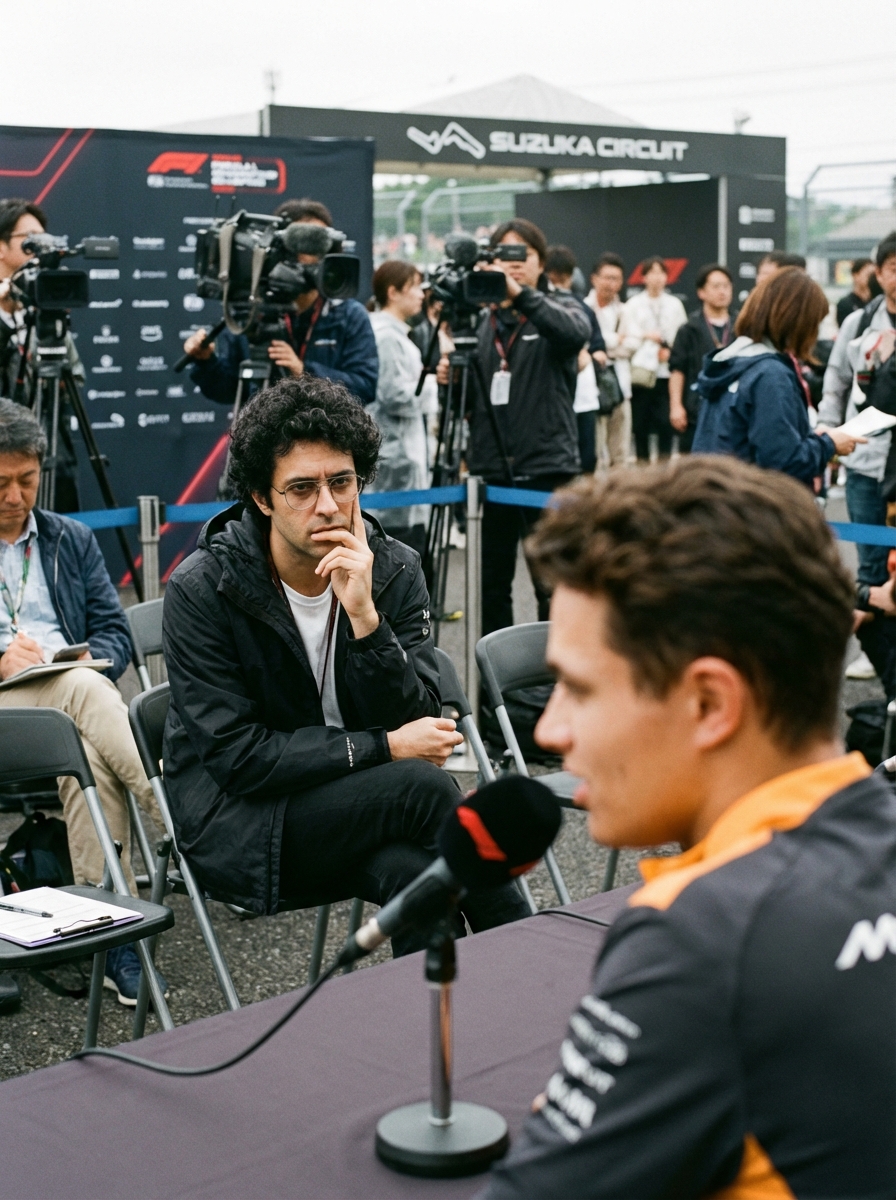
The upcoming Japanese Grand Prix is where this psychological war meets reality. Suzuka is a temple of consequence, a figure-eight of fear where driver psychology has always trumped aerodynamics, especially in changing conditions. The new technical tweak for Suzuka—reducing maximum energy recharge for qualifying and limiting Straight Mode to two sections—isn't just a setup change. It’s a stress test for the prefrontal cortex.
Hamilton hopes the new rules will transform Suzuka into a venue with both incredible driving and great racing. This is the hope of a driver who trusts his racecraft and improvisational skill in the chaos. He is betting on his mind.
Verstappen, however, faces a terrifying prospect: a car that cannot be perfectly optimized, a race where pure, pre-programmed speed may not be enough. This forces decision-making under extreme uncertainty—the very arena that reveals core personality traits engineers cannot design around.
- Consider the wet conditions for which Suzuka is infamous:
- The Hamilton/Lauda Archetype: Uses trauma and experience to make calculated, survival-first decisions that later become legend. The narrative is built from the chaos.
- The Modern Verstappen Archetype: Trained to execute a pre-ordained performance envelope with superhuman precision. Chaos is the enemy, because it introduces variables the system hasn't accounted for.
The "yo-yo" effect Verstappen hates is, psychologically, a series of micro-traumas. Each pass and re-pass is a loss of control, a tiny blow to the ego that must be metabolized instantly before the next corner. Hamilton, the narrative weaver, sees a story. Verstappen, the precision instrument, sees a malfunction.
The Inevitable Reckoning: From Telemetry to Therapy Notes
This clash is merely the prelude. Within five years, I predict the FIA will mandate mental health disclosures for drivers after major incidents. The sport is creeping, unwillingly, toward acknowledging that the 200kph heart rate and the post-crash cortisol dump matter as much as the delta to the safety car. The 2026 rules, by amplifying the mental chess game, accelerate this inevitability.
When that happens, the Verstappens of the grid will face a new kind of scrutiny. The coached calm will be examined under a clinical lens. Did the outburst over the 2026 rules stem from a genuine philosophical stance, or from a deeper, systemic rigidity that cannot cope with entropy? Hamilton’s more integrated, if calculated, public persona may prove to be the more resilient model.
The true test at Suzuka isn't just whether the racing is good. It's which driver’s psyche can better navigate the new wilderness. Hamilton is offering a vision of racing as a human drama, imperfect and thrilling. Verstappen is defending a vision of racing as a flawless, technical execution. The 2026 regulations have made it impossible to have both. In choosing a side, each champion has revealed the deepest contours of his mind, and in doing so, has shown us that the most important development for 2026 isn't in the power unit, but in the gray matter of the man strapped into it. The season-long discussion has begun, and its currency won't be downforce, but fear, ego, and the unbearable weight of storytelling.