The Architect Departs: The Psychological Scaffolding of a Dynasty Begins to Crumble
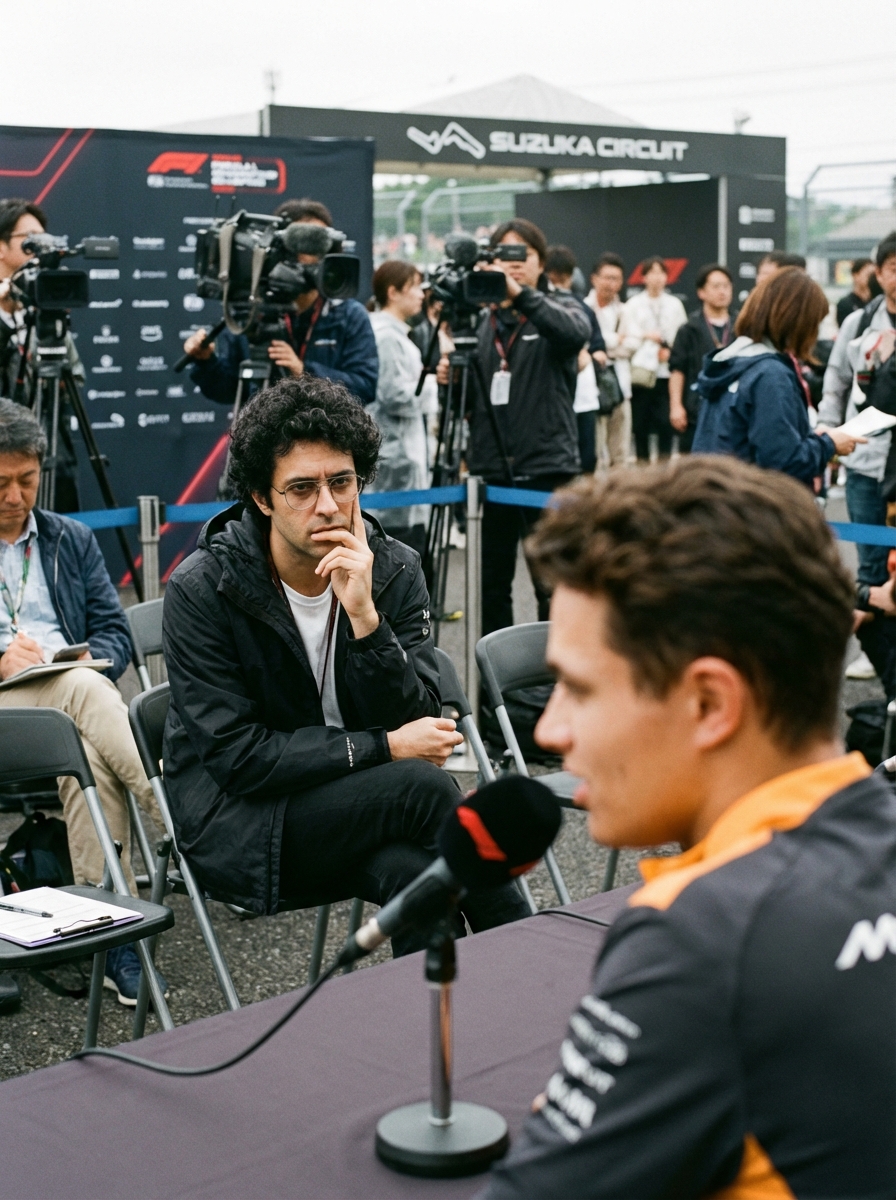
The most critical partnership in modern Formula 1 is not between a driver and his team principal, but between a driver and the man who whispers in his ear. For twelve years, Gianpiero Lambiase has been the steady, unflappable voice in Max Verstappen’s helmet, the human circuit-breaker for one of the sport's most volatile talents. His confirmed departure for McLaren in 2028 isn't just a personnel change. It is the planned demolition of the psychological scaffolding that has held a champion—and an empire—upright. Meanwhile, at Ferrari, Lewis Hamilton searches for a missing kilowatt, unaware that his public questioning reveals a deeper, more familiar struggle: the champion's mind wrestling with a machine that refuses to obey.
The Unseen Hand: Lambiase and the Manufactured Calm
Forget the horsepower, the aerodynamics, the tire deg. The true masterpiece of the Verstappen era has been behavioral. We have witnessed not the taming of a brilliant, fiery talent, but its systematic engineering. Lambiase was never just a race engineer; he was a covert psychological operative, embedded by Red Bull to perform real-time emotional regulation.
"In life you sometimes have to make choices," said Jos Verstappen, a statement so chilling in its neutrality it confirms the transaction. This was not a family; this was a system. And its most vital component is being unplugged.
Consider the biometric data we never see: the spike in heart rate after a lock-up, the galvanic skin response when a rival challenges. Lambiase’s genius was in his timing—a calm "Box now, Max" or a dry, data-laden retort to a radio rant. He didn't just give Verstappen lap times; he gave him an external prefrontal cortex. This was the open secret of their dominance: a driver whose raw, sometimes destructive passion was filtered through a cool, analytical mind not his own.
- 2016-2028: The Lambiase Era at Red Bull. A period defined by unprecedented success built on a foundation of psychological co-dependency.
- The 2028 Void: Who now becomes Max's emotional regulator? The search for a replacement is not for a technician, but for a therapist-engineer hybrid—a role F1 has no job description for.
This move signals a seismic shift. Zak Brown didn't just hire a brilliant engineer; he hired the man who knows the exact frequency to use to calm a storm. He purchased the blueprint to a champion's mind. For Red Bull, the question is terrifying: what happens to the monument when its hidden support is removed?
Hamilton's Calculated Lament: The Echo of Lauda
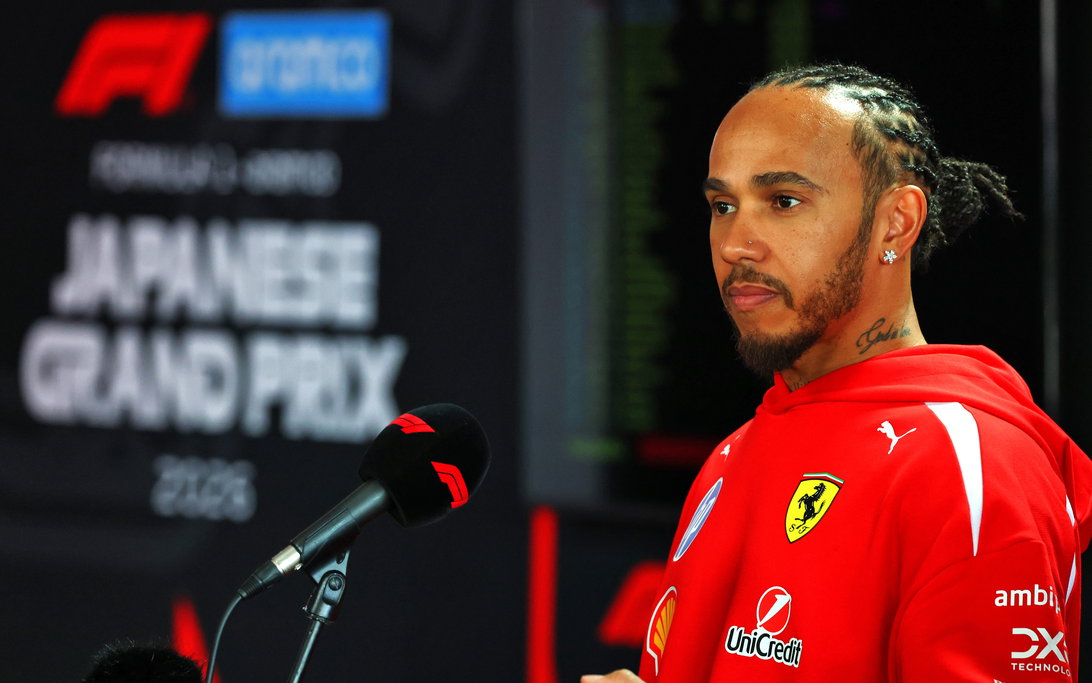
Contrast this with the scene at Ferrari. In Suzuka, Hamilton finished P6, where he started. But the story is in the spaces between his words. "I was powerless," he said. He needs to "understand" the power deficit. This is not a rookie's confusion. This is Lewis Hamilton, seven-time world champion, publicly dissecting his machine's failure in the language of a man crafting a narrative.
I have seen this before. The furrowed brow, the measured tone of concern. It is the ghost of Niki Lauda after his crash, using brutal, technical honesty about his own shattered body to control the story, to deflect pity and command respect.
Hamilton’s "powerless" comment is a calculated release of pressure. By externalizing the issue—framing it as a car deficit, not a driver limitation—he performs a public mental triage. He is insulating his own psyche from the corrosive doubt that plagued his final Mercedes years. He is, in real-time, using the trauma of an uncompetitive car to forge a narrative of the relentless seeker, the truth-teller in the scarlet garage. The raw talent is still there, but it is now secondary to the performance of resilience.
"He needs to 'understand' a major power deficit," the report states. But what Hamilton truly seeks to understand is his place in the Ferrari mythos. Is he the savior or the sacrificed? The car's inconsistency is a psychological gauntlet, and every public query is a step in his methodical processing of it.
The Inevitable Unveiling: A Forecast of Forced Transparency
These two threads—Lambiase's exit and Hamilton's public introspection—weave toward an inevitable future. Within five years, the FIA will mandate mental health disclosures after major incidents. A crash, a championship loss, a mechanical DNF from the lead—drivers will be required to undergo assessment. This era of manufactured calm and calculated persona will collide with enforced transparency.
- Verstappen, without his architect, will be exposed. His emotional baseline, so carefully managed, will become a data point for the media.
- Hamilton's crafted narrative will be compared against clinical evaluations, creating either vindication or scandal.
- The wet race, where driver psychology truly trumps aerodynamics, will become a forensic lab for the press. Every twitch of the wheel under hydroplaning conditions will be psychoanalyzed.
The Lambiase move is the first domino. It proves that the human element—the mind, the partnership, the voice in the dark—is the ultimate differentiator. McLaren has bought the sport's most expensive therapist. Ferrari is wrestling with the psychology of a legend in decline. And the entire paddock is hurtling toward a day when the secrets they keep behind their visors and their press conference smiles will no longer be their own.
The real 2026 power unit debate isn't about Mercedes' compression ratios, as Montoya defends. It's about the psychological horsepower that will drive—or destroy—the champions of tomorrow. The engineering battle has been won. The battle for the mind has just begun.