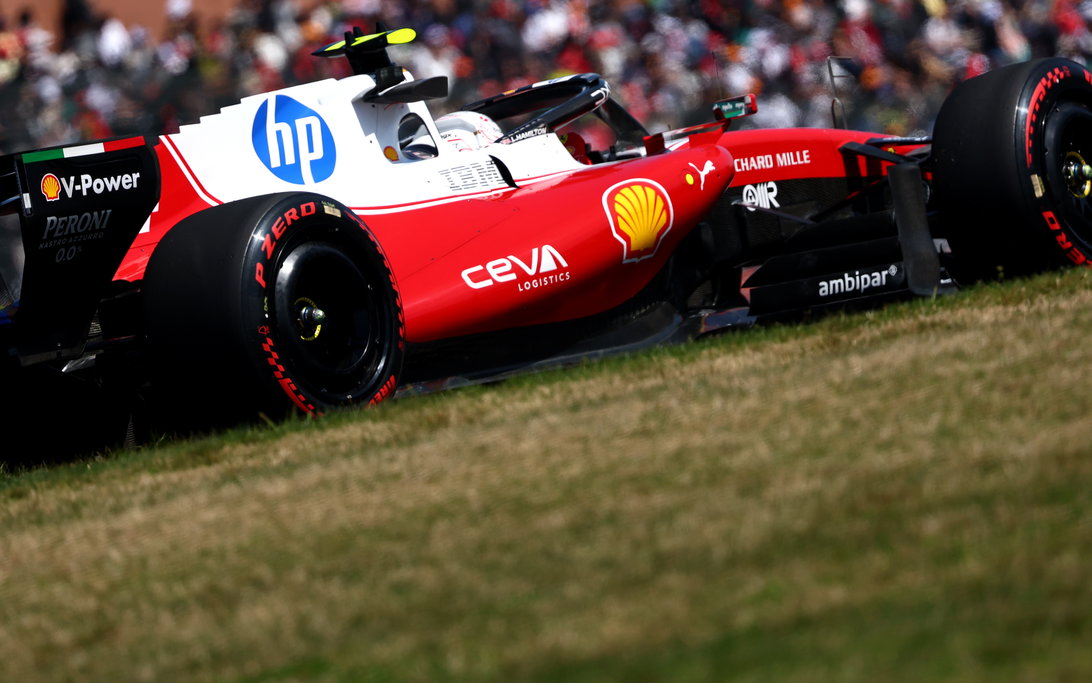
The Heartbeat is Missing: Suzuka's Silent Corners and the Data That Killed the Roar

I pulled the GPS traces for the 130R corner, Suzuka's sacred, flat-out left-hander. The data stream should look like a steady, screaming line. A defiant, 330-kph middle finger to physics. Instead, the 2026 trace from Max Verstappen's car shows a cardiac arrest. A 50 kph flatline in the middle of the corner. Not from a lift, not from a mistake, but from a command. The battery was hungry. The algorithm demanded a sacrifice. The driver, the supposed hero, was merely the vessel for its supper. This is "super-clipping," and it's not a technical hiccup. It's the sport's new, arrhythmic heartbeat.
The story from the paddock is one of driver frustration. Lewis Hamilton calls it "not great." Oliver Bearman mourns the loss of "balls to the wall" commitment. But their words are just the emotional metadata. The real story is in the delta. It's in the silence where a scream should be. We are watching the slow, precise replacement of instinct with instruction, and Suzuka—a circuit that once separated the brave from the merely fast—is the canary in the coal mine.
The Algorithm in the Driver's Seat: Super-Clipping as Symptom
The FIA's response to the uproar was a data-point adjustment: a reduction in permitted energy deployment for qualifying from 9MJ to 8MJ. A 1-megajoule band-aid on a hemorrhaging philosophy. George Russell saw through it immediately, arguing it didn't go far enough.
"It's like telling a concert pianist they can only play 88 keys instead of 89 to make the performance more interesting. You've missed the point. The instrument itself is being re-tuned by someone who's never felt the keys."
He's right. This is the core tension of the 2026 regulations laid bare. Energy management is nothing new. But when the management is so violently intrusive that it dictates throttle application through a corner like 130R, we have crossed a line. The driver is no longer wrestling a beast; he is babysitting a spreadsheet. The telemetry channels commanding the Energy Recovery System carry more weight than the driver's own nerve endings.
- The 2004 Benchmark: I think of Michael Schumacher's 2004 season with Ferrari. The consistency was inhuman, but it was his. It came from a symbiotic, almost violent understanding between man and machine, refined over years. The car was an extension of his will. Today, the car is an extension of the strategy group's simulation. Schumacher's lap times were a metronome of genius. Now, we get a jagged ECG of energy quotas.
This isn't progress. It's proceduralization. We are trading the unpredictable, glorious spike of human overreach for the safe, efficient plateau of system optimization. The story of a lap is no longer "how hard did he push?" It's "how well did he comply?"
The Human Data: Struggles That Numbers Can't Solve
While the super-clipping debate is a macro-level crisis of philosophy, the garage-by-garage data tells more intimate, human stories of pressure. And here, the numbers are archaeologists, digging up fractures.
Honda & Aston Martin: The Vibration Equation
Honda's Shintaro Orihara reports progress on power unit vibrations with Aston Martin, citing "useful data" obtained. This is pure, technical data-sleuthing, and it's commendable. A vibration frequency is a solvable puzzle. It's a waveform to be dampened. But it also highlights a rocky marriage; the vibrations aren't just mechanical, they're metaphorical for a partnership still finding its sync. The data they seek is cold and clear. It's the kind of problem this era is built to solve.
Red Bull's "Miracle": When the Dataset Has No Answers
Then, there's Red Bull. Max Verstappen's description of needing a "miracle" to fix the RB22's "big problems" is the most telling data point of the weekend. Team principal Laurent Mekies promises to get on top of "fundamental issues."
What does a "fundamental issue" look like on a data trace? It's not a spike or a dip. It's a baseline that's fundamentally wrong. It's every channel whispering that the core concept is broken. When a driver of Verstappen's caliber invokes a miracle, he's admitting that the language of data—the thousands of parameters his team scrutinizes—has failed. The intuition in his backside, the feel in his hands, is screaming a truth that the sensors cannot yet quantify. This is the human story buried in the telemetry: the profound frustration when feel and data are in irreconcilable conflict.
It brings to mind the unfair narrative around Charles Leclerc. We obsess over his occasional error—the emotional spike—while the data from 2022-2023 shows he was the most consistent qualifier on the grid. The story wasn't his mistakes; it was the immense, unsustainable pressure created by a car and strategy that demanded perfection. The numbers tell the story of pressure, not error. Verstappen's "miracle" quote is the same: an emotional outlier that points to a systemic, data-resistant failure.
Conclusion: The Silent Symphony
So, what's next for Suzuka? The qualifying session will be a lab experiment: does the 8MJ limit reduce the visual horror of the 130R flatline? Probably, a little. The race will be a marathon of algorithmic pacing.
But the larger trajectory is set. We are five years away, at most, from a "robotized" race. Pit stops called not by a strategist's gut amid changing weather, but by a live, AI-powered model that has already simulated the next 20 laps. Overtakes will be "recommended" by car-to-car delta projections. The driver will be the most sophisticated, most expensive sensor in the loop.
Suzuka 2026 will be remembered not for who won, but for the corner that didn't matter. The 130R was silenced. Not by rain, or a crash, or even a superior car. It was silenced by a mandate. The numbers on the timing sheet will be close, competitive, efficient. But they will have no soul. They will tell us everything about energy deployment, and nothing about the human heart that once had to pound loud enough to be heard over the engine. I have the data from 2004. I can show you the heartbeat. Today, I'm just logging the silence.