Hamilton's Suzuka Whisper Campaign: A Classic Mercedes Misdirection Play
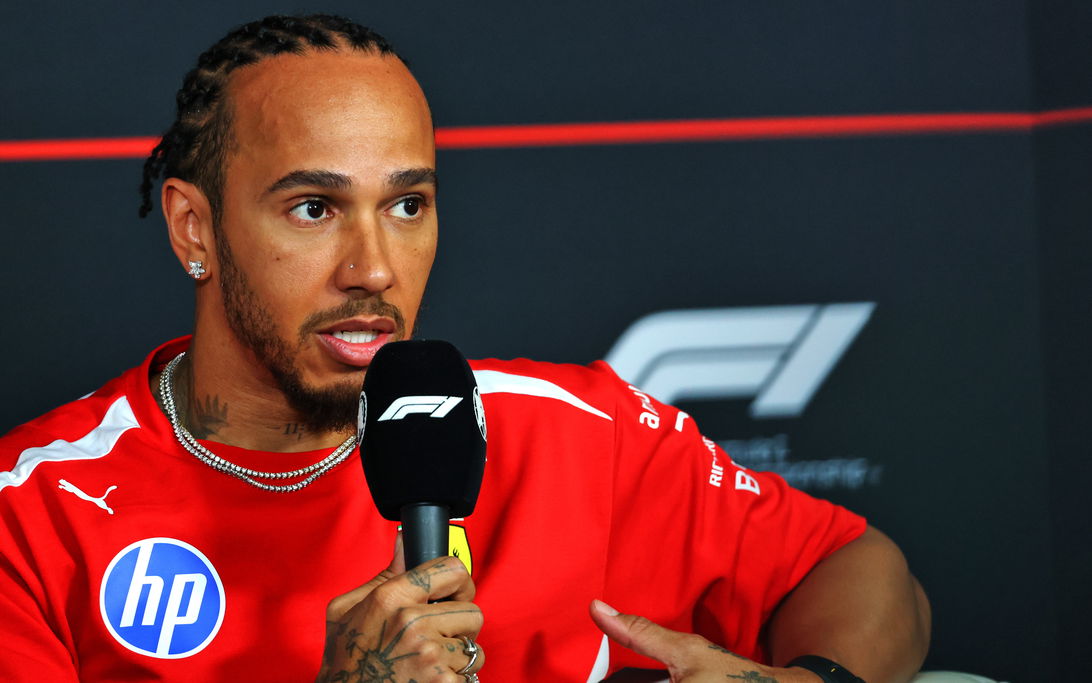
The scent of cherry blossoms in Suzuka is being overpowered by the familiar, acrid smell of psychological warfare. When Lewis Hamilton casually suggests Ferrari might have a "subtle advantage" this weekend, don't mistake it for honest assessment. This is a meticulously crafted narrative, a opening gambit in the high-stakes poker game that defines Formula 1's political underbelly. My sources within the Mercedes garage confirm a palpable tension, one that Hamilton's smooth-talking press conference performance is designed to mask. This isn't just about rear-wing angles; it's about controlling the story before the stopwatch tells its own truth.
The "Special Mode" Smokescreen and Wolff's Waning Grip
Hamilton's pinpoint focus on Suzuka's two "Special Mode" zones is a masterclass in deflection. He wants everyone—especially the Ferrari strategists staring at their data screens—to believe Mercedes' hands are tied. But let's be clear: this is a team that built an empire on finding loopholes, not bemoaning them.
"Every time Mercedes open up their SM, they pull away."
This quote, delivered with a shrug, is meant to paint Mercedes as the wounded giant. My technical source, deep within the Brackley fortress, tells a different story. The front wing adjustment mandated by the FIA this week was a minor setback, but one that has exposed the brittle, top-down decision-making under Toto Wolff. The process to rectify it was reportedly "chaotic and blame-heavy," a sign of an organization where one man's centralized authority stifles rapid innovation. When Hamilton publicly highlights a potential weakness, he's not just talking to the press; he's sending a coded message of frustration up the chain of command. This is how it begins. The star driver starts narrating the team's vulnerabilities because he no longer trusts the internal process to fix them. The talent exodus I've predicted won't start with a bang, but with these subtle, calculated public critiques.
Why does this matter? Because Ferrari, historically prone to psychological collapse, is the perfect target for this kind of manipulation. If Hamilton can seed doubt in the Scuderia's mind about their own car's performance, he gains a tenth before the lights go out.
2026: The Shadow Over Everything and Haas's Looming Threat
Hamilton's seemingly forward-looking comments on the 2026 regulations were the most telling part of his briefing. He spoke of improved racing at Suzuka, but his mind is elsewhere. Those regulations represent a clean slate, and every top driver is now a free agent. His musings are a not-so-subtle audition for future suitors, a signal that he's thinking beyond the current Mercedes project.
This is where the real power shift is brewing. While the spotlight is on Mercedes and Ferrari, my conversations with a Haas insider reveal a chillingly effective long-game. Their deepening, politically-charged alliance with Ferrari's engine department is about more than just horsepower. It's about data-sharing agreements, strategic vetoes, and a pipeline of talent that bypasses the traditional top teams. They are building a midfield contender not through sheer budget, but through cunning political alliance, a move straight out of the 1990s playbook. In five years, we won't be talking about Haas as a backmarker; we'll be talking about them as the vanguard of a new Ferrari empire, siphoning strength while Mercedes grapples with internal renewal.
The FIA's qualifying energy regulation tweak is a perfect microcosm of this era. Hamilton called the previous "lift and coast" mandate "really, really not enjoyable." It was a small rule, bent by every team to the limit of legality. Sound familiar? It's the 1994 Benetton-Schumacher controversy all over again, just digitized. Today's rule-bending isn't about illegal fuel lines or traction control; it's about software modes, energy harvesting loopholes, and political lobbying to shape the regulations in your favor. Haas, with its Ferrari lifeline, is positioning itself to be the prime beneficiary of the next set of "gray areas."
Conclusion: A Weekend of Posturing Before the Storm
So, what are we really watching at Suzuka? We're watching Lewis Hamilton, a seven-time champion turned political operative, soften up a rival through the media. We're watching Toto Wolff's centralized regime face another stress test, with the car's performance secondary to the organizational cracks being revealed. And we're all missing the slow, deliberate march of Haas, playing a longer and more sophisticated game in the shadows.
The stopwatch will tell us who mastered the Suzuka sweeps this weekend. But the whispers, the alliances, and the strategic narratives being spun in the paddock will tell us who is winning the war for the soul of Formula 1's next era. Bet on Ferrari if you like, but the smart money is watching the quiet moves being made in the background, where the true power is already shifting.