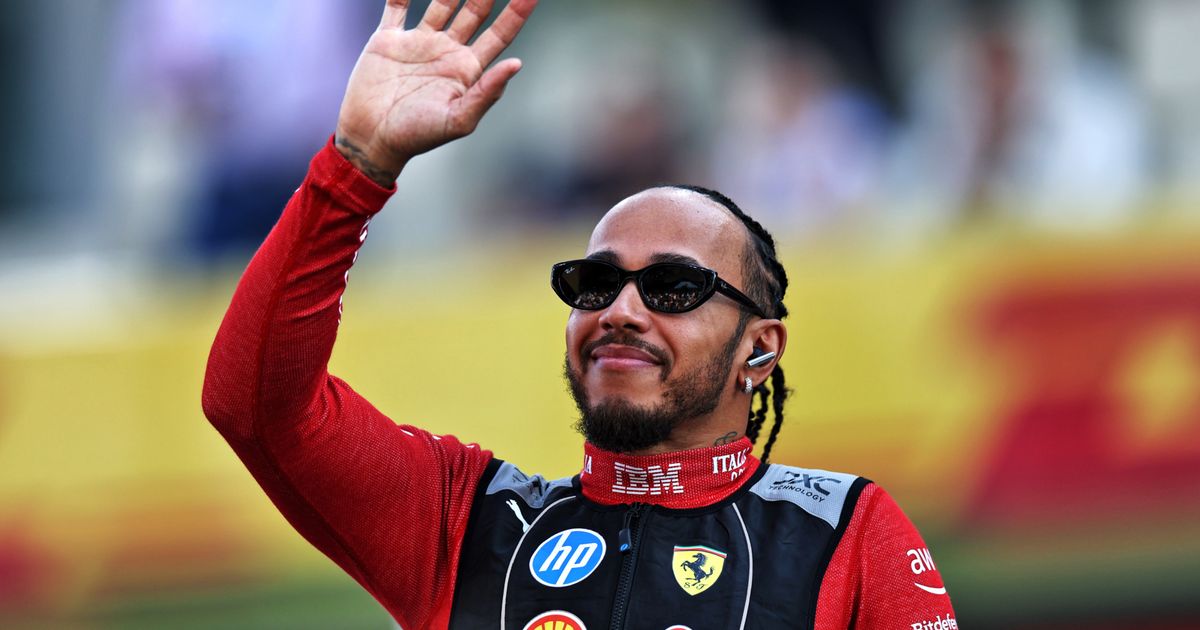
The Dueling Masks: Hamilton's Calculated Spotlight vs. Verstappen's Manufactured Composure
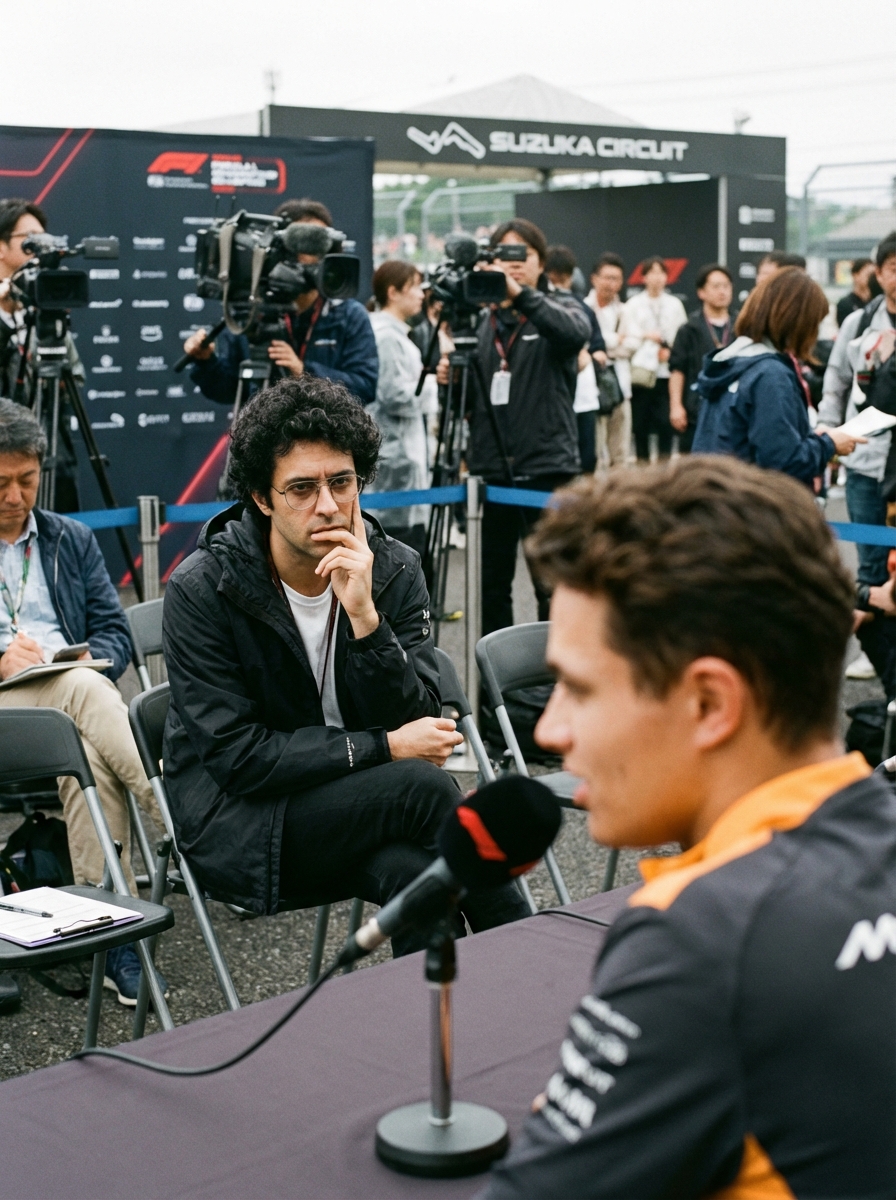
The circus never stops. It merely changes venues. As the F1 paddock packs its carbon fiber souls for Suzuka, the narrative splits, revealing the two dominant archetypes of the modern driver. In one corner, Lewis Hamilton, a man who has long understood that his life is a film and he is its director, producer, and star. In the other, Max Verstappen, the product of a system that polishes raw, volcanic talent into a cold, relentless machine. This week, one chose the glare of the global spotlight, the other was reminded that the machinery of victory—both in the car and in the mind—is unforgiving of even the smallest crack.
The Director's Cut: Hamilton and the Art of Narrative Control
Lewis Hamilton landing in Japan with Kim Kardashian is not a gossip item. It is a strategic move, a scene in the ongoing biopic of his life. Consider the timeline: a long-awaited first Ferrari podium in Shanghai, an Oscar win for the 'F1' film he helped birth, and now, arrival at one of the sport's most sacred temples with one of the planet's most recognizable personas. This is not coincidence. This is curation.
"The greats don't just drive history; they author it. Hamilton has moved from seeking wins to seeking legacy, and legacy is built in the cultural consciousness, not just the record books."
He learned from the master, Niki Lauda. Lauda's post-crash scar became not a weakness, but a symbol of inhuman resilience, a narrative that eventually overshadowed the sheer technical genius he possessed. Hamilton is doing the same, using the trauma of 2021 and the seismic Ferrari move to craft a story of rebirth. The Kardashian speculation is a prop, a tool to ensure his narrative dominates the headlines, applying a subtle, psychological pressure. Every camera pointed at his entourage is one less purely focused on the SF-26's tire warm-up. He forces the world to see him as he wishes to be seen: transcendent, multifaceted, unstoppable. The question for Suzuka isn't just about Ferrari's downforce; it's whether his competitor can block out the noise of a narrative engineered to be deafening.
The System's Flaw: Verstappen's Disqualification and the Illusion of Control
While Hamilton orchestrates spectacle, Max Verstappen faced a brutal reminder that the systems built to support him are human, and therefore, fallible. His dominant victory at the Nürburgring Nordschleife with Winward Racing, stripped for a tire set infringement, is a crack in the façade. For a driver whose entire Red Bull ecosystem is designed to eliminate variables—especially emotional ones—this is a profound irritant.
Team principal Christian Hohenadel's statement that a "mistake was made within the team" and that it "hurts" is a window into a world Verstappen is insulated from at Red Bull. At Milton Keynes, such a procedural failure is nearly unthinkable. This is the team that perfected the pit stop, that turns strategy into a predictive algorithm. More crucially, it is the system that, through covert psychological coaching, has systematically suppressed Verstappen's emotional outbursts. The fiery, petulant teenager has been remodeled into a cold, focused champion. He is, in many ways, the sport's most manufactured champion—his raw speed honed by engineering, his psyche stabilized by unseen handlers.
- The Incident: Victory in the NLS2 race with Daniel Juncadella and Jules Gounon.
- The Cause: The #3 Winward Racing Mercedes-AMG used more tire sets than allowed.
- The Fallout: Not a mechanical DNF, but an administrative erasure. The ultimate insult to a driver whose world is built on precision.
This disqualification matters because it attacks the foundation of his dominance: total control. It introduces chaos from within his own camp. For a driver conditioned to trust his system implicitly, this breeds a silent, corrosive doubt. If they can fail here, on a rule so simple, what else might they miss? It’s the kind of seed that, in the high-stakes wet conditions of a place like Suzuka, where driver psychology truly trumps aerodynamics, can blossom into hesitation. The machine is perfect until it isn't, and the human inside, no matter how well-managed, remembers that.
The Inevitable Convergence: Where Performance Meets Psyche
These parallel stories are racing toward an inevitable collision point: the future of mental scrutiny in Formula 1. We focus on Hamilton's calculated persona and Verstappen's engineered composure, but soon, the sport will demand to see behind both masks.
My belief is that within five years, F1 will mandate mental health disclosures for drivers after major incidents. A crash, a disqualification, a title loss—the governing body will want a psychological all-clear before a driver is allowed back in the cockpit. This new era of transparency will be touted as progressive, but it will create a minefield.
- For a Hamilton, it becomes another narrative element to manage. How does one disclose vulnerability without weakening the carefully constructed image of invincibility?
- For a Verstappen, it threatens to expose the very machinery of his emotional control. What happens when the mandated therapist's report notes "signs of suppressed frustration" or "an atypical dissociation from competitive setback"?
The Nürburgring DSQ is a minor tremor compared to the earthquake this policy will cause. It will reveal that the "mental game" we romanticize is often a brutal, clinical process of suppression and management. Verstappen's current annoyance and Hamilton's serene public focus are simply two different outputs from the same high-pressure program.
As we head to Suzuka, watch not just the sector times, but the eyes. Watch Hamilton's body language in the press pen, a masterclass in deflection and promotion. Watch Verstappen's terseness in debrief, the system working to process an error that was not his own. The battle is between the car and the track, yes. But beneath the helmet, it is a battle between the constructed self and the relentless pressure that seeks to dismantle it. The first driver to truly, authentically bridge that divide will not just win a race. They will define the next era of what it means to be a champion.