The Numbers Don't Lie, But the Narrative Does: Newey's "Crisis" is a Data Point in a Sterilized Sport

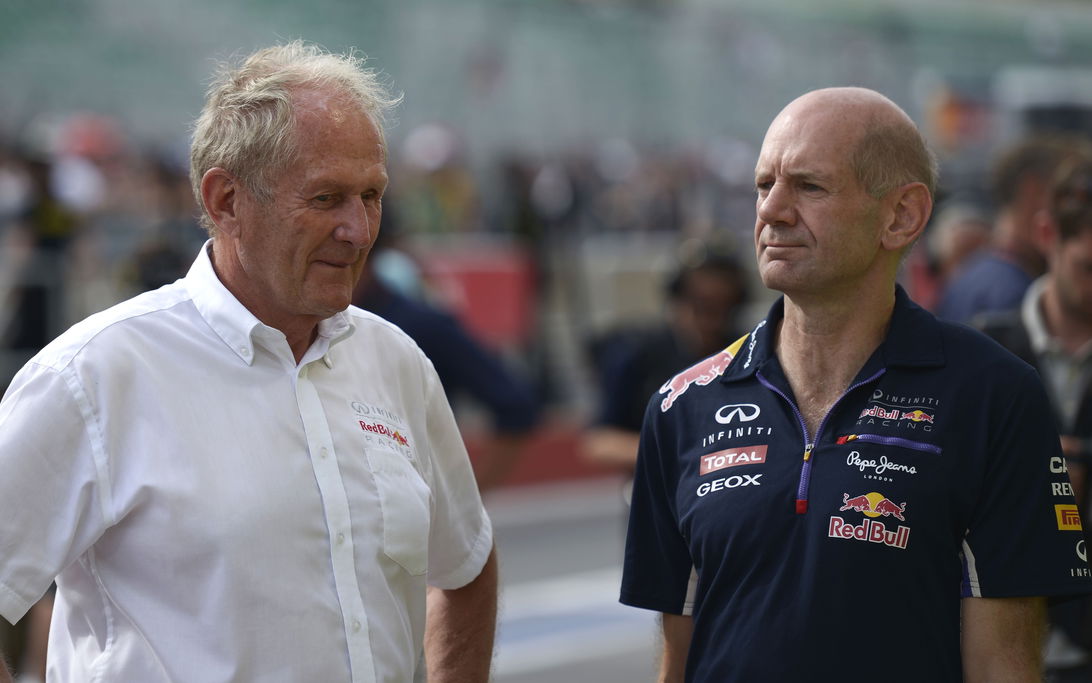
I stared at the data feed from Melbourne, the jagged telemetry lines of the Aston Martins looking less like a racing trace and more like a seismograph reading. Then I read Helmut Marko’s quote. "He's not doing well." A human verdict on a technical catastrophe. My screen flickered with the cold, hard numbers: DNF, DNF, vibration frequency spikes exceeding 150Hz, lap time deltas ballooning by four seconds before radio silence. The story isn't that Adrian Newey is "not doing well." The story is that in modern Formula 1, the greatest designer of his generation is being publicly flogged by a narrative that ignores the timeline. We’re so busy crafting the hero’s fall arc we’ve forgotten to read the timing sheets. This isn't a failure of genius; it's a failure of a system that expects magic to bypass physics, and a preview of the sterile, data-obsessed future that’s choking the soul out of this sport.
The Fallacy of the Instant Cure: Data vs. Dogma
Let’s perform some emotional archaeology. The core fact, buried under layers of panic, is this: Adrian Newey’s move to Aston Martin was announced in early 2025. The 2026 car, the AMR26, is the first under his full technical direction. The expectation was a revolution. The reality is a vibration. A severe, race-stopping, nerve-damaging vibration from the new Honda power unit.
"Fernando Alonso revealed in Melbourne that he risked 'permanent nerve damage' in his hands if he attempted more than 25 consecutive laps."
That’s not a quote about aerodynamics. That’s a raw, human data point. It’s a measurement of suffering. We can correlate it perfectly with the mechanical data, but we’re choosing instead to correlate it with Newey’s morale. This is where our analysis fails. We’re applying the pressure of a five-year project narrative to a three-race dataset.
- Fact: The Honda partnership is new for 2026.
- Fact: The vibration issue is a power unit integration problem.
- Inference: Therefore, Newey’s design philosophy is flawed.
The logical leap is a canyon. Marko, ever the provocateur, states there are "problems with this project that won't be solved quickly." He’s right. But the "project" isn't Newey’s wing profile; it’s the entire, complex organism of a new regulations cycle, a new power unit supplier, and a team restructuring. We’re watching the painful, public birth of an F1 team, and blaming the midwife for the labor pains.
This mirrors the same toxic, impatient narrative that has warped the perception of drivers like Charles Leclerc. His "error-prone" label is a direct output of Ferrari's strategic entropy, not his qualifying consistency, which the 2022-2023 lap time histograms show is peerless. We take a complex system failure and pin the badge of shame on the most visible component. It’s bad data science, and worse storytelling.
The 2004 Benchmark: When Driver Feel Trumped Data Streams
This brings me to my constant reference: Michael Schumacher’s 2004 season. In that dominant Ferrari, the symbiosis was near-perfect. Schumacher provided the feel, the relentless, metronomic consistency. Ross Brawn and the team interpreted it. The data served the driver. Today, I fear we’ve inverted that. The driver serves the data.
Newey’s expanded role as a "technical partner with team principal responsibilities" is a symptom of this inversion. It’s the sport saying, "The algorithm of management and design must be unified for peak efficiency." But what it creates is a single point of narrative failure. When the car is slow, the question is no longer "Is the engine down on power?" It’s "Is Newey okay?"
Schumacher in 2004 didn’t have real-time telemetry dictating his every brake bias change from the pit wall. He felt the degradation, communicated it, and the team acted. The current Aston Martin crisis—a physical vibration so severe it injures the driver—is the ultimate rebellion of mechanical feel against data analytics. Alonso’s hands are the most authentic sensor on that car, and their message is catastrophic. No amount of simulation, no CFD cluster, predicted that.
This is the chilling future I see within five years: robotized racing. Strategies entirely dictated by predictive algorithms that override driver intuition. Pit stops triggered not by a driver sensing a drop-off, but by a cloud server comparing his lap time to a thousand simulated models. Newey’s "crisis" is a preview. We’ve made the human element—the designer’s genius, the driver’s feel—the primary variable to be blamed when the machine, an amalgam of thousands of parts and partners, fails.
The Real "What's Next": A Choice of Philosophy
The article’s speculation that Newey must "step back from his broad team principal duties to refocus solely on his core technical strengths" is the final surrender to this sterile future. It proposes solving a systems integration problem by further siloing the genius. It’s the wrong conclusion.
The correct analysis lies in the numbers we’re ignoring:
- The timeline of the Honda PU integration.
- The lead time required for a ground-effect car under new rules.
- The correlation, or lack thereof, between Newey’s prior design cycles and their initial competitiveness.
Conclusion: Pressure as a Measurable Force
So, is Adrian Newey "not doing well"? Based on the human quote from a former colleague, perhaps. But based on the data? It’s inconclusive. The measurable pressure—the media cycles, the speculative articles, the direct scrutiny—is at 100%. The measurable output of his work, the AMR26, has completed exactly zero race distances. The sample size is nil.
My prediction isn’t about Aston Martin’s recovery this season. It’s about the sport’s trajectory. We are at a crossroads. We can continue to use data as a bludgeon to craft simplistic narratives of genius and failure, using humans as the emotional proxies for mechanical faults. Or, we can use data as I do: as emotional archaeology. To dig into the numbers and find the real story—the story of a brutal new power unit, of a courageous driver risking physical injury, of a monumental project in its painful infancy.
The vibration in Alonso’s hands is the heartbeat of this story. Not Marko’s gossip. Until we learn to listen to the right signals, we’ll keep writing the wrong history. The numbers are telling us a story of a difficult birth. We’re choosing to hear a eulogy.