The Ghost in the Machine: Honda's Return Haunted by the Psychology of Absence
The tremor begins long before the engine fires. It is a vibration in the corporate psyche, a frequency of doubt humming just below the threshold of hearing, felt only in the pit of a driver's stomach as he awaits the formation lap. At Suzuka, the air should smell of cherry blossoms and high-octane promise. For Aston Martin, it smells of scorched wiring and shattered timelines. Honda, the prodigal engineering giant, has returned home not to a celebration, but to an intervention. Their admission is technical: years away from the sport crippled their organization, leading to catastrophic reliability. But the real story is written in the biometric data of Fernando Alonso's clenched jaw, in the forced calm of Lance Stroll's radio silence. This is not a power unit failure. It is an institutional nervous breakdown.
The Organizational Void: More Than Just Empty Desks
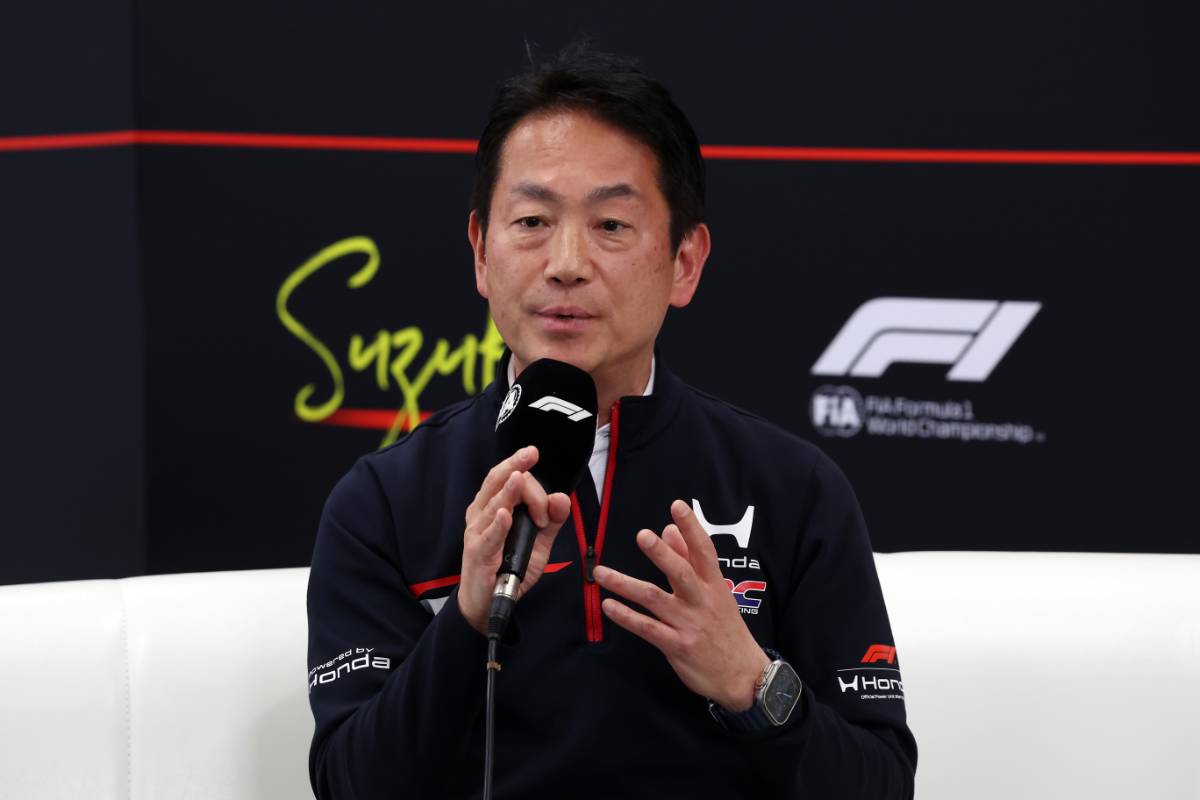
Honda President Koji Watanabe speaks of an "organizational gap," a sterile term for a profound psychological rupture. They stepped back at the end of 2021. The factory in Sakura did not go dark; it fed championship-winning engines to Red Bull. But a supplier's mindset is a spectator's mindset. The relentless, symbiotic pressure of a works partnership—where every twitch of a chassis engineer's hand changes the load on your internals—that pulse faded. That muscle memory atrophied.
"Our Formula 1 activity was quite limited... it took a bit of time to rebuild the organization."
This quote is a masterpiece of corporate understatement, a haiku of regret. It admits that F1 is not merely a technical puzzle, but a living, breathing organism. The "organization" Honda speaks of isn't just engineers and draftsmen. It is the unspoken network of trust, the shared trauma of all-nighters, the collective intuition that senses a harmonic imbalance from a single anomalous data point. They lost the feeling. And now, a severe vibration issue, a physical manifestation of that instability, is tearing their batteries—and Aston Martin's season—apart.
- The Red Bull Paradox: Here lies the exquisite psychological twist. Honda never fully left. They were the silent, reliable heartbeat behind Max Verstappen's dominance. They witnessed, up close, the ultimate expression of systemic control: a driver whose own volatile emotions were meticulously engineered into cold efficiency. They saw the machine work perfectly, but they were merely a part in it, not its nervous system. Transitioning from that passive, if successful, role to being the central nervous system for an entirely new, hungry team like Aston Martin requires a different psychology entirely. One they have yet to rebuild.
The Human Cost: When Aspiration Meets Desperation
For Aston Martin, this is more than a setback. It is an existential threat to a carefully crafted narrative of ascent. Lawrence Stroll’s project is built on ambition as tangible as its new factory walls. To have that ambition grounded by a fundamental, partner-induced flaw is a recipe for a corrosive, silent blame game. The team’s psychology is now in crisis management mode, a state that eats away at long-term vision.
Fernando Alonso, the ultimate competitor, the man who can sense weakness in a rival’s braking profile from three corners back, is now a prisoner to it. Every session becomes an exercise in damage limitation, not exploration. His genius for extracting 110% from a machine is useless when the machine’s goal is simply to survive 90% of a race distance. What does that do to a driver’s psyche? It replaces aggression with apprehension. It turns instinct into calculation, and in F1, hesitation is the father of failure.
Lance Stroll, perpetually measured against both his teammate and his father’s investment, faces a different torment. The car’s frailty removes any chance to prove his mettle on pure performance. He is left not racing, but surviving, a role that offers no glory and amplifies every critique. The vibration isn't just in the battery; it's in the very foundation of the team's confidence.
A Forecast: The Coming Storm of Scrutiny
This saga is a prelude to the future I foresee. Within five years, the sport will mandate mental health disclosures after major incidents. Imagine if we applied that lens today to the Aston Martin garage. The "significant investment" and "title aspirations" cited in the original article aren't just financial terms; they are psychological contracts. The breach of that contract—the promise of a works partnership turning into a public litany of failures—creates a form of collective trauma.
If a driver must later disclose the anxiety of driving a car they know is a ticking bomb, or the depression of a season lost before it began, what then? Honda’s "organizational gap" becomes a case study in causing collateral psychological damage. The transparency would be brutal, necessary, and would redefine how we hold manufacturers accountable. It’s no longer about letting down a team, but about impacting the mental fabric of its people.
Furthermore, this situation throws the Verstappen model into sharp relief. Red Bull’s system is designed to insulate the driver from precisely this kind of operational chaos. The car is a given, a dominant constant. His psychology is the only variable they seek to control. At Aston Martin, with Honda’s stuttering heart in the car, no amount of driver psychology can compensate. The machine’s instability overwhelms the man’s stability. It is the antithesis of the Red Bull method.
Conclusion: The Long Road Back is a Mental One
Honda’s path forward, as they state, is "crisis management." Finish a race. Then finish another. It is a humbling, step-by-step rebuilding of trust, component by component, lap by lap. But before they can calibrate the fuel flow, they must recalibrate the collective nerve.
They are not just solving a vibration. They are learning to feel again. They are rebuilding the shared subconscious of a top-tier F1 operation—the part that knows without being told, that anticipates before the sensor spikes. Until that returns, Aston Martin’s drivers are not pilots of a cutting-edge machine, but test subjects in a high-speed experiment in institutional rehabilitation. The 2026 championship may be lost, but the real battle is for the soul of a partnership. Every failed finish is a tremor of doubt. And in F1, doubt is the most destructive resonance of all.