The Ghost in the Machine: Honda's Vibration Fix is a Band-Aid on Aston Martin's Broken Spine

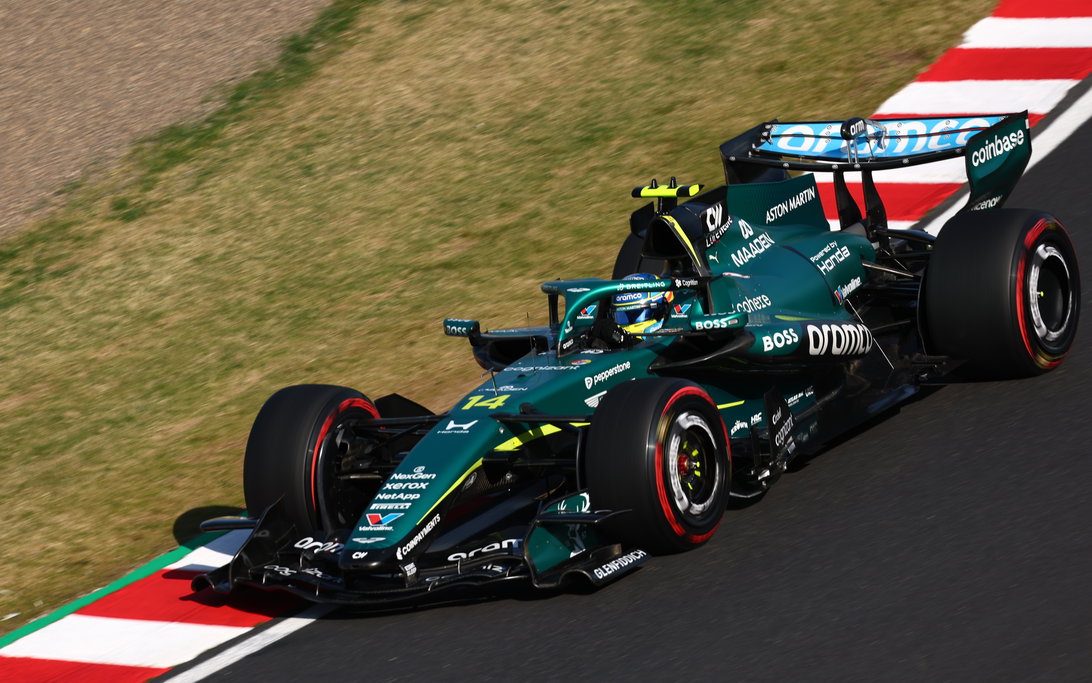
You can hear it before you see it. In the Suzuka paddock, the sound of the Aston Martin AMR26 isn't just the whine of the MGU-K or the bark of the Honda ICE. It’s a deeper, more sinister hum, a resonant frequency that seems to rattle the very air in its garage. I watched Fernando Alonso climb out after FP2, and it wasn't the usual thousand-yard stare of a driver searching for time. It was the vacant, jarred look of a man who’d just spent an hour in a paint shaker. Honda may have found "useful data" on their vibration plague, but let's be clear: they've merely diagnosed the fever while the patient is dying of the disease.
The fundamental lack of pace in that green car isn't a consequence of the shakes; it's a separate, more terminal illness. Solving one without the other is like polishing the brass on the Titanic. This is the brutal reality of the new Honda-Aston Martin "works partnership," a marriage of convenience that, so far, has only been convenient for the teams ahead of them. The vibrations are a safety scandal. The lack of speed is an existential one.
The Nerve Damage is More Than Physical
When Adrian Newey warns that the vibrations could cause "permanent nerve damage" to his drivers, the paddock listens. It’s the kind of stark, horrifying statement that cuts through the usual PR gauze. The epicentre is the battery system, turning the entire chassis into a tuning fork set to the frequency of pure misery.
"We had a useful day in terms of obtaining data that will lead us to solutions for reducing vibrations for the battery and for the driver," said Honda's trackside chief, Shintaro Orihara.
Useful data. It’s the phrase of a pragmatist, an engineer seeing a path forward on a single, nasty problem. And credit where it's due: they ran smooth, high-mileage in both sessions. The reliability, for a moment, wasn't a joke. But here’s the kicker, the detail that tells you everything about their weekend: in FP2, Alonso’s best time, an improvement, only matched the pace of the Cadillac. Let that sink in. A team with Newey’s genius, Honda’s factory might, and Alonso’s vicious talent, is benchmarking itself against a new entrant. The vibrations aren't just rattling the drivers' bones; they're obscuring the view of a canyon-sized performance gap.
This is where my belief in psychological profiling screams for attention. What is this doing to Fernando Alonso? A man whose greatest strength is his preternatural feel for a car’s limit, now driving a machine that communicates through painful, full-body static. And Lance Stroll, whose confidence is a fragile ecosystem? You cannot build a race strategy, you cannot tap into a driver’s ultimate potential, when the core feedback loop is one of distress. It’s the opposite of optimization; it’s systemic degradation. Ferrari’s political dramas with Leclerc are about interpreting data. At Aston Martin, the data is literally painful noise.
A Partnership Built on Shaky Ground
Honda’s update is a step, but Orihara himself laid bare the terrifying truth: "The performance is not where we want it to be." That is the headline. The vibration fix is the mandatory homework. Finding pace is the doctoral thesis they haven't even started.
This situation is a perfect, ugly metaphor for the budget cap era. You have a legendary designer in Newey, but is his genius being hamstrung by the financial straightjacket? Are they forced to chase this vibration fix with resources that should be spent on aero upgrades? I’ve said it before: the current cap has more loopholes than a block of Swiss cheese, and it’s creating unsustainable pressures. Aston Martin’s 2026 start is so disastrous, so fundamentally uncompetitive, that it poses the question: is this the profile of a future "major team collapse"? A lavishly-funded, works-backed operation that simply cannot make the puzzle pieces fit under the new financial rules. If this doesn’t change, don’t be surprised if this "partnership" is discussed in future tense within a few seasons, a casualty of high ambition meeting cold, hard cap reality.
I’m reminded of the Thai tale of Krai Thong and the crocodile king, Chalawan. You can spend all your energy building a spear to pierce the beast’s hide (the vibration issue), but if you’re standing on a crumbling riverbank (the car’s core performance), you’ll be swallowed whole anyway. The team radio from Alonso is quiet, resigned. There’s none of the fiery drama of Prost and Senna, because true conflict requires stakes, requires the belief you can fight. Right now, Aston Martin is fighting the car itself, and losing.
Conclusion: Suzuka is a Litmus Test, Not a Cure
So, what’s next? Honda will analyse their vibration data overnight. They might even find a setting that takes the edge off for Sunday. Alonso, being Alonso, might wrestle the thing to a finish slightly closer to the points. But that’s all theatre.
The two-pronged challenge Orihara mentions is really just one: the car is slow. Painfully, embarrassingly slow. Solving the vibration issue is just about making the drivers capable of enduring the humiliation for longer stretches. The Japanese Grand Prix won’t be a celebration of a fix; it will be a litmus test of how well this nascent partnership can manage a crisis. Can they stop the shaking? Perhaps. Can they stop the sinking? The data, so far, points to a grim conclusion. In the high-stakes poker of F1, Aston Martin and Honda are currently showing their hand, and it’s a pair of twos. The vibrations are just the table shaking from everyone else’s laughter.