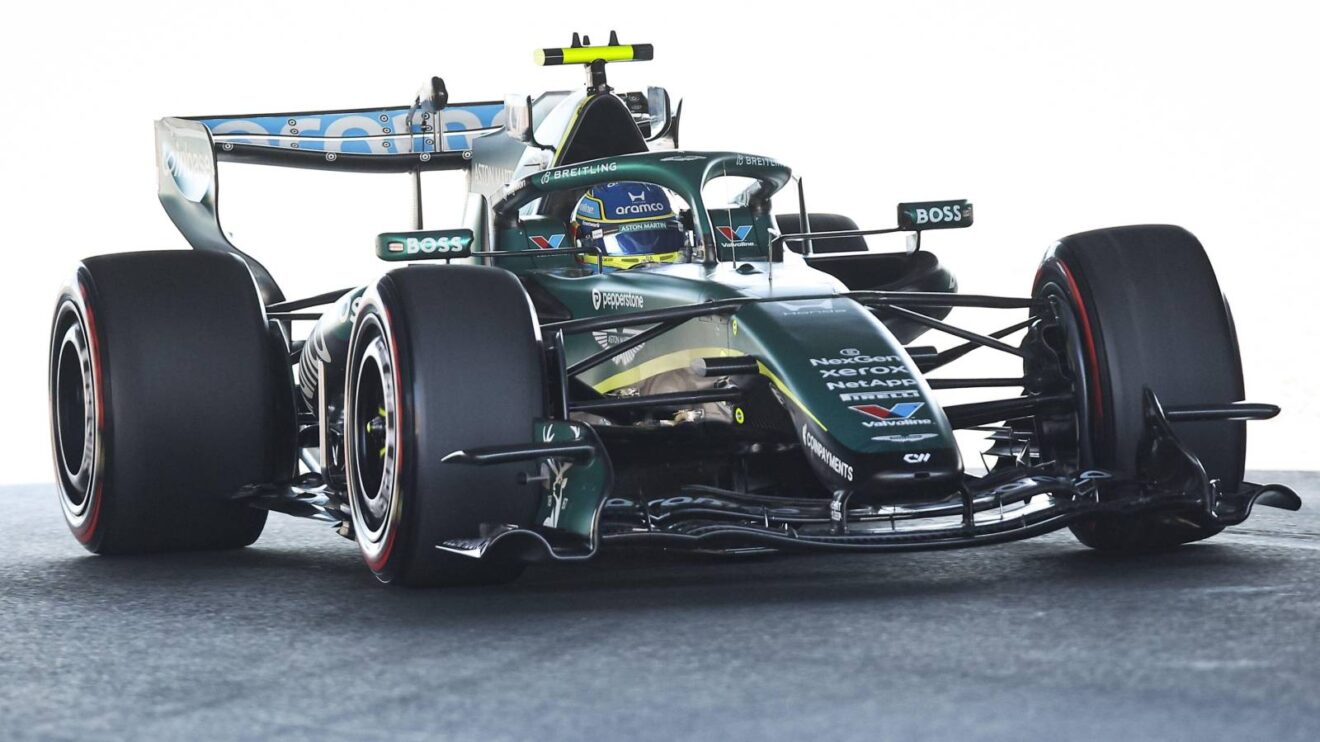
The Algorithm's Tremor: How Honda's Data Dilemma at Suzuka Reveals F1's Cold, Calculating Future

I stared at the timing sheets from Suzuka, the numbers bleeding into a familiar, frustrating pattern. Fernando Alonso's FP2 lap times were a metronome of efficiency, a beautiful, flat line of consistency. Then, the tremor returned. The data from qualifying and the race showed the tell-tale jagged edges, the micro-hesitations, the story of a driver wrestling not just a rival, but his own machine. The headline said Honda shelved a vibration fix. The data tells a deeper story: the moment a team chose the sterile certainty of a finish over the beautiful, chaotic risk of a potential leap. This isn't engineering. It's an autopsy of instinct.
The decision to bench the new "ball" component, a potential cure for Aston Martin's shaking malaise, wasn't made in a smoky garage by a chief mechanic with oil under his nails. It was made in a cloud of predictive reliability algorithms. And in that choice, I see the ghost of F1's future—a sport where the "manageable" vibration is preferable to the "unquantified" solution.
The Schumacher Standard: When Feel Trumps Telemetry
Let's be brutally clear. In 2004, Michael Schumacher's Ferrari V10 was a living, breathing extension of the man. It vibrated, it sang, it communicated. The data stream was a secondary narrative. The primary input was fed through the steering column, into the gloves, up the spine. If a new part showed promise on a Friday, it was raced on a Sunday. The calculation was simple: driver feedback + engineering confidence = performance. The risk of a DNF was the price of progress.
Contrast that with Suzuka, 2026. Honda's engineers had a component that worked. The vibration data from Alonso's Friday car showed a marked, quantifiable improvement. The driver's feedback, reportedly, was positive. Yet, the partnership chose to revert.
"The joint decision with Aston Martin was to remove the part for the remainder of the weekend, prioritizing finishing the race over potential performance."
This single sentence is a manifesto for modern F1. Finishing over potential. Completing the distance over exploring the limit. It’s the logical, data-driven conclusion. Alonso finished the race—Aston Martin's first full distance of 2026. The spreadsheet column for "Classifications" gets a green tick. But what did we learn? That the car, in its sub-optimal state, can limp home? This is the kind of short-term, points-protection thinking that, when applied to driver development, unfairly brands talents like Charles Leclerc as "error-prone," while systematically ignoring the strategic blunders that force them into Hail Mary lunges. We celebrate consistency in drivers, then punish it in engineering.
The Jekyll-and-Hyde Data Set and the Death of Intuition
Alonso described the vibration issue as "a bit random." From a data analyst's perspective, randomness is just a pattern we haven't decoded yet. But the modern F1 system has no tolerance for unsolved patterns. It demands binary inputs: Safe or Unsafe. Go or No-Go.
- Friday's Car (With the 'Ball'): A clean dataset. Reduced oscillations. Predictable performance envelope. A happy, or at least less-annoyed, Alonso.
- Saturday/Sunday's Car (Without the 'Ball'): A noisy, chaotic dataset. Manageable, but present vibrations. An unpredictable performance drain.
The team chose the known chaos over the unknown calm. Why? Because their models could not yet simulate every thermal cycle, every G-force load, every harmonic resonance over 53 laps at Suzuka for the new part. The absence of a complete digital twin meant the part was guilty until proven innocent.
This is the path to robotized racing. When the cost of failure—financial and championship-wise—is so catastrophically high, the incentive is to remove variables. And the greatest variable of all is the human instinct to say, "The car feels better. Let's race it." Soon, the algorithm will not just advise against the new part; it will dictate the pit stop lap, the tire choice, the racing line. The driver becomes a biological actuator, executing pre-programmed performance bands. Where is the story in that? Where is the emotional archaeology in a dataset that has been sanitized of all risk?
Conclusion: The Manageable Malaise
So, Aston Martin-Honda logged their first finish. A data point in the "reliability" column ticks upward. But in the "performance potential" and "innovation courage" columns, there is a void. They are trading the acute pain of a possible DNF for the chronic, "manageable" malaise of a car that is fundamentally flawed.
Honda vows to develop the solution until it is "reliable enough to race." I read: until the simulation confidence interval reaches 99.9%. But by then, the 2026 development war may have moved on, leaving them perfecting a solution to yesterday's problem.
The vibrations in Alonso's car are a physical symptom of a philosophical disease. We are so obsessed with mining data for tenths-of-a-second that we've forgotten to listen to the heartbeat of the sport—the driver's feel, the engineer's gamble, the glorious, unscripted chaos of a new part that might just work. Suzuka wasn't a story about a shelved component. It was a premonition. A tremor of things to come: a future where the car is flawless, the strategy is optimal, and the soul of the sport is a distant, muffled hum, safely managed into oblivion.