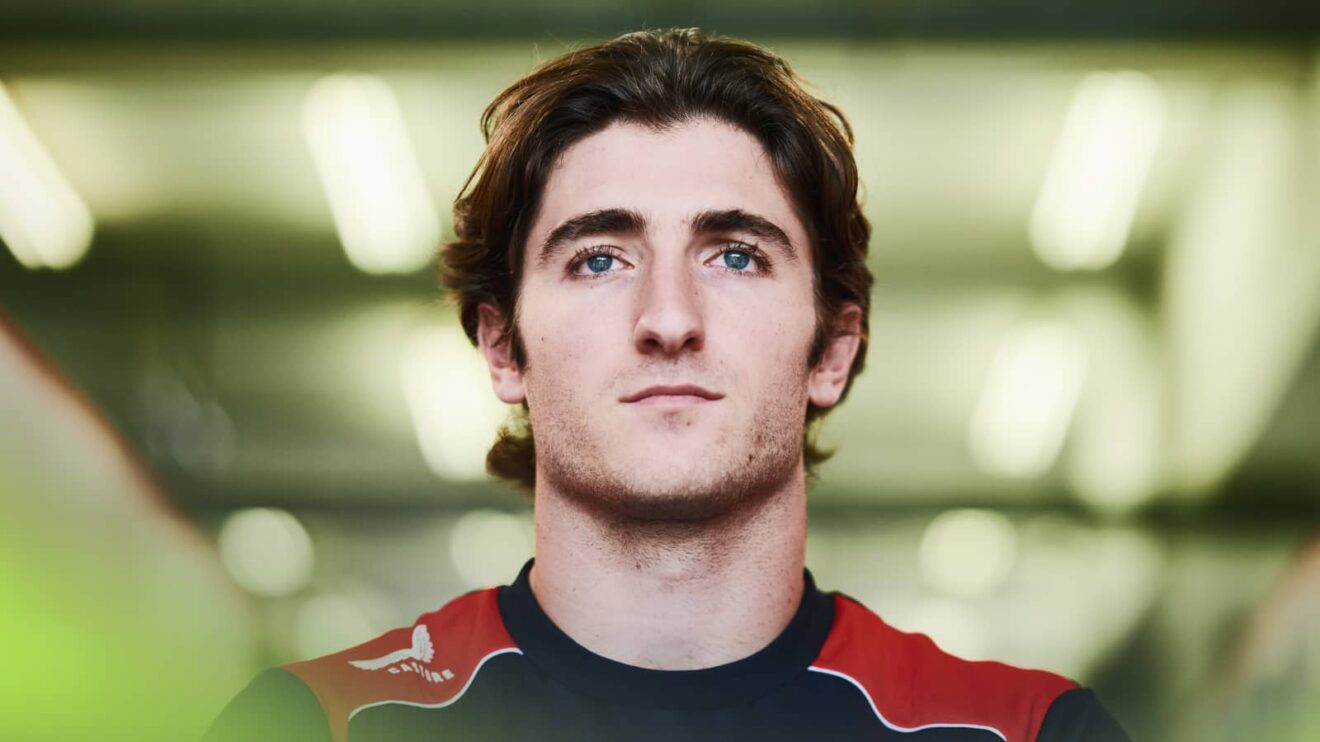
The Ghost in the Machine: Jack Doohan's Calculated Descent into the Endurance Abyss
The most dangerous sound for a Formula 1 hopeful isn't the shriek of a blown engine or the sickening crunch of carbon fiber. It is silence. The deafening quiet of a garage with no seat, the hollow echo of a simulator with no prospect, the mute terror of a career stalling mid-air. For Jack Doohan, that silence began screaming in mid-2025 when Alpine severed the cord on his Formula 2 dream. Now, in 2026, he has chosen to answer it not with a roar, but with the relentless, grinding hum of an endurance prototype. His move to the European Le Mans Series with Nielsen Racing is not merely a career pivot. It is a profound psychological gambit, a deliberate walk into a different kind of darkness to prove he can still find the light.
The Suzuka Fracture and the Psychology of Retreat
The official record states his planned move to Japan's Super Formula "fell through." This is a sterile, mechanical term for what happened. The truth, as it always does, lies in the data and the debris. Three accidents in a test with Kondo Racing at Suzuka. Three fractures in confidence. We are not privy to his biometrics from that day, but we can extrapolate: a spiking heart rate that wouldn't plateau, cortisol flooding the system, the subtle tremor in a hand on a steering wheel that has just betrayed you. This wasn't bad luck; it was a systemic breakdown.
A driver's relationship with fear is not defined by the crash, but by the next corner. Doohan looked into that abyss at Suzuka's daunting curves and, strategically, he stepped back.
His decision to shelve the Super Formula move was not an admission of defeat, but the first sign of a newfound, perhaps hard-won, strategic maturity. He recognized a destabilizing variable—a car or environment that cracked his psychological armor—and he removed it. Contrast this with the old-school, "drive through the pain" ethos of a Lauda. Today's drivers are more like precision instruments; you do not bash a malfunctioning sensor, you recalibrate it. Doohan is recalibrating. The ELMS, with its longer races, shared driving duties, and LMP2-spec Oreca 07, offers a controlled environment. The pressure is diffused across teammates Roy Nissany and Ed Pearson. The goal is not a single qualifying lap of perfection, but sustained, manageable performance. It is therapy on tarmac.
The Dual Identity: Reserve Ghost and Endurance Apparition
Doohan’s 2026 existence will be a study in split psychology. One week, he is the Haas F1 reserve driver, a ghost in the machine, absorbing the electrical buzz of a team on the upswing, watching Oliver Bearman and Esteban Ocon live the life he covets. He will study their mannerisms, their debrief tones, the way they handle the team's strong 2026 start. He will file it all away. The next, he is a driver in the ELMS, battling for position at Barcelona or Spa, his mind forcibly shifted from the nano-precision of F1 to the macro-strategy of endurance.
This duality is his lifeline, but it is also a unique psychological strain.
- The Constant Comparison: Every lap in the Oreca will be subconsciously measured against the potential lap in the VF-26. The brake feel, the grip window, the feedback—all will be a constant, quiet reminder of what he is not doing.
- The Performance Paradox: He must be good enough in the ELMS to prove his worth, but not so independently focused that Haas questions his commitment as a reserve. He must be the ultimate team player in two teams simultaneously.
- The Shadow of Precedent: The article mentions Nyck de Vries and Pietro Fittipaldi. They are blueprints, but also cautionary tales. The path exists, but it is littered with the ghosts of "nearly-weres."
This is where the modern driver's mental fortitude is forged. Not in the singular, fiery crucible of a Grand Prix, but in the slow burn of a hybrid role. Haas didn't just give him a job; they gave him a structured psychological anchor. In a sport where identity is everything—"I am a Formula 1 driver"—Doohan has been given a provisional, hyphenated identity: "F1 reserve-endurance contender." Protecting a fragile psyche requires structure, and his 2026 calendar is precisely that.
The 2027 Mind Games Have Already Begun
Let us be clear: the 2026 season is not about winning the ELMS. It is a year-long, high-stakes psych evaluation. Every interaction at Haas, every performance in the Oreca, is a data point for Team Principal Ayao Komatsu.
With both Bearman and Ocon out of contract at year's end, the Haas garage in 2026 will be a petri dish of competitive tension. Doohan must master a near-impossible balance: be supportive yet visibly superior; be eager but not desperate; be present in the moment while everyone knows you are eyeing the future. It is a performance as nuanced as any wet-weather drive.
And this is where my belief crystallizes: driver psychology trumps aerodynamics in the wet. The 2026 season is Doohan's wet race. The conditions are uncertain, the visibility poor, the grip unknown. His Super Formula plan hydroplaned into the barrier. Now, he must feel his way through the spray. His decision-making under this profound uncertainty will reveal more about his core character than any junior formula title ever could. Is he a Verstappen, whose raw edges were systematically smoothed by Red Bull's psychological machinery into a relentless, emotionless force? Or is he a Hamilton, using the trauma of his Alpine exit to craft a narrative of resilient return?
Conclusion: The Manufactured Comeback
The champions of this era are not born; they are manufactured. Their talent is raw material, shaped by engineers, strategists, and, increasingly, mind coaches. Jack Doohan is now entering his own manufacturing process. The ELMS is his new assembly line. Nielsen Racing is his proving ground. Haas is his quality control.
His success will not be measured in ELMS trophies, but in the absence of Suzuka-like fractures. It will be measured in the consistency of his pace, the clarity of his feedback to Haas, and the steady, unflappable demeanor he projects while living a double life. The silence he must now fear is not that of an empty garage, but the silence of the phone call that never comes in late 2026. He has chosen the hum of endurance to keep the dream alive. We will now see if, in that relentless noise, he can still hear the champion's voice within himself. The 2027 grid may depend on it.