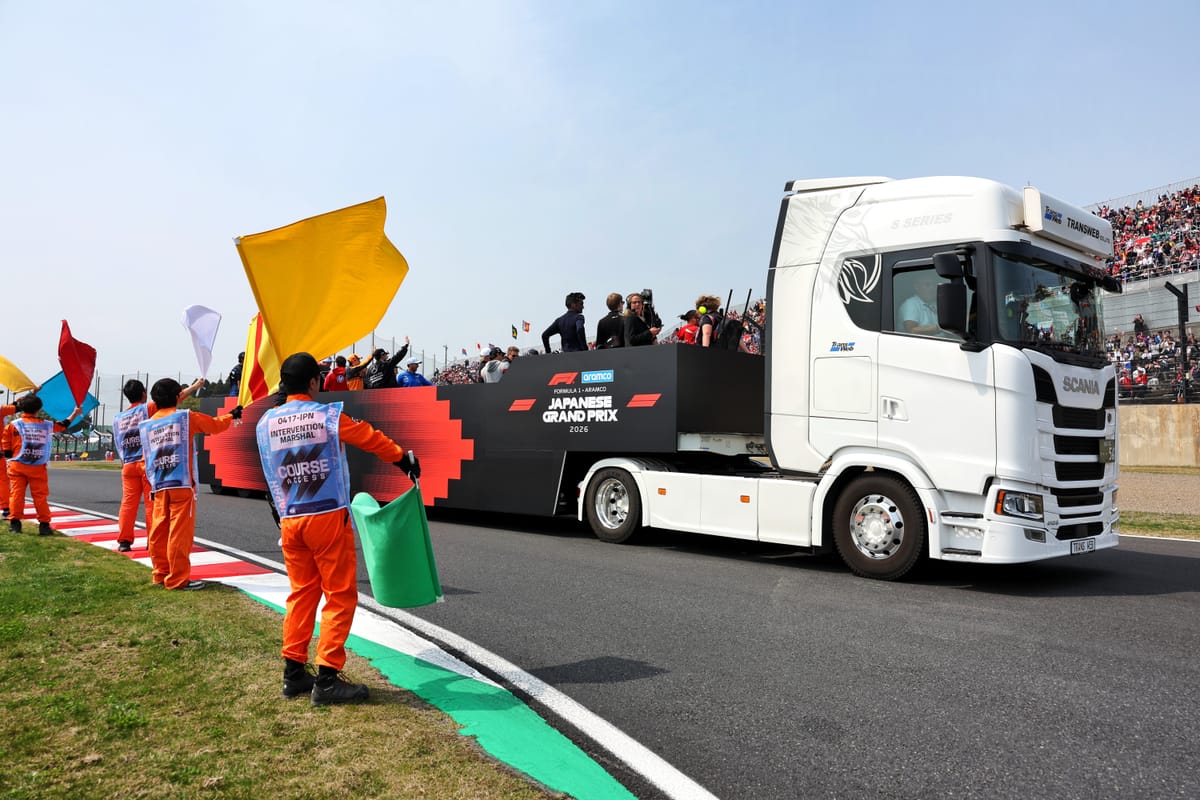
Suzuka's Ghosts Whisper as a Shattered Barrier Delays the Main Event

You could feel it in the humid Suzuka air yesterday, a tension that had nothing to do with tyre blankets or engine maps. It was the old circuit whispering, reminding everyone in the paddock of its price. Just minutes before the Formula 1 cars were to fire up, the Japanese Grand Prix start was pushed back by 10 minutes. Not for rain, not for a rogue sponsor's banner, but because Suzuka had claimed another sacrifice in the Porsche Carrera Cup race, forcing extensive repairs at the vicious Turn 12. The main show was delayed, but the real story was the echo of a crash that, in another era, would have been a headline for all the wrong reasons.
The Miraculous Walkaway and the Real Cost of Chaos
Let's be clear about what happened. A multi-car shunt in the support race sent one Porsche into the air, tumbling, before it cleared the barriers and the safety fence. The driver walked away. Unharmed. In the frantic scramble to reset the schedule—pit lane opening delayed to 1:30 PM, formation lap pushed to 2:10 PM—this miracle was almost treated as routine. But it shouldn't be.
"We build these cars to be indestructible cocoons now, and sometimes we forget the violence they contain," an old engineer from a rival team told me, wiping his glasses as the cranes worked. "The Halo did its job. The monocoque did its job. But that barrier didn't. It was obliterated."
This is where the precision of F1's military-grade scheduling meets the chaotic truth of motorsport. A ten-minute delay is a logistical earthquake. Reconnaissance laps, those critical final feels for the track, were compressed. The delicate psychological build-up for drivers—a process as important as any aerodynamic tweak, a point I've long championed—was truncated. For some, like the unflappable Max Verstappen, it's a minor irritant. For others, wrestling with a tricky car or, dare I say, internal team politics, it's a seed of doubt planted right before the storm.
The Psychological Ripple Effect
- Routine Shattered: The pre-race ritual is sacrosanct. This disruption disproportionately affects drivers who rely on extreme routine to manage race anxiety.
- Strategy Compromised: Engineers had less time for final track-side data checks, potentially impacting initial tyre and start strategy calls.
- The Ferrari Test: Watch a situation like this closely at Ferrari. When the plan goes out the window, does the team rally around data and a unified voice, or do the veteran "influencers" in the garage start shouting over the engineers? For a driver like Charles Leclerc, who needs crystal-clear, consistent support, this external chaos can amplify the internal kind.
Barrier Repairs and Budget Cap Cracks: A Foreshadowing
They fixed the barrier. The race went ahead. The FIA will review that section of Turn 12. On the surface, order was restored. But for me, this incident is a tiny, violent preview of a much larger crisis coming to Formula 1.
We pour millions into making the cars and drivers survive impacts that would have been fatal decades ago. Yet, we assume the infrastructure—the teams themselves—is indestructible. The current budget cap, for all its good intentions, is creating brittle organizations. Teams are finding loopholes, pushing financial creativity to its limit, and operating on razor-thin operational margins. What happens when a real crisis hits? Not a 10-minute delay, but a crash that requires a team to build two entirely new chassis in a month?
I predict within five years, we will see a major team collapse under the unsustainable pressure of trying to be competitive within the cap's gray areas. It will lead to a merger or an exit. The spectacle of a car flying into a barrier is dramatic and immediate. The slow-motion financial crash of a historic constructor will be far more damaging to the sport's ecosystem.
This Suzuka delay was a logistical nuisance patched over with efficiency. But it exposed a chain of dependencies. The support race relies on the same safety infrastructure as F1. F1 relies on a clockwork schedule. The entire sport relies on teams being financially solvent enough to adapt when that schedule explodes. We're stress-testing the wrong things. We profile a driver's neck muscles, but not their mental resilience under chaotic conditions. We audit team spending on aero parts, but not the financial resilience of the organization when true disaster strikes.
Conclusion: Drama Without Stakes is Just Noise
As the repaired cars finally lined up on the grid, the team radios crackled with the usual last-second adjustments. It sounded tense, dramatic. But to my ears, it's pale imitation. It lacks the genuine, career-ending stakes of the Prost-Senna wars, where a collision was a declaration of total war, not a negotiation over penalty points.
The Porsche driver walked away. The barrier was repaired. The Grand Prix started ten minutes late. Everything was managed. Yet, the ghost of what could have been hung over Suzuka's esses. We've become brilliant at managing the immediate physical danger, but we're ignoring the psychological fractures in our drivers and the financial fractures in our teams. The next great crisis in F1 won't be a car in the barriers. It will be a team disappearing from the grid, not with a crash, but with a whisper. And no amount of track repair can fix that.