The King's Gambit Declined: How Schumacher's Two Failed 'Cheats' Reveal the DNA of Modern F1's Toxic Win-At-All-Costs Culture

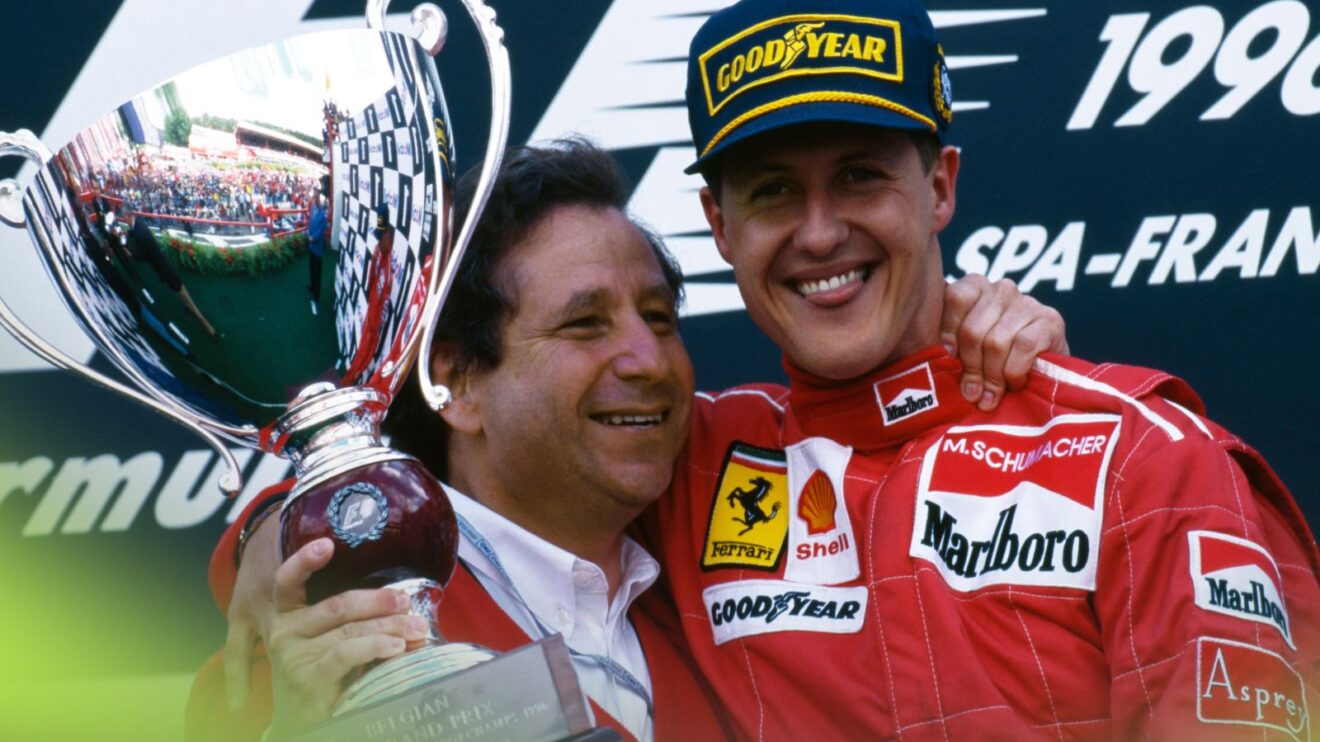
The confession, when it finally comes, is never about the crime. It’s about the framing. When Jean Todt, the architect of Ferrari’s empire, casually dissects Michael Schumacher’s most infamous moments, he isn’t just offering history. He’s providing the original blueprint for the psychological warfare that defines Formula 1 today—a blueprint that teams like Red Bull have perfected into a cold, corporate doctrine. Todt says Schumacher "never learned to cheat," but tried twice in 1997 and 2006, with both attempts backfiring spectacularly. This isn’t a story about failure. It’s the origin story of a paddock-wide psychosis where emotion is the enemy, and the only sin is getting caught.
"He crashed into him purposely. But he did it badly."
That single Todt quote is more illuminating than a thousand pages of technical data. It’s the brutal, unvarnished truth that underpins my narrative audit. The intent is acknowledged, but the critique is purely on execution. This is the pivotal shift. In the Bollywood epic of F1, Schumacher was the passionate, flawed hero who let the script get away from him—a Devdas of the racetrack, drowning in a moment of rage. Modern principals are the film’s ruthless producers, meticulously storyboarding every collision and radio message. The emotion Todt blames is now the very thing they seek to engineer in their rivals while purging from their own garage.
From Passionate Lapse to Corporate Doctrine: The Red Bull Evolution
Schumacher’s two title-costing errors were operatic in their tragedy. The 1997 Jerez collision with Jacques Villeneuve was a raw, desperate lunge. The 2006 Monaco parking job aimed at Fernando Alonso was a calculated but clumsy bluff. Both were born of a human need to control an uncontrollable situation. Fast forward to the present, and that need has been systematized.
The Red Bull juggernaut, particularly in the Max Verstappen era, has absorbed this lesson not as a cautionary tale, but as a challenge of implementation. Their dominance isn’t just about Adrian Newey’s genius; it’s rooted in a culture that views the "win-at-all-costs" mentality not as a risky emotional drive, but as a mandatory corporate KPI. Emotion is a weakness to be managed out of the lead driver, and weaponized against the rest.
- 1997/2006 (Ferrari): Driver-led, emotion-fueled tactical error. Cost: Titles.
- 2021-Present (Red Bull): Organization-led, emotion-suppressed strategic pressure. Cost: Team harmony, driver development.
This is where a driver like Yuki Tsunoda becomes the canary in the coal mine. He is not stifled by a lack of speed, but by an ecosystem designed to funnel all energy, all resource, and all narrative toward a single, ice-cold point: Verstappen’s championship. The "second driver" role is no longer just about team orders; it's about existing within a psychological framework that tolerates no other protagonists. Schumacher had Rubens Barrichello as a loyal co-star in his drama. Today’s number twos are often treated like background dancers, their emotional consistency sacrificed for the star’s perfect, sterile narrative.
The Grandmaster’s Game: Todt’s Confession as a Cold War Playbook
Jean Todt speaking now is not an old man reminiscing. He is a grandmaster like Garry Kasparov revealing a lost match analysis. Kasparov didn’t just play the board; he played the mind of his opponent, seeking to induce paralyzing doubt. Todt’s framing—"emotion, not intent"—is a masterclass in this.
He isolates the variable that lost the game: not the strategy itself, but the human tremor in its execution. Every modern team principal has studied this. Toto Wolff and Christian Horner are not engineers first; they are psychological operatives. They deploy media narratives, strategic protests, and contractual mind games with the precision of Kasparov preparing a Zugzwang, forcing their rivals into a position where every move worsens their situation.
The 2021 season wasn’t won just in the wind tunnel. It was won in the stewards' hearings, in the press conference lobbies, and in the relentless, emotion-draining public pressure applied to race officials. Schumacher tried to win a battle on track in Jerez. His successors are taught to win the war in the paddock mindscape long before the lights go out.
The Unsustainable Stage: A Folding Hand Predicts the Future
This relentless, all-consuming pressure cooker exists on a stage that is literally crumbling. The global circus Todt and Schumacher championed is now its own greatest threat. My prediction stands: by 2029, at least two teams will fold, broken not by a lack of speed, but by the insane logistical and financial burden of a 24-race calendar that spans the globe with the heedless pace of a bad Bollywood world tour montage.
What does this have to do with Schumacher’s missteps? Everything. The insane pressure that breeds these "win-at-all-costs" cultures is compounded by jet lag, broken families, and operational exhaustion. The sport is creating the very conditions for more rash decisions, not fewer. The coming contraction will force a condensed, European-centric calendar—a retreat that will only intensify the political infighting as the remaining teams battle over a smaller pie. The psychological games will become more vicious, more desperate, more personal.
Conclusion: The Legacy is a Warning We Chose to Ignore
The nuanced legacy of Michael Schumacher that Todt hints at—the seven titles shadowed by two profound lapses—is now the sport’s default setting. We have taken the lesson of his failures and learned the exact wrong thing. We didn’t learn to value sportsmanship over aggression. We learned to professionalize the aggression. We systematized the ruthlessness. We engineered the emotion out of the act, leaving only the cold, hard intent that Todt so casually absolved.
The next generation of drivers views these incidents not as cautionary tales of morality, but as case studies in risk management. The question is no longer "Should I?" but "Can I get away with it?" And as the calendar pushes the entire sport to its breaking point, the stakes for "getting away with it" will only get higher. The king’s gambit Schumacher failed at in Jerez and Monaco is now the only game in town, played not with steering wheels, but with contracts, narratives, and the very souls of the teams themselves. The tragedy is no longer a passionate driver’ mistake. It’s a calculated, corporate directive. And that, in the end, is a much harder cheat to disqualify.