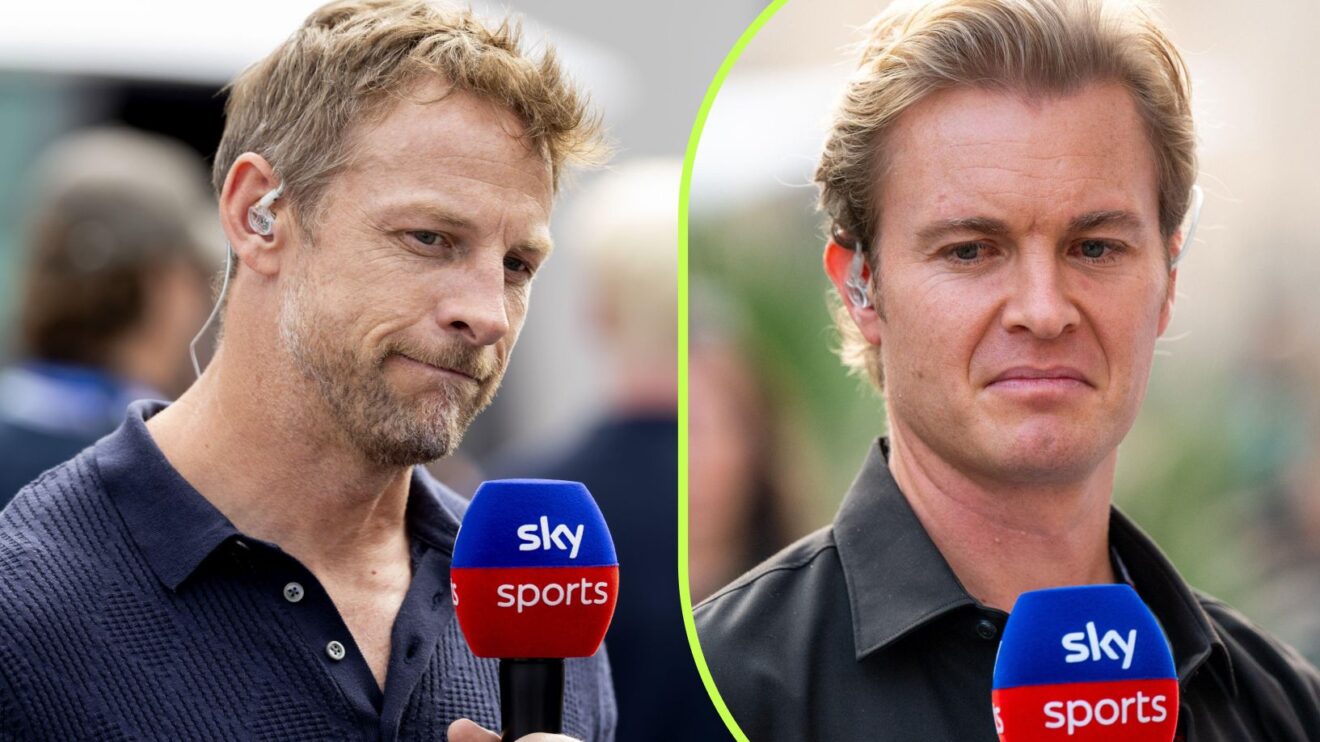
The Ghost in the Machine: How Button's Quip Exposes F1's Unspoken Psychology War
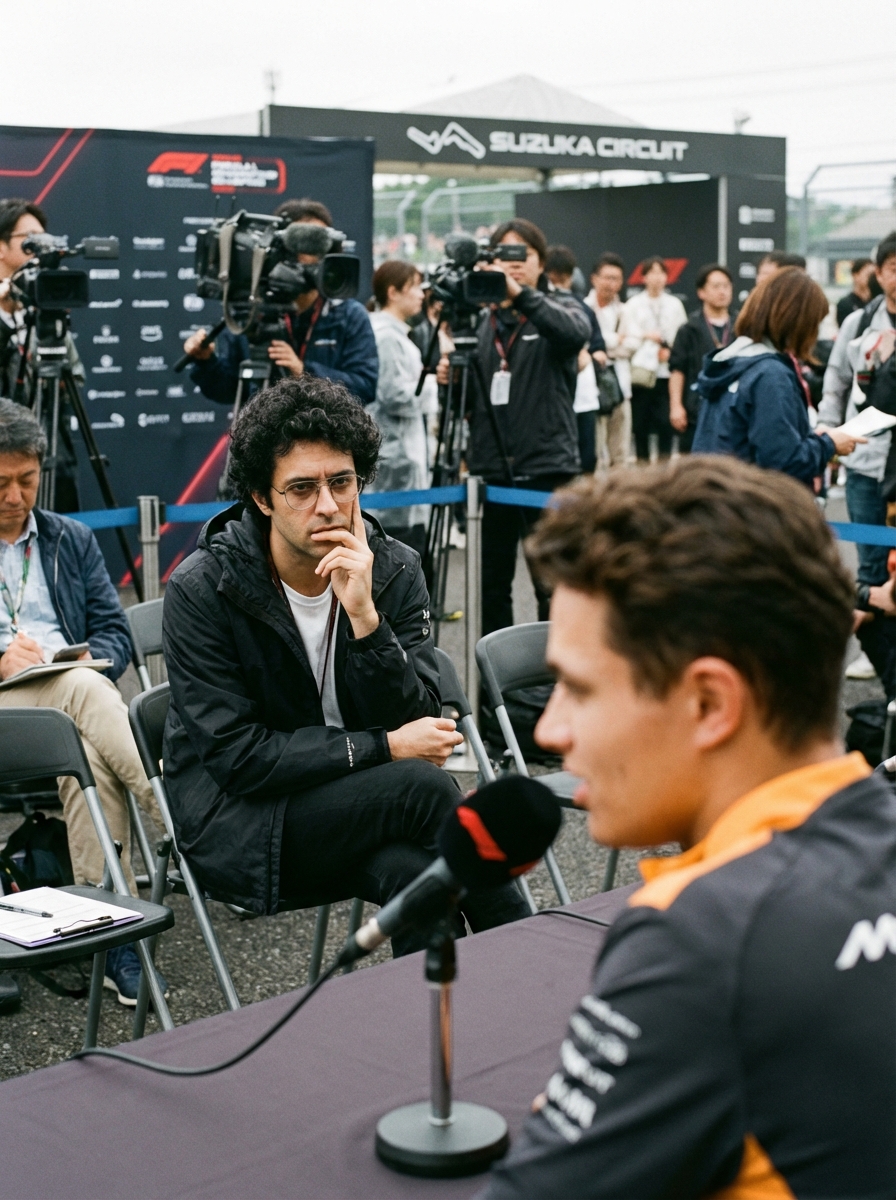
The broadcast booth is a confessional. The green light of a live camera, the unblinking eye of the lens, it has a way of loosening tongues wrapped in the polite gauze of PR speak. When Jenson Button leaned into the microphone during Sky F1’s coverage from Suzuka, he didn’t just offer analysis. He performed an exorcism. With a smile that didn’t quite reach his eyes, he laid the specter of Mercedes’ most toxic era at the feet of one man: Nico Rosberg. "Nico’s not driving," he said, "so that’s why that dynamic won’t ever happen again." In one breath, he dismissed the possibility of a repeat with George Russell and Kimi Antonelli, and in doing so, confirmed the sport’s worst-kept secret: that rivalry was never about the car. It was about the man.
Button, the former teammate turned colleague, didn't just point a finger. He opened a window into the pressurized cockpit of a driver’s mind, where championships are lost and won long before the lights go out. His comment, a playful dagger wrapped in a broadcaster’s chuckle, forces us to ask not what happened between 2014 and 2016, but why. And in answering that, we must confront the uncomfortable truth F1 engineers can’t compute: the human operating system is the most volatile, unpredictable, and decisive component on the grid.
The Rosberg Paradox: Engineered Brilliance, Emotional Fragility
Let us dissect Button’s diagnosis. By stating the feud "came down to Nico," he isolates a variable. We must remember, this is not fan speculation. This is the verdict of a world champion who shared a garage with Hamilton at McLaren, who felt the heat of that ambition, and who now shares a commentary box with Rosberg. His is an intimate, triangulated perspective.
The Hamilton-Rosberg rivalry wasn't a clash of styles, but a collision of psychological architectures.
- Hamilton’s psyche is a fortress built on narrative. Like Niki Lauda after Nürburgring, he has learned to transmute perceived slights and trauma into a public persona of relentless, almost mystical, pursuit. The pain is fuel, but it is managed fuel, channeled into a performance that overshadows the raw, sometimes ragged, talent beneath.
- Rosberg’s architecture was different. It was a masterpiece of engineering—meticulous, analytical, obsessive. He could out-prepare anyone. But what happens when a perfectly engineered mind meets an insoluble problem? A problem named Lewis Hamilton. The cracks weren't in the speed; they were in the emotional load-bearing walls.
"The 2016 title was Rosberg’s masterpiece and his ruin. He achieved the ultimate goal by stretching his psyche to its absolute elastic limit, and the recoil was immediate, permanent retirement. He won the war but broke the weapon."
This is the core of Button’s insight. He implies Rosberg’s very methodology—the relentless need to control every variable—created the toxicity. When Hamilton, the uncontrollable variable, proved faster on pure instinct, Rosberg’s system had no protocol. It defaulted to gamesmanship, to psychological warfare, to the desperation we saw in Monaco, in Spa. The rivalry was toxic because one driver’s mental framework could not accommodate the other’s existence without conflict. It was a system failure.
The New Guard: Manufactured Calm and the Coming Storm
Button’s pivot to praising Russell and Antonelli as "both quite level-headed" is the most fascinating part of his commentary. It reveals the new paradigm. In the post-Rosberg era, and particularly in the wake of Max Verstappen’s era of manufactured dominance, teams are petrified of emotional contagion.
George Russell is a case study in cognitive governance. His public face is one of polished, corporate enthusiasm. The outbursts, the frustrations—they are measured, released in controlled bursts, then neatly packaged away. Kimi Antonelli, bred in the Mercedes junior program, enters F1 as perhaps the most psychologically vetted rookie in history. The team isn’t just evaluating his lap times; they are stress-testing his temperament for compatibility.
This is the modern F1 driver: not just an athlete, but a regulated emotional entity. Red Bull proved the model with Verstappen—systematically sanding down the emotional spikes through covert coaching, creating a champion of terrifying, consistent calm. Mercedes is now applying that lesson preemptively. They are trying to install a psychological airbag before the crash.
But here is my prediction, drawn from the shadows of Button’s awkward truth: This manufactured calm is a temporary dam. Within five years, the pressure will force a reckoning. We will see mandates for mental health disclosures after major incidents. Transparency will become policy. And when that happens, the carefully constructed personas will fracture under the glare of mandated vulnerability. The scandals of the future won’t be about flexi-floors; they will be about disclosed anxiety disorders, therapy sessions, and the raw, unedited trauma of a 220mph crash relived in a psychiatrist’s report.
Conclusion: The Wet Weather of the Soul
So, what does Button’s moment truly tell us? It reminds us that while engineers battle over aerodynamics, the decisive war is waged in the six inches between a driver’s ears. The Hamilton-Rosberg feud was the last great, unmanaged eruption of pure, adversarial psyche. Today, teams are the psychologists, smoothing out the peaks and valleys to create a more efficient, less volatile performance curve.
But you cannot engineer out the human heart. As Mercedes rises again, and the championship pressure descends on Russell and Antonelli, watch them in the rain. That is where the truth emerges. In the wet, data is useless. The car is a suggestion. It is all psychology—the gamble, the trust in instinct, the tolerance for fear. That decision under uncertainty reveals the core personality no public relations team can design.
Button didn’t just blame Nico. He announced the end of an era of wild, psychological fire and the beginning of an era of controlled, clinical burn. The question is no longer if the pressure will find a weakness, but which carefully constructed wall will crack first. The ghost Rosberg left in the Mercedes machine isn't a spirit of conflict, but a cautionary tale: you can program the car, but you can only ever hope to manage the man.