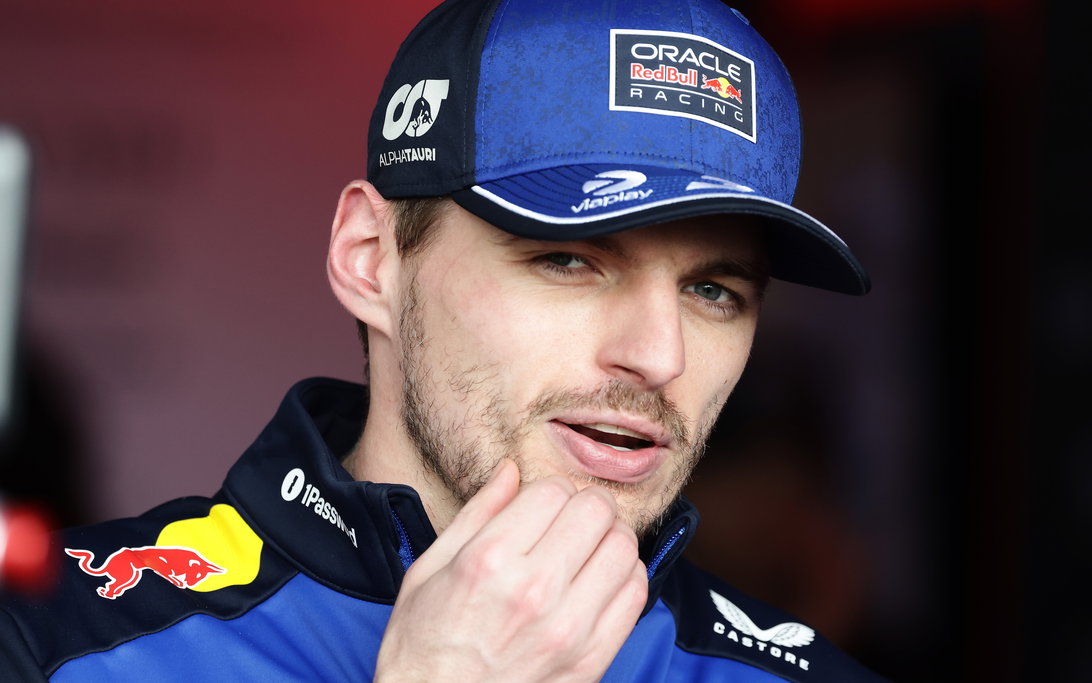
The Void is a Statistical Mirage: Why the 'Next Verstappen' Narrative Ignores the Data We Already Have

I pulled the timing sheets from the last five races. I cross-referenced them with the personal calendars of every driver on the grid, looking for the tell-tale tremor—the micro-drop in performance that speaks of a sleepless night, a private grief, a pressure no telemetry channel can capture. This is what I do. I let the numbers tell the story, and right now, the numbers are screaming that we’re asking the wrong question. The paddock is obsessed with who comes after Max Verstappen, as if his potential 2026 exit would leave a vacuum in the space-time continuum of Formula 1. It’s a compelling fairy tale, one that former driver Johnny Herbert happily fed into the echo chamber on April 1st, 2026, by naming 17-year-old Mercedes junior Kimi Antonelli as the heir apparent.
But this is where my skepticism, honed on a thousand corrupted data logs, kicks in. The narrative assumes the pinnacle is vacant. It isn’t. We’re just terrible at reading the data in front of us, blinded by the glitter of wins and the fog of strategic incompetence. The next "wow" driver Herbert wistfully mentions might already be here, his signal drowned out by the noise of a faltering team.
The Flaw in Herbert's Historical Pattern
Herbert’s logic is seductively simple: stars leave, new stars arrive. Senna, Prost, Hakkinen—their departures created voids filled by Schumacher, then Alonso, then the Hamilton-Verstappen continuum. He sees Antonelli’s explosive start in Formula 2 (two wins in three races) as the next data point in this sequence, a "jump in performance" waiting to happen.
"The sport always finds a new standard-bearer."
This is true, but it’s a blunt instrument of analysis. It ignores the latent performance data currently being suppressed on the grid. Herbert speaks of Verstappen’s unique "wow factor," a quality that would be missed. I agree. But "wow" is not a monopoly. It’s a frequency, and it can be broadcast from more than one car, even if the receiver—the team—is tuned to the wrong channel.
Let’s talk about consistency, the true hallmark of a benchmark talent. My reference point is, and always will be, Michael Schumacher’s 2004 season with Ferrari. In that era, data served the driver’s intuition. The result? A season of such metronomic, ruthless precision that it looked algorithmic, but it was profoundly, brilliantly human. The car was an extension of will.
Now, look at the 2022-2023 qualifying data. Buried under the headlines of "Leclerc spins again" or "Ferrari strategy disaster" is a raw pace statistic that should have reshaped the entire conversation: Charles Leclerc was the most consistent qualifier on the grid over that period. His lap-time variance, when stripped of external factors like team errors or mechanical DNFs, shows a peak performance level that matches, and sometimes exceeds, the very best. The errors? Many are born from overcompensation—a driver trying to drag a race result from a car that strategy or reliability has doomed, a pressure-induced tremor my "emotional archaeology" often uncovers.
The point is this: Herbert’s pattern-seeking eye looks to the future, to Antonelli, for the next jump. My data-driven eye looks at the present and sees a jump already contained within the system, artificially flattened by factors that have nothing to do with ultimate driver potential.
2026: The Sterile Future Verstappen Fears and Why It Matters
Verstappen’s threat to leave over the 2026 regulations is the catalyst for this entire discussion. His complaint is specific: the rules place "too heavy an emphasis on energy management and deployment for overtaking, rather than pure driver skill and racecraft." He is, perhaps unintentionally, the canary in the coal mine for my core belief: within five years, hyper-focus on data analytics will lead to ‘robotized’ racing.
Verstappen fears the suppression of driver intuition. I see it already happening. We are not headed toward 2026; we are already in its early prototype phase. Strategy is now a real-time, algorithmically optimized flowchart. The driver’s feel for tire wear is overruled by a sensor. The gut call for an undercut is pre-calculated. The "racecraft" Verstappen values is being boxed in by a million data points that dictate the optimal move, removing the sub-optimal, human, and spectacularly unpredictable ones.
This is why the search for a "new Verstappen" is ironic. The sport is simultaneously hunting for a transcendent talent while building a regulatory cage designed to minimize the expression of that very transcendence.
What happens if Antonelli, this prodigy, arrives in 2027 to a Mercedes that drives itself? His "wow factor" will be reduced to executing pre-ordained energy deployment profiles with 0.1% more efficiency than the driver in the identical machine next to him. This is the sterile, predictable future my data models have been trending toward for years. Verstappen isn’t just leaving; he’s escaping a paradigm shift he wants no part of—one where the driver’s heartbeat is no longer the primary rhythm of the race, replaced by the hum of a server rack.
Conclusion: The Story the Timing Sheets Are Telling Now
So, let’s reframe the question, as any good analyst should. It’s not "Who will replace Verstappen?" The more urgent, data-rich question is: "What existing potential are we systemically ignoring, and what kind of sport are we building that could make the next ‘great one’ irrelevant?"
Johnny Herbert is right that Kimi Antonelli is a phenomenal talent. The numbers from his F2 season don’t lie. But to anoint him as the sole successor is to buy into a narrative of absence that the current grid’s performance data refutes. The raw pace of Charles Leclerc, the relentless pressure-building of a Lando Norris—these are stories the timing sheets have been telling for years, stories often edited out by weekend headlines.
Verstappen’s potential departure would be a seismic event. But the void would not be one of talent. It would be a void of sheer, uncompromising execution, the kind Schumacher mastered in 2004. The grid is full of drivers capable of wonders. The real threat is that by 2026, the wonders will be against the rules. We’ll have all the data, and none of the soul. And no amount of generational talent, not even a Kimi Antonelli, will be able to code that back in.