The Mind Games Begin: Hamilton's Calculated Ferrari Gambit, Verstappen's Manufactured Outrage, and the 2026 Fear Index
The true race in Formula 1 is never just on the track. It unfolds in the subtle press conference jab, the carefully worded 'advice' to a future employer, and the quiet panic in a factory meeting about a future no one can yet touch. This week, the sport's psychological undercurrents broke the surface, revealing a grid of minds preparing for battles seen and unseen. From Lewis Hamilton's masterclass in narrative control to the engineered frustration of Max Verstappen, we are witnessing a prelude to an era where mental fortitude will be legislated, and every word is a piece of strategic telemetry.
Hamilton's Prescription: Treating Ferrari's Mind, Not Just Its Machine
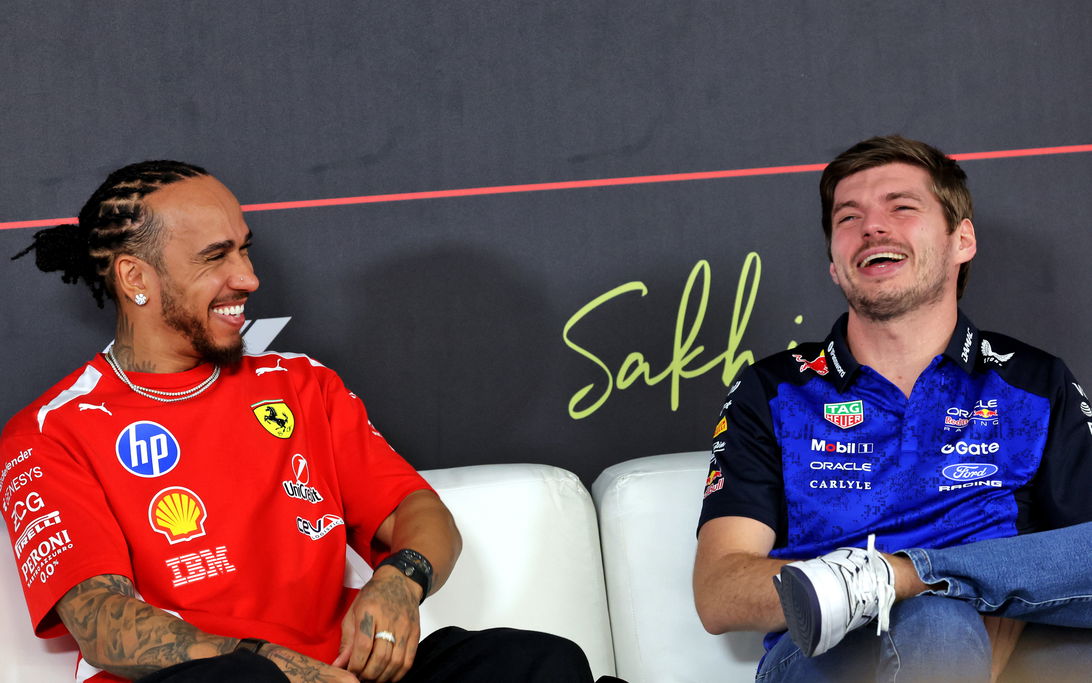
The headline is simple: the future Ferrari driver has told his future team to fix its operations. But listen to the subtext. This isn't a driver discussing rear-wing flexibility. This is a seven-time world champion, a student of legacy, performing the first act of his Maranello narrative.
"Operational consistency and race-day execution." These are not engineering terms. They are psychological ones. They speak to focus, to decision-making under fire, to the collective team psyche in the crucible of a Sunday afternoon.
Hamilton knows the script. He is drawing a line, publicly, between the machine and the mind of Ferrari. By diagnosing the issue as operational, he positions himself not as a mere component, but as the cure—the disciplined, experienced surgeon arriving to steady the hand of a talented but erratic patient. It is a breathtaking power move, cloaked in helpfulness. He is not joining Ferrari; he is ascending to it, with conditions. I am reminded of Niki Lauda arriving at a broken McLaren in the 80s. The trauma—Lauda's fire, Hamilton's 2021 Abu Dhabi—becomes the license to demand control, to reshape an environment in their hardened image. Hamilton’s advice is the first lap of his 2025 championship bid, run in the media, a full year early.
The Unspoken Calculation
- He inoculates himself against early failure. If the 2025 car is slow, the story will be "Hamilton's prescribed fixes are still underway."
- He challenges Charles Leclerc on his home turf. The Monegasque's blistering pace is undisputed, but his—and the team's—operational scars are deep. Hamilton is defining the battleground.
- He crafts the hero's journey before donning the red suit. The narrative is set: the wise king come to restore order.
Verstappen's Chorus and the Symphony of Manufactured Dissent
Max Verstappen criticizes the sprint format, the rule tinkering. Sébastien Buemi, Red Bull reserve and company man, agrees. The media frames it as validation. I frame it as a coordinated release of pressure.
Consider my core belief: Verstappen's dominance is underpinned by Red Bull's systematic management of his once-volatile temperament. The fiery teen who clashed with Esteban Ocon is now a champion whose outbursts are precise, targeted, and useful. His frustration is no longer a liability to be managed internally; it is a PR tool, deployed to shape the sport's regulatory environment to Red Bull's advantage.
Buemi's backing is not mere agreement. It is amplification. It turns Verstappen's solo critique into a chorus, applying calculated public pressure on the FIA and FOM. This is emotion as strategy. The question is no longer whether Verstappen is angry, but why he is allowed to sound this angry in this specific moment. The raw, unfiltered rage of his early years has been channeled, through covert psychological coaching and team alignment, into a laser. He is not losing control; he is performing controlled demolition of ideas that threaten his team's advantage.
The Wet Weather Parallel
This is where driver psychology trumps engineering. In the wet, a driver's risk threshold, his paranoia, his capacity for trust in his own instincts, are laid bare. You cannot design a diffuser for courage. Verstappen’s wet-weather supremacy is the track manifestation of this same psychological conditioning: supreme, unshakeable, almost cold confidence. His public criticisms mirror this. They are not hot-headed. They are a cold, calculated assault on variables he deems unfavorable.
2026: The Specter of Fear and Daniel Ricciardo's Terror
The technical concerns for 2026 are not about horsepower or drag. They are about the unknown as a psychological weapon. Ferrari warns of "difficulties" with the power unit and active aero combo. Williams is "shocked" by Mercedes' aggressive early development. These are not technical assessments; they are fear indicators, leaked to unsettle rivals and manage internal expectations.
- Ferrari's warning is a pre-emptive excuse and a cry for resource allocation to the board.
- Williams' shock is an admission of psychological defeat in the first skirmish of a war three years distant. They have seen Mercedes' mind at work in a meeting room and have already felt outmaneuvered.
This feeds directly into my prediction: within five years, mental health disclosures will be mandated. The stress of developing for a phantom formula, the pressure of these early mind games, will manifest. When a driver crashes a 2026 prototype, the inquiry won't stop at the carbon fiber. It will probe the sleep patterns, the cognitive load, the anxiety of driving a theoretical car. We will have unprecedented transparency, and with it, a harvest of new scandals.
And in the midst of this future-gazing, we have Daniel Ricciardo, a man trapped in the present tense. His admission that racing outside F1 "terrifies" him is the most raw psychological data point of the week. It isn't about speed; it's about identity. The thought of another series isn't a new challenge; it's an erasure of self. His fight for an F1 seat is a fight against existential oblivion. What am I if not a Formula 1 driver? That terror is more powerful than any fear of a barrier.
Conclusion: The Theater of Tomorrow
We stand at an inflection point. Hamilton is writing his final act, using psychology as his pen. Verstappen and Red Bull are weaponizing sentiment. The engineers are already battling the 2026 phantom, a contest of nerves as much as CFD. And Ricciardo reminds us that for all the talk of cars and rules, this is a sport that consumes souls.
The 2026 regulations will not be won on the drafting table alone. They will be won in the minds of drivers who must trust them, and in the resilience of teams navigating a fog of fear and propaganda. The first driver to master the active aerodynamics of the next era will not be the one with the quickest hands, but the one with the most tranquil mind amidst the chaos. The mind games, as we see this week, have already begun. The stopwatch is secondary.