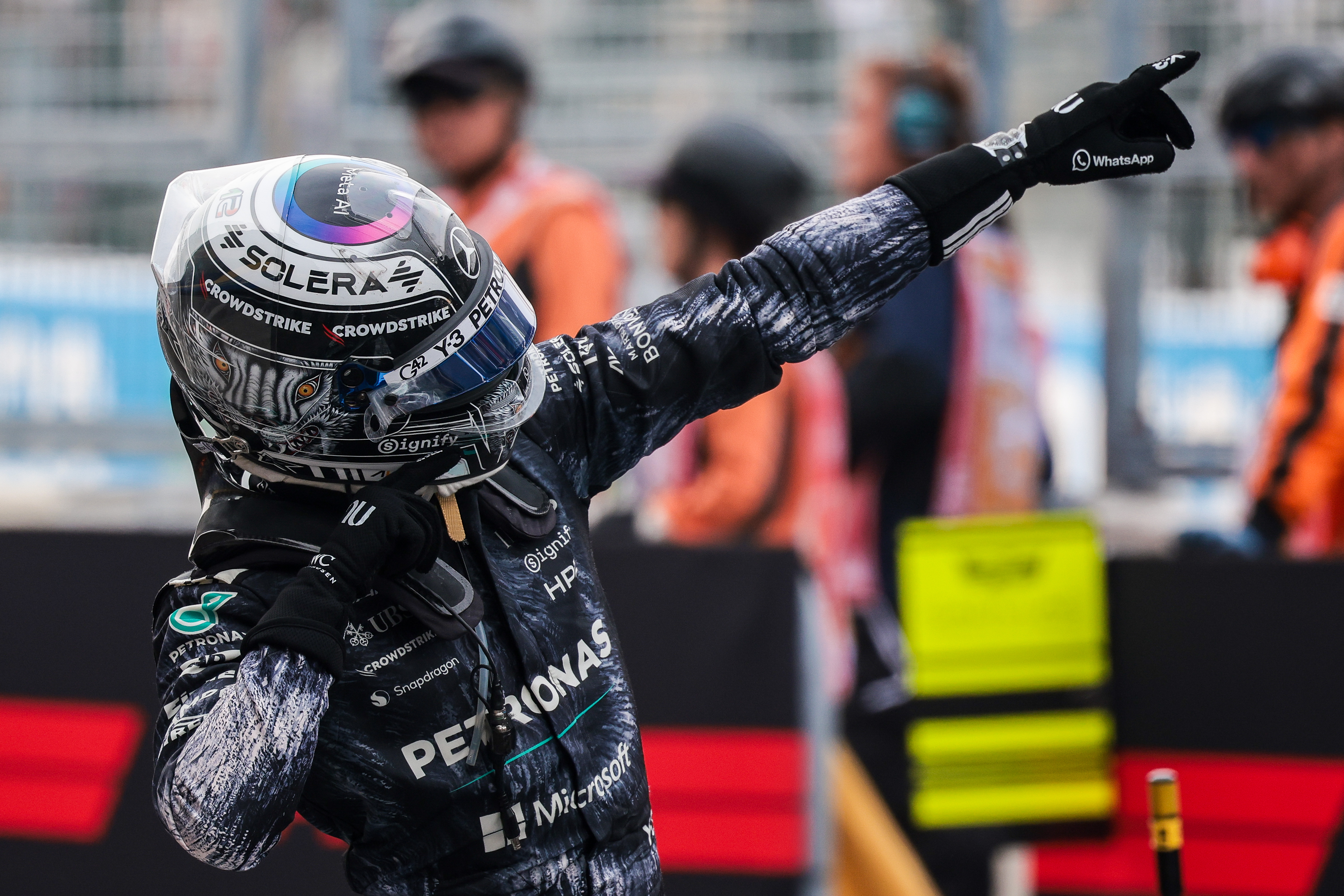
The Ghost in the Machine: Antonelli's Lead and the Data We're Ignoring

I stared at the timing sheet from Suzuka, the columns of numbers bleeding into a familiar, frustrating story. The headline writes itself: 19-year-old phenom, strategic masterstroke, generational shift. The numbers at the top are clear: Kimi Antonelli, 72 points. George Russell, 63. Mercedes, 135. A neat, dominant narrative. But data, real data, isn't just about the summit. It's about the contours of the climb, the tremors in the line graph that hint at the fault lines beneath. And right now, the most telling tremor isn't at the top. It's in P3, with a driver whose story is being written by the wrong algorithm.
The Leclerc Paradox: A Ferrari Fall Guy in a Data-Driven Age
Let's be blunt. The post-race chatter will frame Charles Leclerc's podium as a fortunate salvage operation after a "fierce duel." It fits the lazy, persistent narrative: the error-prone prodigy. But scrub the paint-swapping from the broadcast and look at the lap traces. Look at the sector times. The raw pace data from 2022-2023, which I keep pulled up like a sacred text, already told us he is the most consistent qualifier on the grid. That didn't vanish. What happens at Ferrari is a systematic erosion of that potential, a weekly ritual of strategic chaos that forces a driver to overreach.
"Consistency isn't just a driver metric; it's an institutional one. Ferrari's data lake is polluted with panic. They're reading his heart rate, not the race."
At Suzuka, he was again the collateral damage of a team that uses data to react, not to anticipate. The Safety Car gifted Antonelli the lead, but what was Ferrari's play for Leclerc? The numbers from his stint before the stop showed a car capable of challenging Piastri, but the call came late, the delta was lost. He then spent his final stint fighting a Mercedes on older tires—a battle of data-fueled tire models versus raw driver feel. He won that battle. That's the story. Not a recovery drive, but a reclamation drive against his own team's predictive failures. In an era screaming about analytics, the best qualifier of his generation is constantly hamstrung by the sport's most historic team's inability to use them.
Suzuka's Safety Car: The Algorithm's First Taste of Blood
Now, to the new championship leader. Let's not romanticize the "well-timed Safety Car." It was perfectly timed. For the Mercedes strategy computer. The moment Oliver Bearman's Haas left the track, a thousand simulations ran in Brackley and on the pit wall. The decision for Antonelli was instantaneous: stay out, pit under yellow, inherit lead. It was flawless, emotionless, and effective. This is the harbinger of the sterile future I see coming.
Kimi Antonelli drove a superb race. He controlled it from the front with the icy precision of a veteran. But the pivotal moment, the race-winning moment, was not a daring pass at 130R. It was a software prompt. This is the path we're on: within five years, I believe these moments will be fully automated. Driver intuition—the Schumacher-esque gut call to pit a lap earlier than planned, to feel a tire graining before the telemetry spike—will be overridden. We'll have algorithmic pit stops, optimized tire changes, and races decided by which team's machine learning model best predicts chaos. Suzuka 2026 will be seen as a primitive stepping stone. The win was executed by a teenager, but it was architected by code.
I think of Schumacher in 2004. His consistency was a function of feel, of a symbiotic, almost pre-verbal communication with Ross Brawn. They had data, yes, but they trusted the heartbeat of the car over the digital pulse. Today, they'd have told him to manage a 0.4s gap, and in the process, sterilized the very artistry we watched.
By The Numbers, And Between Them
- 19 years, 72 points: The headline. The youth record.
- 13.2-second winning margin: The dominance post-Safety Car. A number that screams car advantage, not just driver brilliance.
- Max Verstappen, P8: The subplot. Red Bull's data is telling a story of decay, a champion's heartbeat syncing with a dying car.
- The Unwritten Number: Leclerc's lap time variance in clean air vs. traffic. I'd wager it's the lowest in the top five. The consistency persists, even when the strategy doesn't.
Conclusion: The Human Cost of the Perfect Dataset
So, what does the data from Japan really tell us? It tells us Mercedes is executing a cybernetic masterpiece. It tells us Ferrari is still writing tragedy in binary. And it tells us a talented 19-year-old is the face of a shift that is as much about silicon as it is about skill.
Antonelli deserves the lead. But as we race toward Shanghai, watch more than the points column. Watch the radio traffic. Watch the on-board reactions to strategy calls. We are in the golden age of data, but we are on the precipice of using it to build a cage. The true championship battle might not be between Antonelli and Russell, but between the drivers and the ever-more-prescriptive datasets that seek to pilot them. The numbers from Suzuka show a new leader. My fear is they're also showing us the blueprint for the first driverless champion. The story isn't just who's ahead. It's about who—or what—is really steering the car.