The Ghost in the Machine: Antonelli's Win and the Algorithmic Safety Net

I stared at the lap chart from Suzuka, the lines crossing like a cardiogram for a patient in crisis. Kimi Antonelli’s line flatlined at the start, a sudden dip from P1 to P6. Then, the steady, metronomic climb back to the top. The official narrative is about clutch errors and mental resilience. But the real story, the one the timing sheets whisper, is about how modern Formula 1 is building a world where a driver’s worst mistake can be algorithmically erased. This wasn't a comeback; it was a system override.
The "Stupid" Error and the Data-Driven Salvation
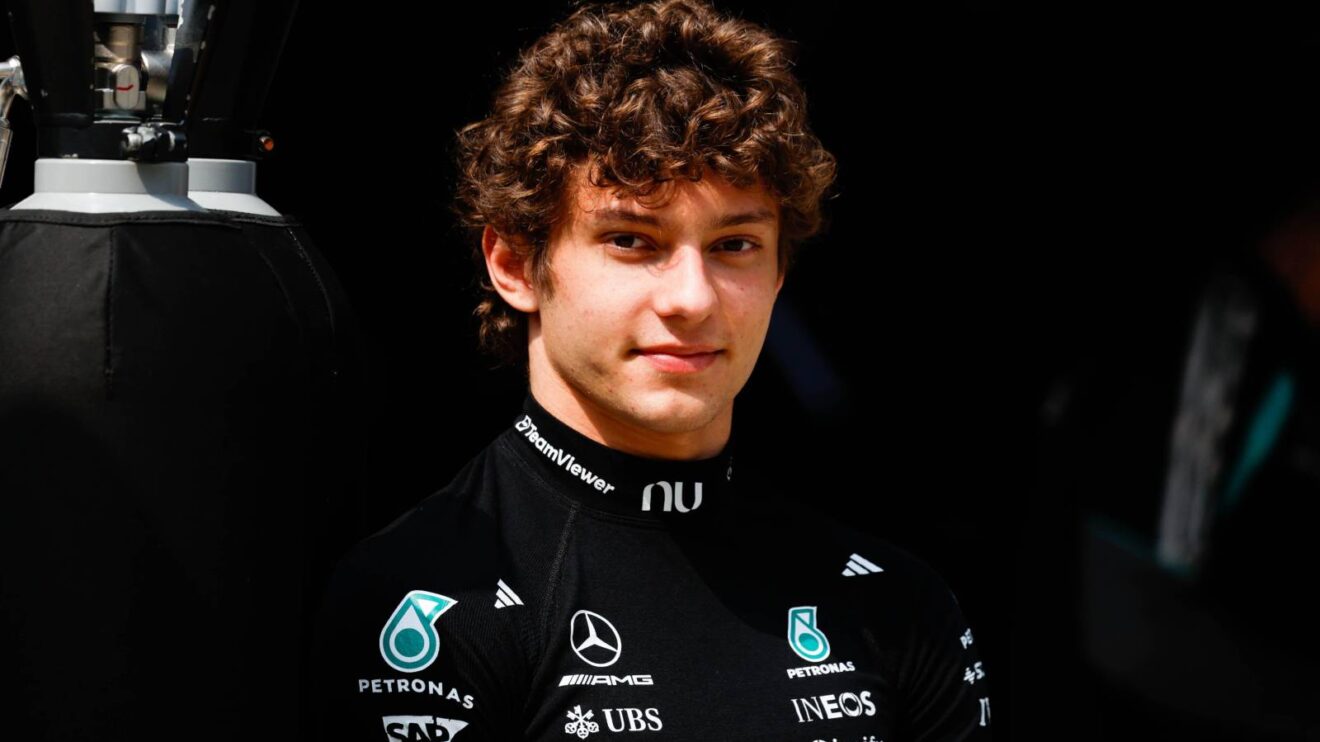
Let’s be clear about the facts. On March 31, 2026, Kimi Antonelli did what he described as a "really stupid thing." He botched his clutch procedure at the Japanese Grand Prix, turning pole position into a first-corner scramble in sixth. The visceral, human error. The kind that, in another era, would define a race, a championship even. His quote is a raw admission of fallibility:
"I didn't insert my fingers into the clutch correctly, leading to an improper release and excessive wheelspin."
This is the driver feel Schumacher spoke of in 2004—the intimate, physical dialogue with a machine that can betray you in a millisecond. But what happened next is pure 2026. The system absorbed the shock.
The Safety Car for Oliver Bearman’s crash wasn't just luck; it was a variable fed into a real-time probability engine. Antonelli, crucially, had not yet pitted. The Mercedes wall, swimming in a sea of predictive data, knew the neutralization was his salvation. His stop under yellow was flawless, a pre-programmed response that handed him the net lead. He acknowledged it himself: without that Safety Car, winning would have been "a lot more difficult."
But is that the point? The win wasn't built on a daring double-stint on hards or a relentless charge through the field on pure pace. It was built on a pit wall’s correct call on when to box, a decision increasingly made not by gut but by gigabytes of historical tire wear and traffic simulation. Antonelli’s "strong pace after clearing traffic" was executed from clean air, handed to him by the strategic algorithm. The human error was mitigated by silicon.
The Leclerc Paradox and the Sterilized Battle
This is where the story gets bitter for me. Buried in the details is a gem that perfectly illustrates my crusade: Antonelli "struggled to pass Charles Leclerc earlier due to differing energy deployment strategies."
There it is. Charles Leclerc, the man whose raw one-lap pace data from 2022-2023 marks him as the most consistent qualifier of his generation, was reduced to a moving roadblock defined by his car’s energy algorithm. He wasn't being out-driven in a wheel-to-wheel duel; he was being managed by a deployment curve. This is the robotized racing I fear—the battles decided by who has the more conservative regen setting, not the braver late-braking move.
The article frames Antonelli taking the championship lead from George Russell as a "major power shift." Is it? Or is it simply the result of one driver having his catastrophic error digitally corrected, while the other didn't need the help? Russell dropped from second to fourth at the start, a quieter mistake that didn't trigger the same safety-net sequence. The nine-point gap now separating them is less a measure of driver superiority and more a ledger entry from a day of chaotic variables processed by Mercedes' supercomputer.
We are celebrating the outcome while sanitizing the struggle. Schumacher’s 2004 dominance was a terrifying display of human-machine synergy, where the feel through his fingers was the final, irreplaceable data point. Today, the feel is an input, one of hundreds, often overruled by the central processor.
Conclusion: The Archaeology of a Flawed Victory
So what does the data archaeology of Suzuka tell us? It uncovers a story of pressure, yes. A rookie on pole feeling the weight of expectation, his fingers betraying him. But it also uncovers the sport's trajectory. The win is a data point in Antonelli's rise, but it’s a louder data point in the rise of the omnipotent strategy tool.
Antonelli vows to do "a lot of work" on his starts. He should. Because the next time he makes that "really stupid" error, the Safety Car may not deploy. The algorithm may not have an answer. And we will see if the mental resilience they praise is built on the confidence of comebacks earned on track, or on the subconscious safety net of a team that can computationally undo his worst moments.
The championship lead at 19 is a historic headline. But dig into the numbers, and you find a more profound, unsettling truth: F1 is learning to love the driver less for his imperfections, and more for his compatibility with the system designed to erase them. The heartbeat of the sport is becoming a steady, predictable hum from the server rack, not the arrhythmic, thrilling panic of a clutch pedal gone wrong.