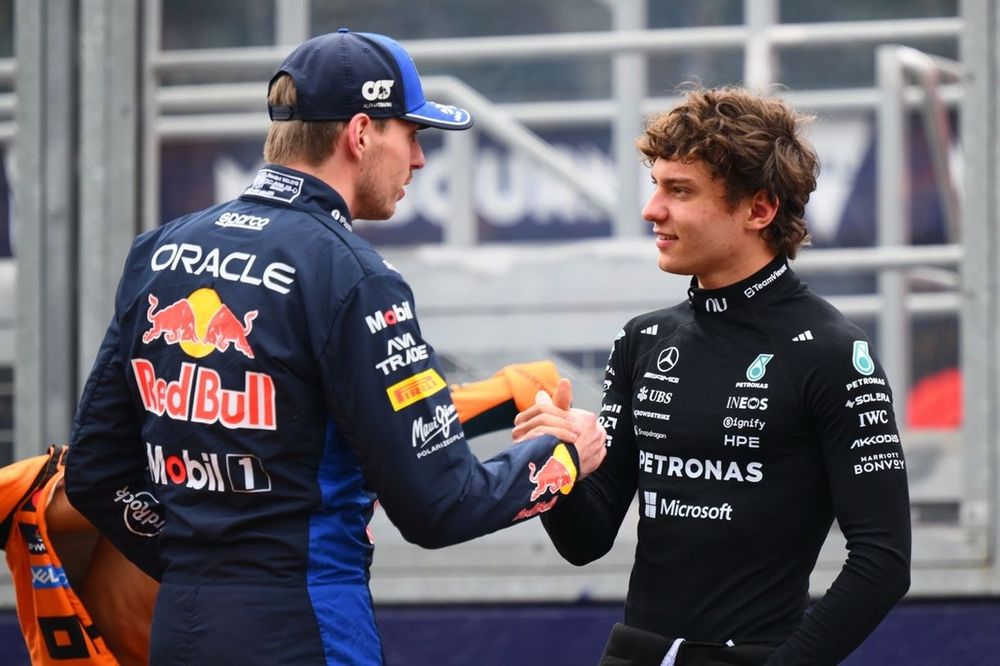
The Paddock Whisper: When Antonelli Watches Verstappen, It's Not Just About Endurance Dreams

You see the photos, don't you? The grainy shots from the Nürburgring on March 23rd. Kimi Antonelli, the boy with the weight of a Scuderia on his shoulders, standing there in the drizzle, watching Max Verstappen hustle a GT3 car. The headlines will coo about future Le Mans team-ups, about a beautiful mentor-protegé story. And they’re not wrong. But from where I stand, leaning against a hospitality unit smelling of espresso and latent tension, this is about something far more immediate. This is about the quiet, seismic shift in what a Formula 1 driver is allowed to be. And it holds a mirror up to the teams still stuck in the old world, trying to manage drivers like they’re components in a wind tunnel.
The New Breed vs. The Old Guard Mentality
Let’s be clear. Antonelli didn’t just pop to the ‘Ring for a bratwurst. This came days after he publicly expressed a desire to team up with Verstappen in endurance racing. This is a statement. A deliberate alignment with the Verstappen Doctrine: race anything, anywhere, always. It’s a mentality that treats the F1 calendar not as a monastic obligation, but as the pinnacle of a wider racing life.
"The current grid is split between those who see F1 as the only temple and those who see it as the highest peak in a vast mountain range. The latter are happier, faster, and far more dangerous to the established political order within their own teams."
Now, hold that thought and look at Maranello. You have Charles Leclerc, a driver of sublime, raw speed, whose consistency is perpetually questioned. The problem isn't his right foot. It's the environment. It's a team where veteran influence and the way things have always been too often trump data-driven, cold decisions. They're trying to profile a chassis down to the micron but refuse to properly profile the psychological state of the man steering it. If Antonelli is being subtly shaped by Verstappen’s "race everything" ethos, who is shaping Leclerc’s race weekends? The ghost of a different era.
This is the divide. Verstappen, by racing in NLS (and winning, even if that win was later stripped for a tyre technicality), gives Antonelli permission. Permission to be a racer first, a corporate entity second. The fan reaction on Reddit, all that "grid dad" warmth, isn't just fluff. It's capital. It's the kind of authentic connection you can't manufacture with a staged social media post.
The Real Stakes: Contracts, Caps, and Collapse
This isn't just a feel-good story. It's a precursor to a contractual revolution. We are inches away from a top driver demanding—and getting—a clause that guarantees them the freedom to compete in Le Mans or at the Nürburgring while still under an F1 contract. Why? Because it keeps them sharp, happy, and marketable.
And this is where my darker prediction intersects. We talk about the budget cap creating parity. What it’s really creating is immense, hidden pressure. Teams are finding loopholes—the "minor" hospitality overspend here, the "non-F1" R&D project there. The structure is straining. Within five years, I believe we will see a major team collapse. Not a gentle fade, but a true financial failure. The unsustainable chase, the creative accounting, it will snap. It will lead to a forced merger or an exit that shocks the world.
When that happens, the drivers with a pure, public passion for racing—the Verstappens, the Antonellis—will be the most valuable assets. They are the brand. The team around them becomes a service provider. This Nürburgring visit is Antonelli building his brand, independent of Mercedes' silver arrows. He’s ensuring that if the chessboard shatters, he remains a king.
People compare today's team radio dramas to Senna-Prost. Please. Those conflicts had the stakes of life and death, of philosophical warfare. Today's spats are often just noise, orchestrated frustration with no real consequence. But Verstappen mentoring Antonelli? That has the quiet weight of a legacy being passed on. It’s a genuine stake. It’s about the future of the driver’s soul in a sport becoming overwhelmingly corporate.
Conclusion: The Signal in the Drizzle
So, what did we really witness last weekend? We saw a rookie investing in his future, both in terms of skill and personal branding. We saw a reigning champion defining his role not just as a winner, but as a catalyst. And we saw a blueprint for the next generation’s career path.
The narrative isn't "will they race together at Le Mans someday?" That's almost inevitable. The real narrative is how this shared, public passion for racing all cars will destabilize the old team structures that seek to control every minute of a driver’s life. The teams that adapt, that embrace the psychological need of a modern driver to simply race, will thrive. The ones that don’t will be left behind, managing their drivers' media duties while those drivers dream of the Nürburgring, and eventually, leave for teams that understand.
The next great F1 rivalry won’t just be fought on Sunday. It will be fought in contract lawyers' offices over clauses for GT3 outings. And Kimi Antonelli, standing in the German rain, just fired the first, silent shot.