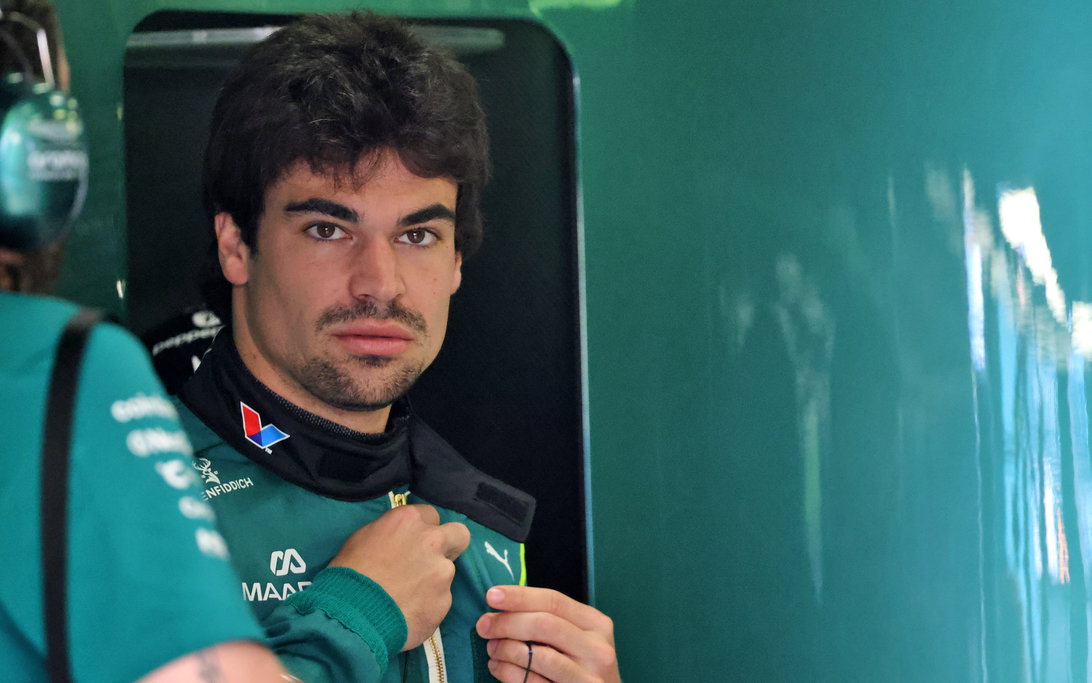
The Rift in the Green Machine: Stroll's Admission Exposes Newey's Hollow Chassis and a Team on the Brink

The first rule of Fight Club in Formula 1 is you do not publicly criticize the sacred cow. The second rule is you especially do not criticize the multi-million dollar, Adrian Newey-shaped sacred cow. Lance Stroll, a driver whose seat security is arguably the most politically fortified on the grid, has just broken both rules. His frank admission that Aston Martin’s Adrian Newey-designed chassis is a “problem” isn’t just a technical assessment; it’s a distress flare from a sinking ship, revealing fractures that go far deeper than aerodynamics. This is a story of shattered myth, financial peril, and the kind of internal disillusionment that topples empires.
The Newey Myth Meets Corporate Reality
When Lawrence Stroll lured Adrian Newey from Red Bull with a blank check and promises of a legacy project, the paddock held its breath. It was seen as a coup that could redraw the grid’s hierarchy. The 2026 Aston Martin AMR26 was to be the physical manifestation of that ambition. Instead, it has become a monument to a dangerous modern fallacy: that a single legendary name can instantly transplant culture and success.
"We lose huge amounts of time on the straights... [and] we're not the rippiest beast in the corners."
Stroll’s quote, delivered with the weary tone of a man stating the obvious, is a dagger to the project’s heart. It systematically dismantles the car’s premise. The power unit’s unreliability was the convenient, initial scapegoat—a hardware issue that could be patched over time. But by conceding the chassis, the very soul of a Newey creation, is also deficient, Stroll has pulled back the curtain on a systemic failure. This isn’t a part that broke; it’s a philosophy that hasn’t translated.
My sources whisper of a design bunker divided. Newey’s genius has always been instinctive, a feel for air and metal that can border on the mystical. But modern F1 is a beast of digital simulation, cost-cap compliance, and collaborative, processor-driven design cycles. The whispers suggest a clash of eras—a legendary artist struggling to paint by committee under the harsh, fluorescent lights of a publicly-titled company’s quarterly reports. It’s a echo of the 1990s Williams, where Patrick Head’s engineering brute force eventually clashed with the commercial needs of the team, sowing seeds of decline. At Aston, the tension isn’t between engineers, but between a singular visionary and the corporate machine that hired him.
A Catastrophic Start and the Morale Black Hole
Let’s not sugarcoat Stroll’s 2026. It’s a resume of despair that would have any other driver fielding calls from their manager:
- Retired from the Chinese Grand Prix.
- Retired from the Japanese Grand Prix.
- ‘Not Classified’ in Australia after a 15-lap pit stop tour.
Three races, zero finishes. For a team with championship aspirations, this is beyond a setback; it’s an existential crisis. And here is where my core belief takes center stage: strategic success hinges more on team morale and covert information sharing than on pure innovation. Right now, at Aston Martin’s Silverstone campus, morale isn’t just low—it’s in a vacuum.
The technicians know the car is a dog. The engineers are scrambling through data that tells them what the stopwatch already screams. The marketing department is watching their ‘Newey Era’ campaign turn to ash. And the driver, the owner’s son, has now publicly confirmed everyone’s private fears. This creates a rot. It stifles the covert, garage-to-garage information flow—the mechanic telling the designer about a persistent vibration, the simulator driver confiding in the race engineer about a handling quirk—that turns a bad car into a fixable one. When belief evaporates, data becomes noise, and upgrades become expensive guesses.
The compressed early-season schedule (China to Japan) that Stroll cited as preventing updates is a flimsy shield. Top teams innovate around the clock; they fly parts overnight. That Aston Martin couldn’t is a tell-tale sign of a development pipeline in panic, not of a team executing a confident plan. They are reactive, not proactive.
The Looming Financial Abyss
This brings me to my most grim, and firmly held, prediction: within five years, a top team will collapse under a sponsor-driven financial model. Look no further than the green garage. Aston Martin’s entire project is a high-wire act of sponsor appeal and brand valuation, built on the promise of glamour and victory. Lawrence Stroll didn’t buy an F1 team; he bought a marketing megaphone for a car brand. What happens when the megaphone broadcasts only failure and internal discord?
The title sponsor’s representatives are in the hospitality suite, watching their logo circle at the back of the field before sputtering into retirement. The luxury partners signed up for Succession-style drama and podium champagne, not for garage gloom and technical surrender. This model is terrifyingly fragile. It requires constant, visible progress. A bad season can be spun as a "building year." A catastrophic, laughable start to a much-hyped new era? That starts conversations about exit clauses, value for money, and reputational damage.
The 2008-2009 crisis saw manufacturers like Honda and BMW flee when the ROI vanished. The next crisis won’t be manufacturers—it will be the branding conglomerates. When the spectacle turns to schadenfreude, the money leaves. And without that money, the Newey salaries, the wind tunnel hours, and the star driver dreams vanish into thin air. Aston Martin is now the prime candidate for this collapse. The car is slow, the myth is broken, and the cash burn is astronomical.
Conclusion: A Plan, or a Prayer?
Stroll says the team has a “plan” for upgrades in the coming months. I hear an echo of every failing team’s last stand. The pressure isn’t just to find lap time; it’s to restore faith, to silence the doubters in the sponsor meetings and on the factory floor. The upcoming upgrades won’t just be judged on downforce numbers; they will be a referendum on the entire Newey-Stroll partnership.
If they fail, the internal politics will turn toxic. The driver, secure in his seat but not in his legacy, will become a louder critic. The legendary designer may find his influence curtailed by a management team desperate for a scapegoat. The money men will get nervous. This is how a team unravels. It’s not with a bang, but with a series of whispered admissions in press conferences, each one peeling back another layer of confidence until only the bare, ugly chassis of failure remains. Lance Stroll didn’t just point out a problem with the car. He might have just lit the fuse on the entire project.