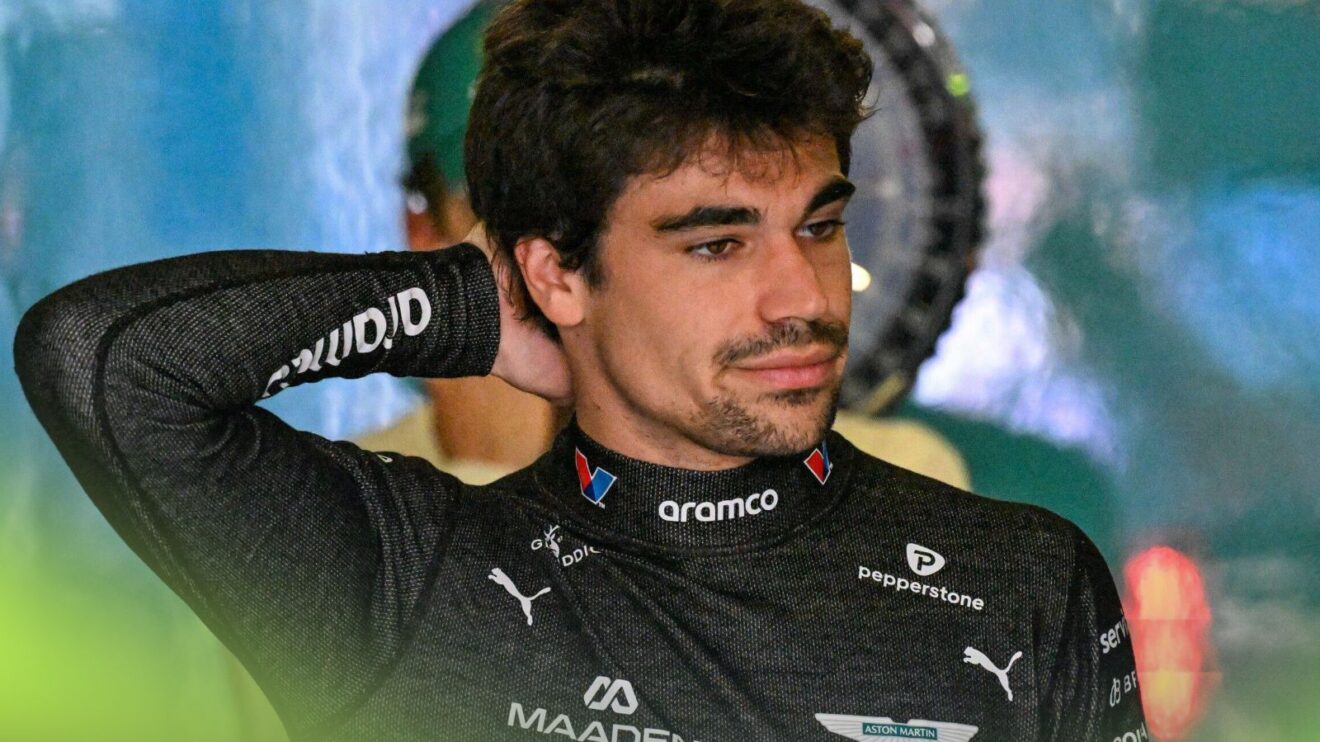
The Penalty Ledger: How Lance Stroll's 8:25 of Sanctions Tells a Deeper Story About Modern Racing's Data Paradox

I opened the timing sheets from Paul Ricard expecting a simple debut narrative. Instead, I found a ledger of errors so precise, so quantifiable, it felt like an autopsy. Lance Stroll’s GT3 debut wasn't just marred by penalties; it was defined by a single, brutal metric: eight minutes and twenty-five seconds. That’s not a racing incident; that’s a sentence. While the headlines will scream about Aston Martin's last-gasp victory with the #7 car, the real story is etched in the violation codes of the #18. This is what happens when the abstract "learning curve" is converted into cold, hard stopwatch time. It’s data with a heartbeat, and its rhythm was erratic.
The Anatomy of a Penalized Debut: A Data Triptych
The raw numbers from the GT World Challenge Europe opener are a triptych of modern racing woes: driver error, team disarray, and the unforgiving nature of professional sports car racing. Stroll, sharing the #18 Comtoyou Racing Aston Martin with Roberto Merhi and Mari Boya, didn't lack pace. His qualifying lap of 1:54.472, a mere 0.005 seconds off the more experienced Merhi, tells us his raw speed adaptation was successful. The stopwatch captured competence. But race data is multidimensional, and the other dimensions betrayed him.
The penalty breakdown is a clinical read:
- Collision (Boya): A stop-and-go. The most straightforward error, a misjudgment.
- Ignoring Blue Flags (Stroll): A failure of racecraft awareness, of processing real-time information beyond the steering wheel.
- Repeated Track Limits (Stroll): This is the most telling one. It’s not a single mistake; it’s a pattern. It speaks to a driver searching for limits in a new car, yes, but also to a discipline fracture. In Michael Schumacher’s 2004 season, his consistency wasn't just about fast laps; it was about existing, lap after lap, within a predefined operational box with near-surgical precision. The car was an extension of that will. Here, the data shows a will at odds with the rulebook’s geometry.
"The stopwatch is an honest witness. It records excellence and indiscipline with the same impartial glare. Eight minutes and twenty-five seconds isn't a narrative; it's a verdict. You can't argue with the sum."
This debut, inspired by chats with Max Verstappen about the fun of sports cars, collided with the professional reality. The final position—15th—is almost irrelevant. The story is in the cumulative penalty column, a number so large it overshadows the promising qualifying delta. It’s a stark reminder that in endurance racing, the driver is a node in a system. One node’s erratic output can corrupt the entire run.
The Broader Signal: F1's Data Crutch and the Erosion of Instinct
This incident is a microcosm of a tension threatening the soul of top-tier motorsport. We are hurtling toward a future where data analytics doesn't just inform decisions, it mandates them. Stroll’s penalties—particularly the repeated track limits—highlight a driver operating without the ingrained, car-specific intuition that comes from thousands of kilometers. In F1, that intuition is being systematically replaced by real-time telemetry directives. The engineer sees a deviation from the optimal traction model and corrects it over the radio. The driver becomes a biological actuator.
Is this progress? Schumacher’s genius at Ferrari was a fusion of pre-digested data from testing and a visceral, unteachable feel for tire degradation and balance. He was the algorithm. Today, we risk creating a generation of drivers who are brilliant at executing a pre-ordained strategy from the pit wall but may be losing the ability to improvise under pressure, to feel a car sliding beyond the ideal slip angle and use it, to manage a race when the original data set becomes obsolete.
Stroll’s GT3 weekend is a perfect, messy example. The F1 driver, accustomed to a cocoon of data, steps into a less data-saturated environment (though still highly technical) and the result is a string of procedural errors. The pace was there—the data proves it—but the racecraft discipline faltered. It’s as if the muscle of independent race management has atrophied, waiting for a voice in the ear to say "now." In a not-too-distant future, will we see "robotized" racing where algorithmic pit calls and driving lines suppress all driver variance? Where a penalty sheet like this is an impossibility because the car's systems physically prevent track limits breaches? The sport would become sterile, predictable. The heartbeats would sync to a single, silicon metronome.
Conclusion: Data as Emotional Archaeology
So, what do we excavate from the ruins of this 15th-place finish? We find a cautionary tale written in penalty minutes. For Stroll, the path forward is clear: the data shows he can match the pace. The next layer of data—the consistent, clean race stint—must now be unearthed. It requires a synthesis of that raw speed with the kind of iron discipline that defined eras past.
For the rest of us, this debut is a rich data point in the ongoing study of the modern driver. We must use data not just for optimization, but for emotional archaeology. What does a lap time drop-off correlate with? What does a pattern of track limits violations in a new car tell us about the transferable skills from F1? The numbers from Paul Ricard tell a story of adaptation, pressure, and the steep, non-linear cost of mistakes at this level.
The #7 Aston Martin won the race with nine minutes to go. But the more enduring story may be the #18 car, which lost it over eight minutes at a time. One is a headline. The other is a dataset ripe for analysis, a human story of ambition and error quantified, waiting for anyone willing to look beyond the final classification. The timing sheets never lie. You just have to know how to listen to what they're shouting.