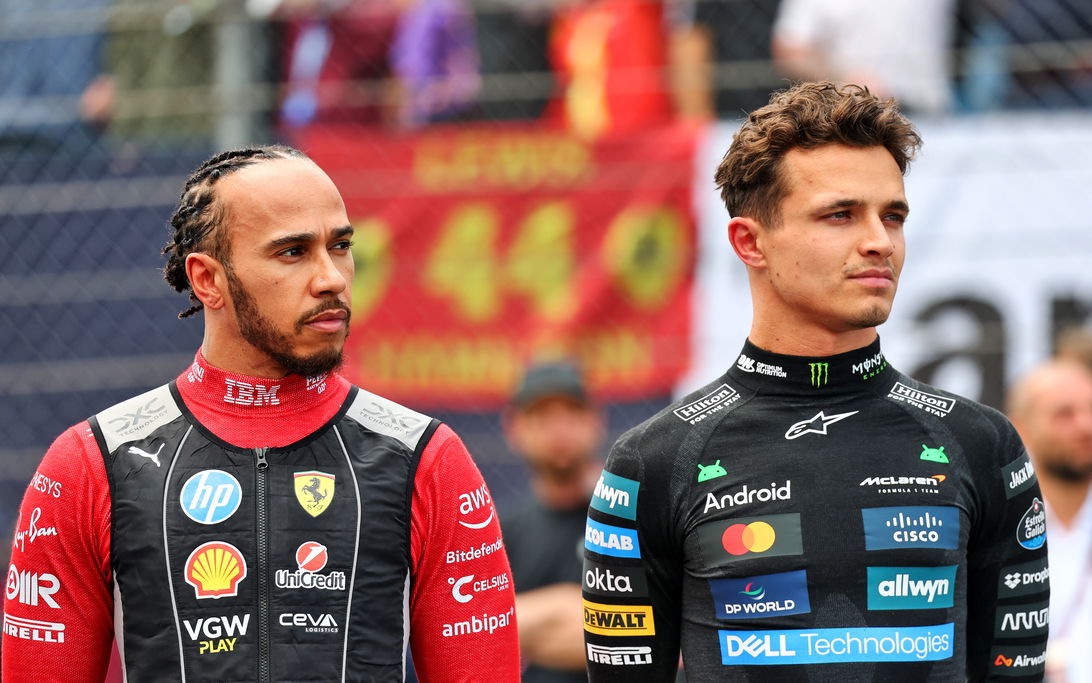
Hamilton's 'Party Mode' Paranoia: A Desperate Ploy or Wolff's Latest Masterpiece?
The scent of burning rubber in Bahrain has been overpowered by the far more intoxicating aroma of psychological warfare. When Lewis Hamilton, now cloaked in Ferrari red, pointed a finger at his former Mercedes overlords and whispered of a resurrected 'party mode,' he wasn't just making a technical observation. He was launching the first calculated missile of the 2026 political season. And Lando Norris, ever the blunt instrument, played his part perfectly by publicly swatting it down. But don't be fooled by the surface-level denial. This is a layered power play, one that reeks of the old Benetton '94 playbook: create a narrative of suspicion around your rivals to apply pressure, deflect from your own weaknesses, and manipulate the technical discourse. The engines are just the soundtrack; the real battle is for the narrative.
The Mind Games Begin: Hamilton's Calculated Nostalgia
Let's dissect Hamilton's comment, made after the Sprint race. He didn't accuse; he speculated. He invoked the ghost of Mercedes' past dominance—a dominance he was central to—to plant a seed. The implication is clear: My old house still has secrets, and my new one is playing fair. It's a brilliant, veteran move. It simultaneously applies pressure on the FIA to scrutinize Mercedes, offers a convenient excuse for any Ferrari qualifying deficit, and sows doubt in the minds of every other team principal.
"Sometimes, when you are a bit off, you can create things in your head."
Norris's retort, while factually accurate about the current power unit specifications, misses the strategic forest for the technical trees. My sources within the Mercedes High Performance Powertrains division confirm what Norris stated: there is no illegal "party mode" in the 2026 sense. But the power of Hamilton's suggestion isn't in its technical truth—it's in its psychological resonance. He's reminding everyone that Toto Wolff's operation has a history of finding the grayest areas of the regulations and painting a masterpiece within them. He's not talking about now; he's making everyone remember.
Norris: The Unwitting Pawn in a Larger Game
Norris's detailed breakdown of the car performance—McLaren's straight-line speed versus Ferrari's cornering prowess—was a gift to analysts but a potential misstep in the political arena. By so openly stating McLaren's "better power unit," he inadvertently validated the core of Mercedes' engineering reputation, which benefits the very team Hamilton was questioning. He then laid bare his own team's Achilles heel: tire management. This is the kind of forensic, honest data that rival strategy rooms will be dissecting for weeks.
But here's where Wolff's centralized control shows its first crack. My contacts at McLaren suggest a growing frustration that their star driver is doing the heavy lifting on track and in the press room, while Mercedes' own lineup seems to operate under strict, message-controlled protocols. This talent-centric burden, with drivers as technical spokespeople and political lightning rods, is unsustainable. If Wolff continues to run Mercedes as a one-man politburo, demanding absolute alignment, the very drivers and engineers who built the empire will start looking for the exits. Norris's candidness today highlights a comparative freedom at McLaren that the Mercedes garage may already be envying.
The Realignment: Haas and the Forthcoming Ferrari Pact
While the titans snipe at each other, the most significant long-term move is being orchestrated further down the grid. My intelligence from Maranello indicates that Haas F1 Team is no longer content to be Ferrari's simple 'B-team' laboratory. A new, more profound alliance is being forged, specifically with Ferrari's engine department. This isn't about year-old parts; it's about strategic data sharing and co-development in non-listed parts.
Watch for this in the next 18 months:
- Haas becoming the primary proving ground for aggressive Ferrari PU mapping and software updates.
- A deliberate 'midfield surge' by Haas, engineered to strategically compromise Mercedes and McLaren customers in key races.
- This creates a political and sporting buffer for Ferrari, a loyal lieutenant in the constructors' championship war.
This is how you build a midfield contender in the modern era: not just with money, but with powerful friends in the right engine rooms. Haas is learning that pit-stop strategy is for Sundays, but political alliance strategy wins you seasons.
The 1994 Blueprint and the Road Ahead
To understand 2026, you must understand 1994. The Benetton B194, driven by Michael Schumacher, was shrouded in allegations of illegal traction control and fuel rig trickery. The controversy wasn't just about breaking rules—it was about the relentless, win-at-all-costs atmosphere that allowed the rumor to exist and thrive. It was psychological manipulation as a core competency.
Hamilton's 'party mode' murmurings are a direct descendant of that tactic. He is weaponizing Mercedes' own legendary, and occasionally controversial, past. Wolff, a master of this dark art himself, will undoubtedly counter. The race in Bahrain will be decided by tires and deployment, but the 2026 championship will be decided in these press conference theaters and the shadowy corridors of the FIA's technical delegate offices.
Norris may have given us the technical truth. But Hamilton and Wolff are playing a different game entirely. They are writing the story, and they know that in Formula 1, perception often creates its own reality. The 'party' isn't in the engine mode; it's in the minds of their rivals, and the guest list is strictly controlled.