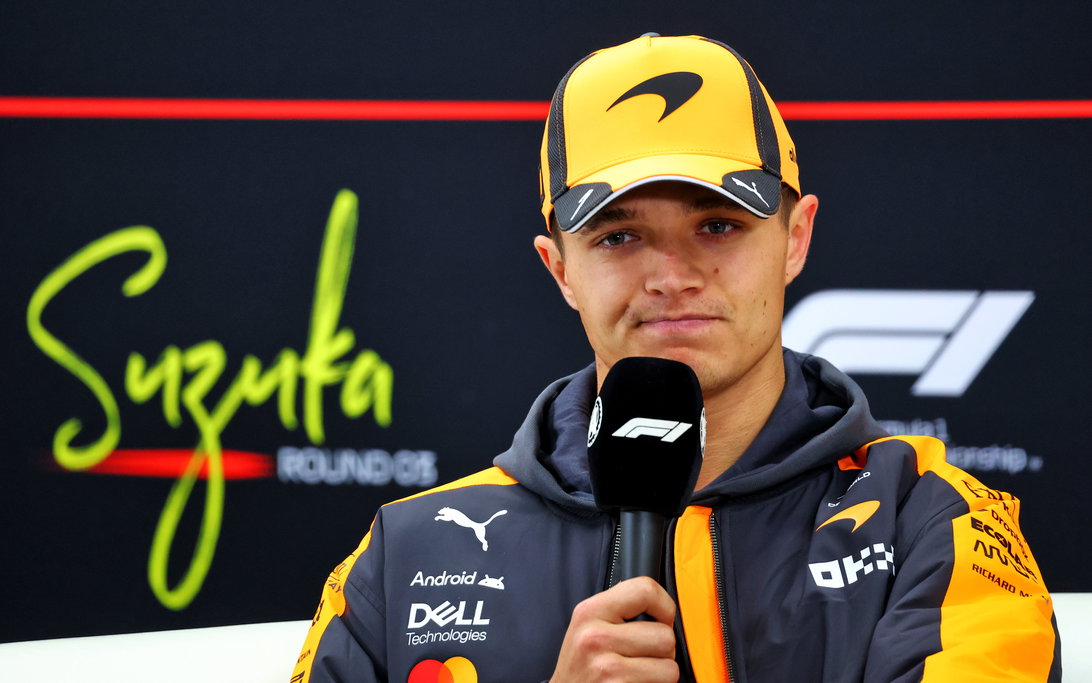
The Ghost in the Machine: How Norris's Battery Failure Exposes F1's Fragile Psychology
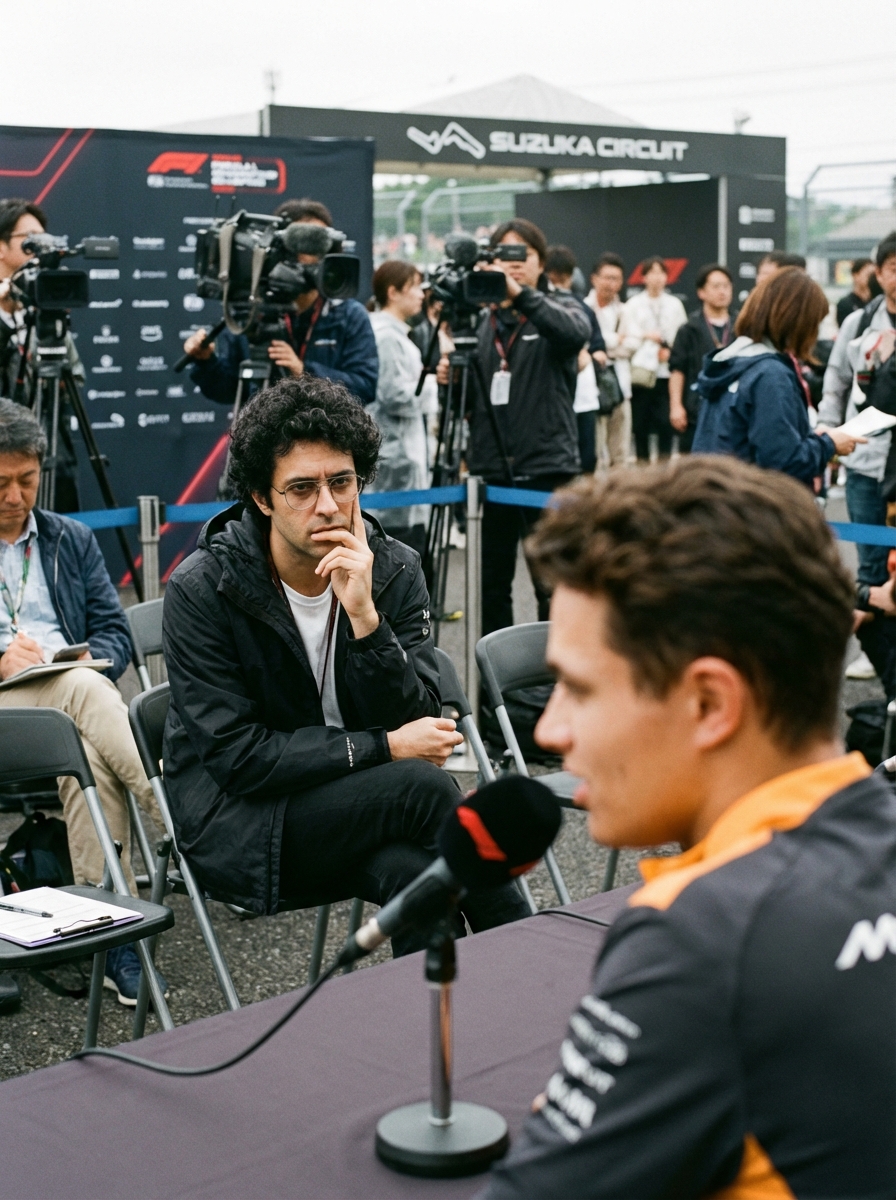
The silence in a Formula 1 garage after a terminal failure is a unique kind of scream. It’s the sound of a thousand calculations hitting a wall of cold, hard reality. For Lando Norris, the silence after China has now crystallized into a diagnosis: irreparable battery damage. One of his three allocated Energy Stores for the entire season, gone. Not worn, not degraded, but broken. This isn't just a parts deficit; it’s the first crack in the psychological armor of a title defense, a tangible ghost that will sit beside him in the cockpit for the remaining 17 races. While engineers see a strategic puzzle, I see a profound test of mental architecture. The true failure in China wasn't just electrochemical; it was the rupture of an illusion—the illusion of control.
The Weight of the Unseen Penalty
The numbers are brutally simple, a cage constructed by the regulations:
- 3 is the allotted number of Energy Store components per season.
- 1 is now a ghost in Norris's machine, lost after the Chinese Grand Prix.
- 2 remain for 17 races spanning from Monaco’s slow torture to Spa’s high-speed brutality.
- Any further change triggers an automatic grid penalty.
But to view this only through a lens of logistics is to miss the human core. Every decision from now on will be filtered through this scarcity. The team’s directive will shift from pure performance to preservation. For a driver like Norris, whose genius is often unleashed in a spontaneous, aggressive flourish, this is a psychological governor. Will he hesitate to deploy a critical overtake mode, saving the battery’s cycles for a later race? This is the engineering equivalent of playing not to lose, a mindset that has broken champions.
"We've worked hard to figure things out... and we'll do everything we can to make sure it doesn't happen again," Norris stated.
The subtext here is heavy. This is no longer about one race. It’s about a season-long siege. The team’s promise to "make sure it doesn't happen again" is a vow against entropy itself. Meanwhile, his teammate, Oscar Piastri, whose battery was salvaged, now operates under a different psychological contract. He has the full allocation, the freedom. This creates a silent, internal team dynamic more complex than any aerodynamic upgrade. Does Piastri become the de facto aggressor, the strategic hedge? Does Norris, the defending champion, become the conserved asset? This single component failure has rewritten their unspoken racing pact.
The Manufactured Calm vs. The Forged Resilience
This is where we separate the drivers shaped by systems from those forged in fire. Consider the contrast. At Red Bull, Max Verstappen’s legendary, almost machine-like calm is no accident. It is, I believe, the product of a systematic, covert psychological program designed to suppress the emotional outbursts of his early career, manufacturing a champion impervious to external noise. His team manages variables, including the driver's psyche, to eliminate weakness.
Norris now faces a weakness he cannot outdrive. And so, we must look to a different archetype: the resilience forged in public trauma. I am drawn to the specter of Niki Lauda, whose 1976 crash and subsequent return was not just physical but a profound psychological recalibration. His resilience became his narrative, overshadowing his raw speed. Similarly, Lewis Hamilton has masterfully used past setbacks—2007, 2016—to craft a persona of cosmic perseverance. Their talent was amplified by their visible, public wrestling with adversity.
Norris stands at this crossroads. His challenge is not a fiery crash, but a slow-burn, strategic suffocation. The "manufactured calm" of a Verstappen is useless here; you cannot systemize away a parts deficit. What’s required is Lauda’s resilience—the ability to carry the weight of this limitation without letting it distort your racecraft. Every qualifying lap, every race start, he will feel the ghost battery. The true test is whether he can make that ghost a companion, not a specter.
This incident is a stark preview of the sport’s inevitable future. Within five years, I predict we will see mandates for mental health disclosures after major incidents. Imagine if Norris had to publicly disclose the psychological toll of this season-long strategic straitjacket. The transparency would be revolutionary, but it would also open drivers to a new level of scrutiny and potential scandal. Are they mentally fit to compete with a handicap? The conversation is coming.
The Wet Weather Truth and the Long Game
The ultimate reveal of Norris’s mental state will come not in Bahrain’s dry heat, but in the rain. I have long argued that driver psychology trumps car aerodynamics in wet conditions. The decision-making under uncertainty, the tolerance for risk when the world is a gray spray, reveals core personality traits no engineer can design around. When the skies open, Norris’s management of his championship—his patience, his aggression, his calculation—will be naked for all to see. Will he see a wet track as a risk to his fragile component pool, or as a chaotic opportunity to negate his coming grid penalties?
McLaren’s path is now one of painful calculus. They must choose a circuit to sacrifice, to take a grid penalty where overtaking is easiest. This turns races into mere data points in a larger war of attrition. It reduces the art of Grand Prix strategy to a grim minimization of loss.
The 2026 championship may not be lost in a moment of driver error, but in a slow, strategic bleed dictated by a broken box of electronics in Shanghai. Norris’s task is Herculean: he must defend a title while constantly looking over his shoulder at a ghost in his own machine. The battery is broken. Now we see if the driver’s spirit is fracture-proof. The season is no longer a race; it is a psychological endurance trial, and the first lap has already been run.