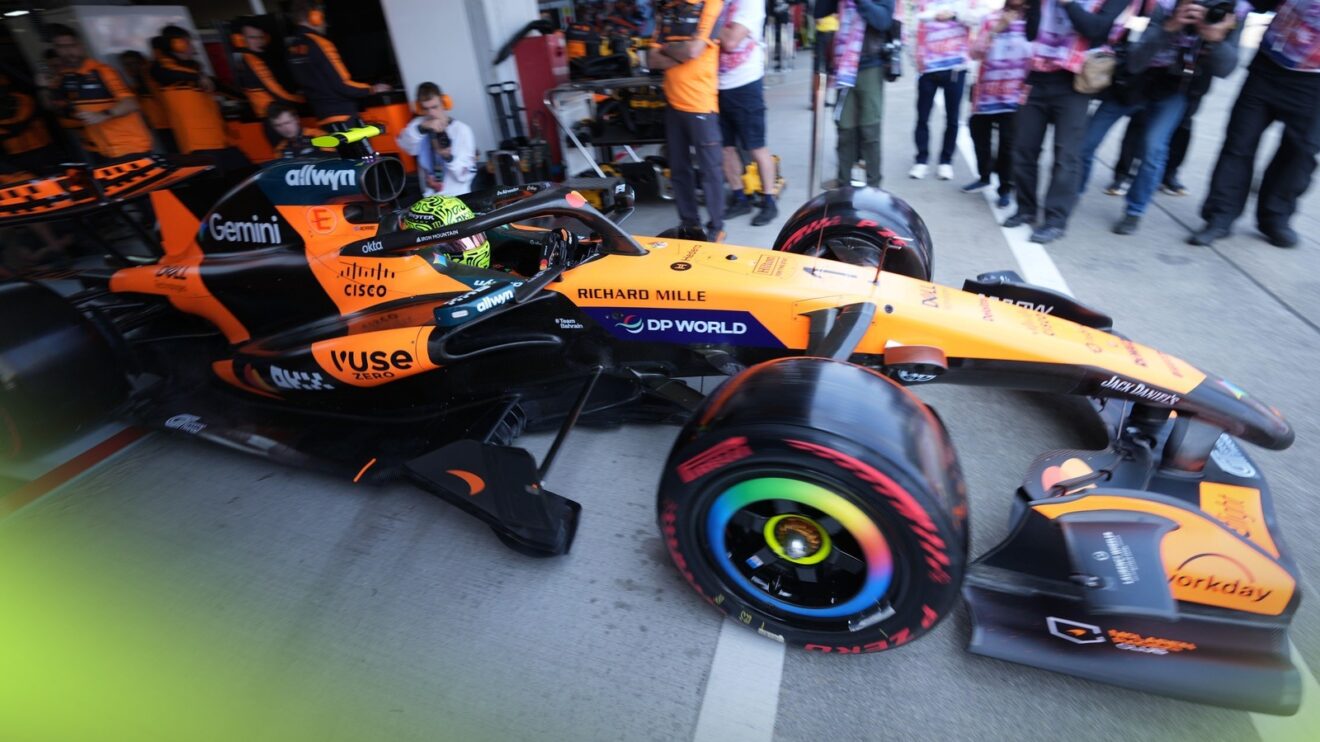
The Ghost in the Machine: How McLaren's Data Blindness is Haunting Lando Norris

I stared at the timing sheet from FP3 in Suzuka, and the numbers felt like a eulogy. Lando Norris: P6. A respectable, hollow number. The real story was in the gaps, the silence where his long-run data should have been. It was buried in the cold, official FIA document noting his third Energy Recovery System battery of the 2026 season. Three. A digit that, in the modern calculus of Formula 1, translates directly to a looming 10-place grid penalty. This isn't bad luck; it's a systemic failure of listening. McLaren is drowning in telemetry but deaf to the heartbeat of their own car, and in their quest to optimize every variable, they're sacrificing their champion's intuition on the altar of flawed data.
The Archaeology of a Failure: From China's Silence to Suzuka's Specter
Let's dig into the data grave. The sequence is damning, not in its randomness, but in its pattern.
- China: Double DNS. Both cars, dead on the grid. Andrea Stella confirmed "separate electrical faults on the battery units." Two cars, same system, same catastrophic outcome. A statistical anomaly? Hardly. That's a screaming trendline.
- Japan, Friday: Hydraulics. Norris's running limited. An isolated incident, they'd have us believe.
- Japan, Saturday: ERS Battery Failure. The third unit of the season, pushing past the allocated limit, detected just before final practice.
The narrative from Woking will speak of "separate electrical faults." My analysis, the story the correlation charts tell, is of a fundamental incompatibility. The 2026 Mercedes power unit, with its new rule cycle complexities, is speaking a language the McLaren chassis refuses to understand. They are fitting components and reading live failure metrics, but where is the predictive analysis? Where is the driver's feel in this equation?
"The recurring reliability problems, particularly on the electrical side of the Mercedes power unit in the McLaren chassis, will be a primary concern for the team as they work to understand the root cause."
This is the understatement of the season. This is the core of the crisis. They are diagnosing ghosts. Norris, the 2025 World Champion, is now a test driver for a problem that should have been simulated into oblivion. His raw pace, the data I've pored over from his title year, shows a metronomic consistency rivaling Leclerc's qualifying dominance. But what is pace when your machine is an unreliable narrator of its own condition?
The Schumacher Standard: When Driver Feel Was the Primary Sensor
This is where modern F1's obsession fails. We have a thousand data points per second, yet we cannot prevent a double DNS. Let me take you back to 2004. Michael Schumacher's Ferrari used 18 engines across two cars for an entire season. Eighteen. In a less reliable era, by today's metrics. They listened to the driver. Schumacher could feel a harmonic vibration, a subtle shift in power delivery, and his feedback was the primary diagnostic tool. The team trusted that organic data stream.
Now? Norris feels a hiccup. He reports it. The engineers check the telemetry, see no critical alerts, and send him back out until the system fails catastrophically. The third battery is a monument to this disconnect. The driver's intuition is an analog signal in a digital world, and we are filtering it out. We are robotizing the reaction, not the car. The pit stops are algorithmically perfect, the energy deployment is pre-programmed, but the fundamental marriage of chassis and power unit is left to chance.
What does this do to a driver's psyche? You can correlate it. The lap time drop-off after a reliability scare is measurable. The oversteer corrections become more frantic, the trust in the pedal disappears. Each time Norris approaches the limit now, a part of his brain is reserved for listening for the click, the whine, the silence that spells another retirement. This isn't just about points; it's about eroding the very instinct that makes a champion.
Conclusion: The Penalty is Already Incurred
The discussion revolves around the "specter" of a future grid penalty if a fourth battery is needed. This is a misreading of the situation. The penalty has already been served.
It was served in Shanghai, with zero points from two cars. It was served in Suzuka's FP3, with 28 minutes of lost track time and a compromised setup for qualifying. It is being served every session Norris runs, not at 101%, but at 95%, preserving a machine he no longer trusts.
McLaren's problem is not a parts shortage. It is a philosophy shortage. They are using data to explain failures, not to prevent them. Until they start treating Norris's post-session debriefs with the same weight as their sensor logs, they are merely documenting their own decline. The numbers are clear: three batteries, two DNSs, one frustrated champion. The story they tell is one of a team so busy reading the digits, they've forgotten how to hear the engine, and the man, cry out.