The Trophies We Don't See: How Lando Norris's Miniature Gifts Expose F1's Emotional Arms Race
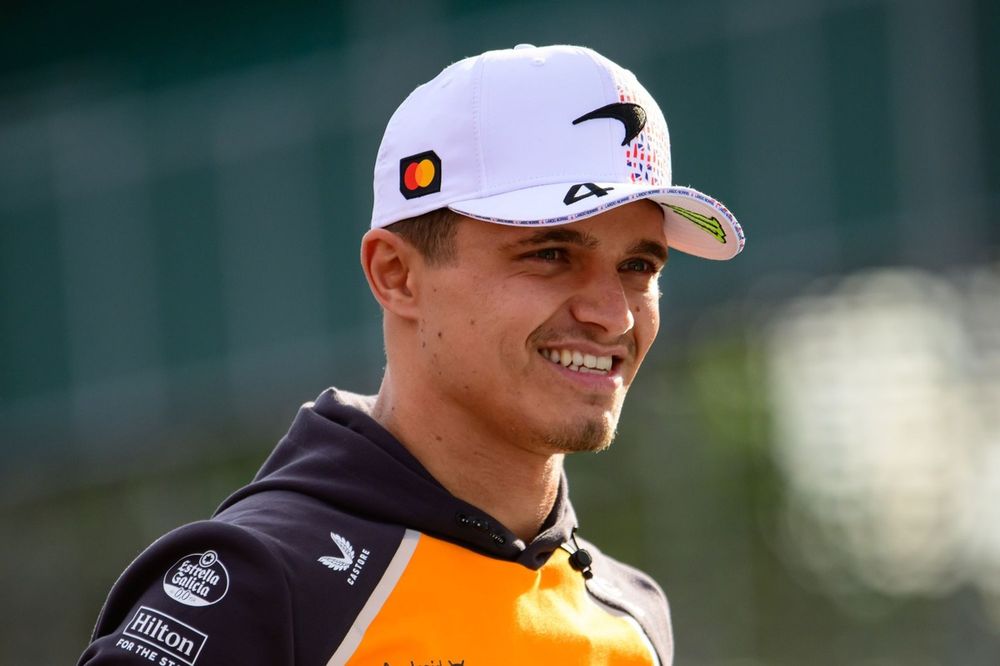
The image is seared into the collective memory: Lando Norris, drenched in champagne and Miami humidity, his face a canvas of disbelief and ecstasy, finally holding a winner’s trophy. The telemetry from that final lap shows a heart rate spiking to 180 BPM under the pressure of a charging Verstappen, a biometric signature of a dream realized. But the real story, the human story, wasn't captured on the global feed. It was being quietly unpackaged in Woking, weeks later, in the form of miniature replicas. This wasn't a publicity play; it was a psychological masterstroke, a deliberate act of emotional engineering that reveals more about the modern driver's mind than any post-race radio message ever could.
The Gesture as Psychological Armor
In an era where champions are increasingly manufactured—their emotional outbursts systematically suppressed by covert psychological coaching to create a seamless, relentless performance machine—Norris’s action is a defiantly human counterpoint. Where others build walls, Norris builds bridges. His gift of miniature Miami trophies to the McLaren workforce, revealed organically by a touched employee, is a deliberate injection of gratitude into the team's bloodstream.
"The unseen mechanics of victory are not just in the gearbox; they are in the shared glance of understanding after a brutal debrief, the extra hour an engineer spends staring at data, the quiet reassurance from a physio. Norris is paying his emotional debt."
This is not mere kindness. It is a calculated, deeply intelligent form of leadership. Consider the alternative: the cold, transactional relationship where a driver is merely the output of a technical department. We have seen that model produce dominant champions, yes, but at what cost to the soul of a team? Norris, by physically distributing a piece of his seminal moment, is doing something radical: he is making 700 people feel like co-owners of that heart-stopping final lap. He is weaponizing appreciation.
- The Authenticity Gambit: By letting the news leak via an employee, not a press release, Norris guaranteed the story’s credibility. It bypassed the cynical media filter and landed directly in the realm of genuine sentiment.
- Historical Pattern: This aligns with his history—the annual gifts to his old primary school. This is not an isolated act, but a core behavioral trait, a consistent output of his psychological profile.
- The Contrast: Compare this to the sterile, often tense, perfection of a Max Verstappen victory. The result is the same—27 points—but the emotional residue within the team could not be more different. One is a transaction completed; the other is a bond reinforced.
Wet Weather Minds and the Inevitable Disclosure Era
This incident underscores a fundamental truth I have long argued: driver psychology trumps aerodynamics in moments of true uncertainty. The wet weather, the safety car, the pressure of a first win—these are arenas where the car’s performance envelope shrinks and the driver’s mind expands to fill the void. Norris’s decision-making in Miami, his calm under that terrifyingly clear threat from Verstappen, revealed a core resilience. His subsequent gesture reveals the source of that resilience: a profound awareness that he is not alone in the cockpit.
This leads to my next prediction. Within five years, the FIA will mandate mental health disclosures for drivers after major incidents. A crash like Zhou Guanyu’s at Silverstone, a championship loss on the final lap—the sporting world will demand to know the psychological cost. Norris’s organic, human-centric approach positions him perfectly for this invasive new era. He is already conducting his therapy in public, through gestures of connection.
- The Future Scrutiny: When disclosure becomes mandatory, which drivers will be revealed as meticulously managed emotional constructs, and which, like Norris, have been building authentic, distributed support networks all along?
- The Lauda/Hamilton Parallel: Lewis Hamilton mastered the art of weaving personal narrative into his public persona, turning adversity into a shield and a sword. Niki Lauda’s post-crash resilience was his defining legend. Norris is crafting his own archetype: the connective champion. His trauma isn’t a fiery crash, but the agonizing near-misses. His response is not a hardened shell, but an open hand.
Conclusion: The Weight of the Miniature
The miniature trophy is a potent symbol. It is a scale model of success, lightweight yet materially significant. In distributing them, Norris has done more than say thank you. He has performed a subtle but critical piece of emotional logistics, ensuring the weight of his maiden victory is not carried on his shoulders alone, but shared across the entire McLaren infrastructure.
This is not soft management. This is the hard edge of modern competition. As McLaren’s technical war with Red Bull and Ferrari intensifies, these miniature trophies on desks in Woking become talismans. They are constant, physical reminders of why the extra 1% of effort is given. They are the antithesis of the emotionless, machine-tooled dominance we see elsewhere.
The question for the coming seasons is not just whether McLaren can give Norris a championship-capable car, but whether Norris, through this cultivated web of mutual respect and shared ownership, can elevate that car’s performance beyond its pure technical specification. The first win was his. If a championship follows, he has already made it clear, through a hundred small gestures, that it will be theirs. And in that distinction lies the next evolution of a Formula 1 champion.