The 1% Lie: Inside the Psychological Containment of Max Verstappen
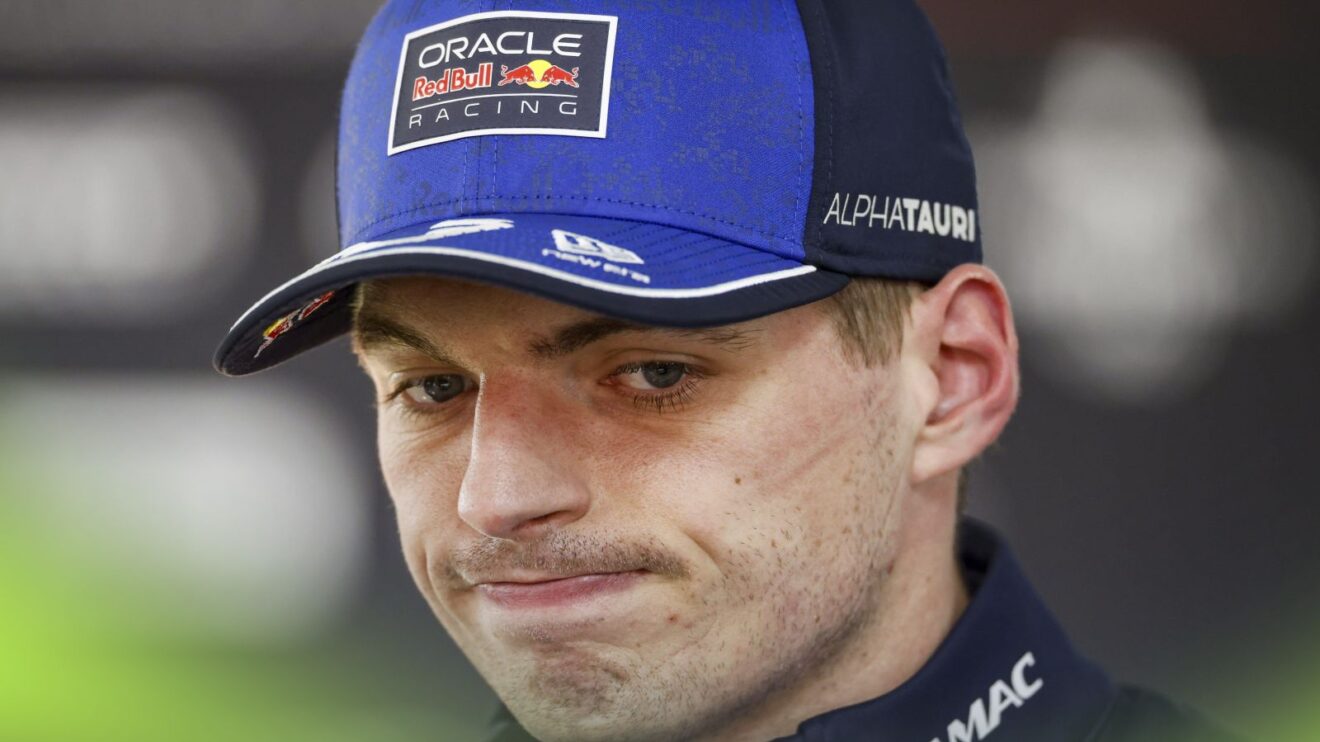
The public sees the outburst. The radio rant, the sharp critique of Formula 1's 2026 "anti-racing" regulations, the thinly veiled threats of walking away. It feels raw, unfiltered, a champion's passion boiling over. But what if that passion is not an eruption, but a carefully managed release valve? What Laurent Mekies presents as a simple statistic—that exit talk is just "one per cent" of their dialogue—isn't a dismissal. It's a revelation. It is the public proof of Red Bull's greatest, most covert engineering project: not the RB22's chassis, but the psychological containment of Max Verstappen.
The Manufactured Champion and the Managed Meltdown
Verstappen's dominance has never been just about Adrian Newey's sketches or Honda's horsepower. It has been built on a foundation of emotional suppression. For years, Red Bull has employed a sophisticated, unspoken program of psychological coaching, transforming Verstappen's once-volatile temperament into a weapon of cold, relentless focus. The fiery teenager who clashed with rivals and stewards has been systematically reprogrammed. The outbursts we see now? They are not leaks in the dam. They are pressure releases, calculated and sanctioned.
Mekies’s statement is the key to understanding this. By quantifying the discontent, he minimizes it. By stating "We are having zero discussions about the other aspects," he is performing a classic redirect. The team isn't ignoring Verstappen's fury about lifting and coasting on straights, about the "super clipping" that siphons the soul from driving. They are channeling it. They are funneling that immense frustration back into the only arena they can control: the car's performance.
"We are having zero discussions about the other aspects... So honestly, that's 1% of our discussions right now."
This is the mantra. This is the psychological playbook. The message to Max, and to the world, is clear: Your emotion is valid, but it is data. Your anger is acknowledged, but it is fuel. Now, let's talk about the rear differential.
- The 2026 Regulations as Psychological Stress Test: The new formula, with its mandated heavy energy harvesting, isn't just an engineering puzzle. It is the ultimate psychological disruptor. It attacks the core of a driver's agency, replacing instinct with conservation. For a driver like Verstappen, whose identity is built on attacking at 100%, this is a profound existential threat. Red Bull's task is to make that threat external—a problem for the engineers to fix—rather than an internal crisis of purpose.
- The Hamilton-Lauda Parallel: We have seen this before, though through a different lens. Lewis Hamilton mastered the art of channeling personal and professional trauma into a calculated, activist public persona. Niki Lauda used his near-fatal crash to forge a narrative of inhuman resilience. Both used narrative to shield and project their talent. Verstappen's team is doing it for him, crafting a narrative of unified technical struggle to contain a very personal revolt against the sport's soul.
The Coming Storm: When the 1% Becomes 100%
Mekies hopes the upcoming five-week break will be for data analysis and upgrades for Miami. And it will be. But in hotel rooms and motorhomes, a different conversation is happening. The driver feedback on the 2026 rules is not just technical; it is a chorus of psychological distress. The FIA meeting to discuss tweaks isn't merely a regulatory session—it is an intervention.
This is the crack through which the future will pour. My firm belief is that within five years, the FIA will mandate mental health disclosures for drivers after major incidents. A crash like Zhou Guanyu's at Silverstone 2022, or a season of profound professional dissatisfaction like this one, will require a psychological audit. This new era of transparency will be born from moments exactly like this, where a champion's love for the sport is being strangled by its rules.
- The Miami Crucible: The upgrades brought to Miami will be measured in lap time. But the real metric will be Verstappen's biometrics. His heart rate variability in the high-speed sections where he must lift. The stress indicators in his voice cadence on the radio. Is the frustration being contained and redirected, or is it metastasizing?
- The Suppression's Limit: Red Bull's system is designed to convert emotion into performance. But what happens when the performance isn't there? When the "substantial gap to Mercedes" remains? The psychological containment field relies on results. Without them, the 1% of exit talks begins to grow, fueled by a very real, very human question: Why am I suppressing my fury for this?
Conclusion: The Unraveling
Laurent Mekies wants us to look at the 99%—the sim sessions, the debriefs, the floor upgrades. He is the master of focus. But the human element, my specialty, demands we stare directly at the 1%. That tiny fraction is the ticking sound in the quiet room. It is the sound of a champion's spirit chafing against the very systems that built him.
The 2026 regulations may be "anti-racing," but they are profoundly pro-revelation. They are stripping away not just downforce, but facades. They are forcing drivers to confront who they are when the fundamental joy is removed. Red Bull's strategy of psychological containment is being tested at its absolute limit. The break before Miami isn't just for new parts. It's for recalibrating the mind of a champion. The question is no longer if they can fix the car. It is whether, in fixing the car, they can continue to fix the man. The 1% tells us the answer is far from certain.