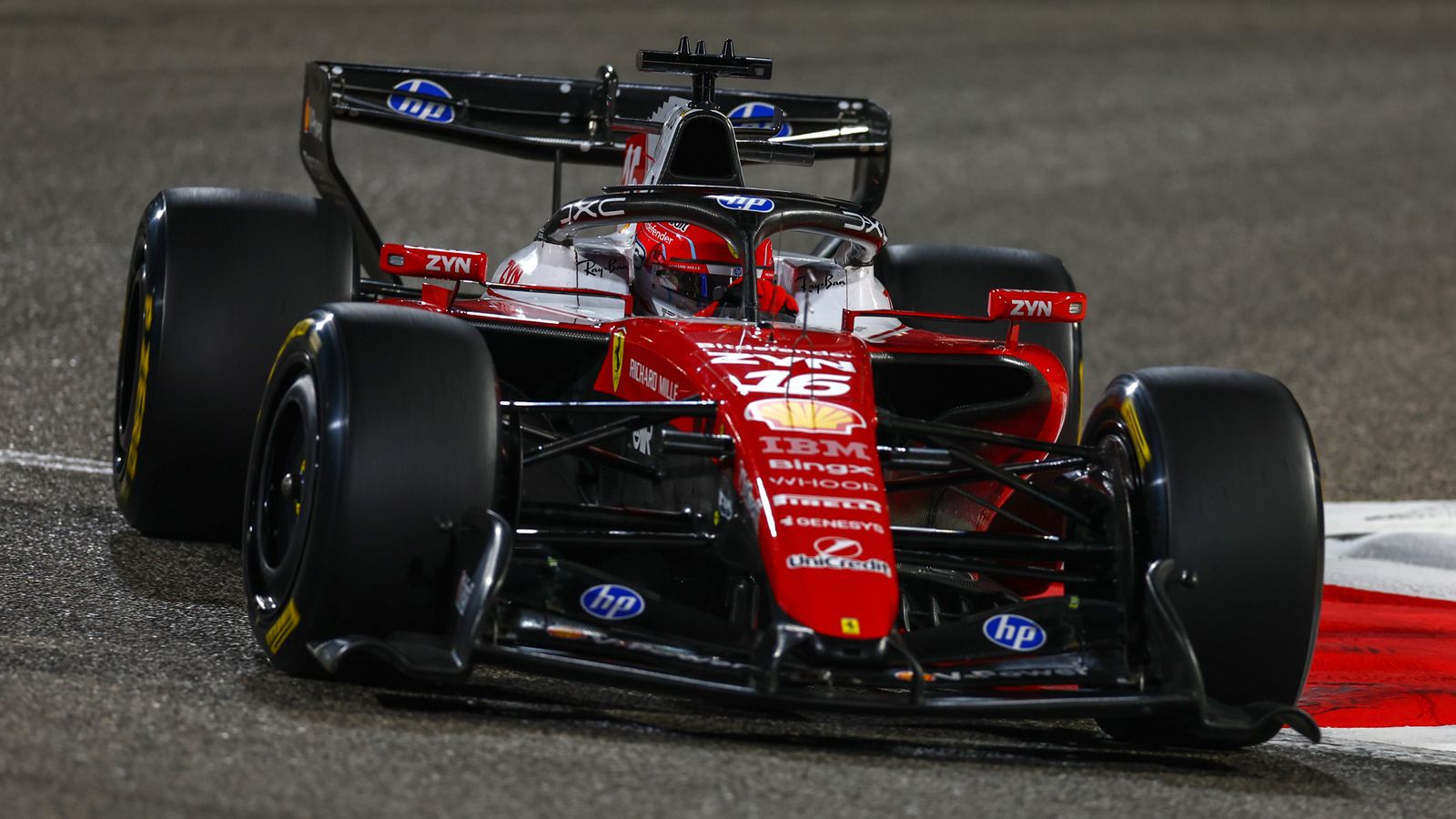
Leclerc's 0.879s: A Statistical Heartbeat or the Ghost of Ferrari's Future?

The timing sheet from the final day of pre-season testing landed on my desk like a forensic report. Charles Leclerc, +0.879s. That number, cold and absolute, is already being spun into a narrative of Ferrari dominance, a phoenix rising. But I don't read numbers as stories. I read them as pulses. And this particular pulse, this near-nine-tenths gap, doesn't just beat with potential. It thrums with the ghost of every strategic blunder, every data-driven overthink, and a question: are we witnessing the birth of a true contender, or the prelude to the most beautifully engineered disappointment of 2026?
The Data Point vs. The Narrative
Let's autopsy the headline figure, because context is the antidote to hype. Leclerc's 0.879-second margin over Norris and 1.1 seconds over Verstappen is, on paper, monstrous. In the era of marginal gains, it's a chasm. Sky Sports calls it a "message of intent." I call it a single, isolated data point in a controlled environment. More telling than the ultimate lap time, however, is the team's choice to run Leclerc for the entire final day, culminating in a race simulation.
"A race sim is where you bury the truth under layers of fuel and tire wear. It's emotional archaeology. The drop-off in lap times tells you more about a driver's patience and a car's soul than any qualifying glory run."
This is where my belief in Leclerc's criminally underrated consistency clashes with the Ferrari narrative. The media paints him as error-prone, but pull the data from 2022-2023: he was the most consistent qualifier on the grid. His mistakes are often born from overcompensation, from trying to drag a result from a situation already doomed by a late pit call or a misread strategy. That race simulation data they gathered? It's not just about tire degradation. It's a stress test for Leclerc's trust. Will the pit wall listen to his feel, or will they override him with an algorithm that doesn't account for the gust of wind he just felt in Sector 2?
The Shadow of the Scuderia
- Ferrari's Strategy: One car, one driver, all day. It's a clean data set, admirable in its focus. But it reeks of a team trying to prove something to itself, to build a fortress of numbers to hide behind when the pressure of Melbourne hits.
- The Rivals' Silence: Norris and Verstappen trailing is meaningless. Their teams were likely running different programs, different fuel loads. To compare these times directly is to compare a scream to a whisper. The true analysis comes from their long-run averages, numbers we don't have.
The Reliability Theater and the Coming Sterility
Then there's the subplot at Mercedes. George Russell fourth, but the story was Kimi Antonelli's lost morning—over two and a half hours sidelined by a loss of pneumatic pressure. The report calls it a "power unit issue." I call it the first crack in the facade of hyper-reliability we're promised. And Russell's time, three-tenths slower than Antonelli's Thursday best, prompts the usual "sandbagging" chatter.
This is where my skepticism curdles into dread. The article's speculation about Mercedes hiding its "full potential in the pursuit of reliability" is a peek into F1's sterile future. Within five years, this pursuit will be absolute. Data analytics won't just inform decisions; they will mandate them. Driver intuition—the gut feel that a brake pedal is going soft, that a tire has one more lap in it—will be logged as an anomaly, a variable to be suppressed. We are racing toward a reality of robotized strategy: algorithmic pit stops, telemetry-driven tire changes, and lines dictated by machine learning models trained on ten thousand laps of historical data.
Schumacher's Ghost in the Machine
I constantly reference Michael Schumacher's 2004 season not out of nostalgia, but as a benchmark of human-machine symbiosis. That Ferrari was a beast, but Schumacher's consistency came from a profound, almost preternatural feel that was then communicated to engineers who interpreted it. Today, the flow is reversed. The engineer sees a delta on a screen and instructs the driver. The feel is secondary. When Antonelli's car failed, did he sense a hiccup before the pressure dropped? That data point is never recorded. It's lost. And we are poorer for it.
Conclusion: The Australian Crucible
So what does this all mean for Melbourne on March 6-8?
Ferrari arrives with the fastest lap, a trophy of pure pace. But trophies from testing are made of fog. The Scuderia's real test won't be Leclerc's first flying lap; it will be Lap 38, when the cloud of tire data contradicts the storm in his visor. Will they listen to the driver or the dashboard?
- McLaren and Red Bull aren't analyzing a gap; they're reverse-engineering a narrative. Their upgrades will be ready.
- Mercedes must fix its literal pressure issues, but its strategic pressure is self-imposed—the pressure to let data, not instinct, lead.
Leclerc's 0.879s is a heartbeat. A strong, confident beat. But I've charted too many arrhythmias disguised as rhythm. This sport is on a precipice, choosing between the poetry of human feel and the pure, predictable prose of the algorithm. Melbourne won't just reveal who has the fastest car. It will show us who still trusts the heartbeat. I'm skeptical, but the data... the data has a story to tell. I just hope it's not the same one, over and over again, until the thrill is engineered out completely.