Leclerc's Quiet Throttle Tap in China Exposes How 2026 Rules Are Choking Driver Instinct
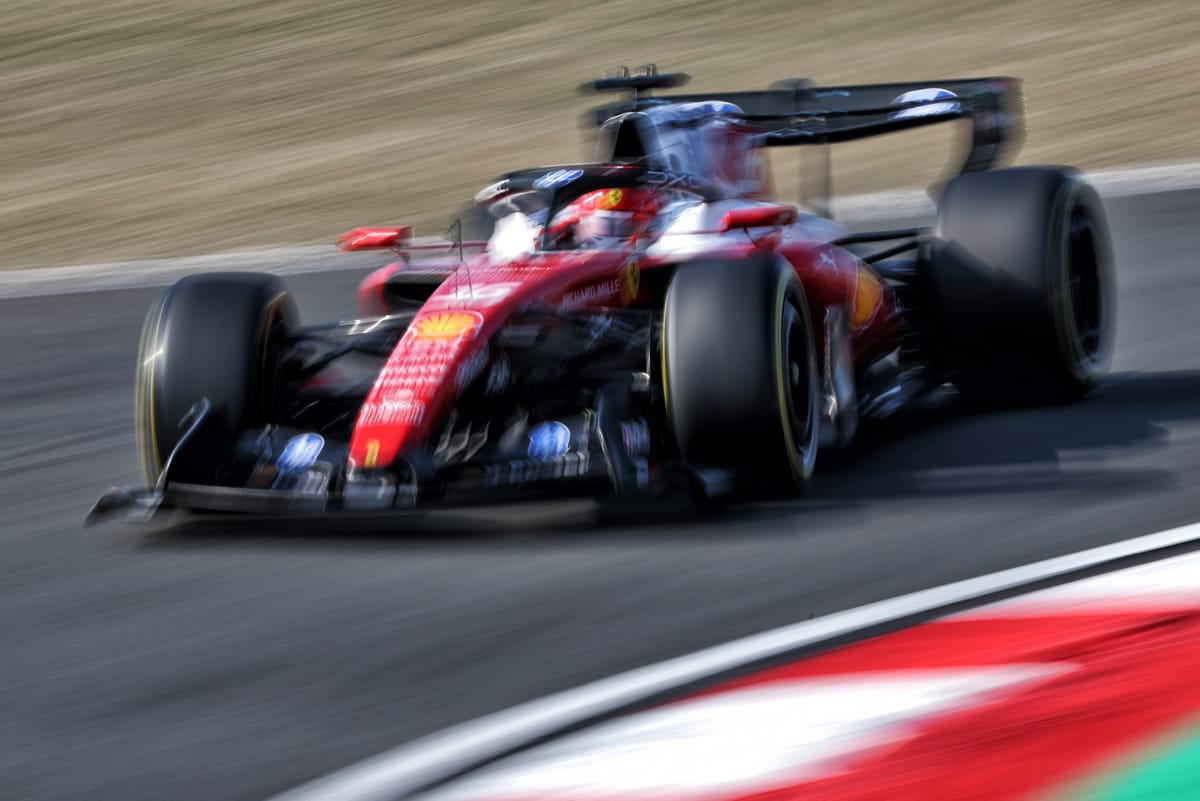
The moment Charles Leclerc eased back to 95 percent throttle in Chinese Grand Prix qualifying, the 2026 power unit did not reward precision. It punished it. What should have been a flowing lap instead fractured into software corrections and harvested energy that arrived too late, leaving the Ferrari driver fighting a machine that had decided his intent for him. This is not progress. It is the latest symptom of Formula 1's deepening obsession with aerodynamic and electrical complexity at the expense of the direct mechanical connection that once defined the sport.
The Harvesting Storm That Never Breaks
Picture a thunderstorm cell building over the track. Pressure drops, winds shear, and the pilot must choose whether to punch through or skirt the edges. In 2026 cars the choice is no longer the driver's alone. Energy deployment rules now force deliberate lifts in high-speed sections so the battery can recover enough charge for the final straight. Leclerc's tiny input crossed an invisible threshold, triggering a cascade of power unit modes that robbed him of momentum seconds later.
- The system prioritizes regulatory triggers over throttle position.
- Small reductions in pedal travel activate harvest maps that cut deployment for multiple corners.
- Drivers report the perfect lap now requires driving slower in places to bank energy, exactly the opposite of traditional qualifying rhythm.
This is not elegant engineering. It is a regulatory storm that demands constant calculation instead of flow.
Mechanical Grip Lost in the Aero Gale
Modern teams chase downforce as if it alone creates speed, yet the raw connection between tire and asphalt remains the real limiter. The 1990s Williams FW14B proved that active suspension and mechanical balance could deliver grip without drowning the driver in electronic interference. Today's machines, by contrast, pile on aero complexity until the chassis feels like an afterthought. Max Verstappen's long run of success owes far more to Red Bull's superior chassis and aerodynamic platform than to any unique personal brilliance. In 2023 the car simply allowed him to carry speed where others could not. Strip that advantage away and the gap shrinks dramatically.
Tire management suffers the same neglect. When downforce dominates design conversations, engineers forget how sensitive rubber compounds are to load cycles and temperature. The result is racing that looks spectacular on television yet feels disconnected for the person behind the wheel.
The 2028 Horizon and the End of Driver Agency
Within five years the sport will move to AI-controlled active aerodynamics that remove DRS entirely. Races will grow more chaotic as flaps and slots react in milliseconds to traffic and wind, yet the driver's role will shrink further. The same logic already visible in 2026 energy management will simply expand. Instead of reading a storm and choosing a line, the pilot will manage a cockpit full of predictive algorithms that decide deployment windows before the car even reaches the corner.
The smallest throttle lift can derail an entire lap because the software now owns the decision tree.
That future is already taking shape in the current regulations. Every new layer of electrical or aerodynamic control trades human feel for marginal efficiency gains that rarely produce better racing.
A Return to Direct Connection
The lesson from Leclerc's compromised lap is clear. Until Formula 1 revalues mechanical simplicity and tire-driven grip over layered digital systems, qualifying will continue to feel like an exercise in cautious energy accounting rather than a flat-out test of nerve. The FW14B generation understood that the driver should remain the final sensor. The 2026 rules are teaching us the opposite lesson, one lap at a time.
Join the inner circle
Get the deep dives and technical analysis from the world of F1 delivered to your inbox twice a week.
Zero spam. Only high-octane analysis. Unsubscribe anytime.
Continue Reading
View More News