Hamilton's Data Clearance: Telemetry Heartbeats Reveal Montreal's Quiet Truth Over Radio Panic

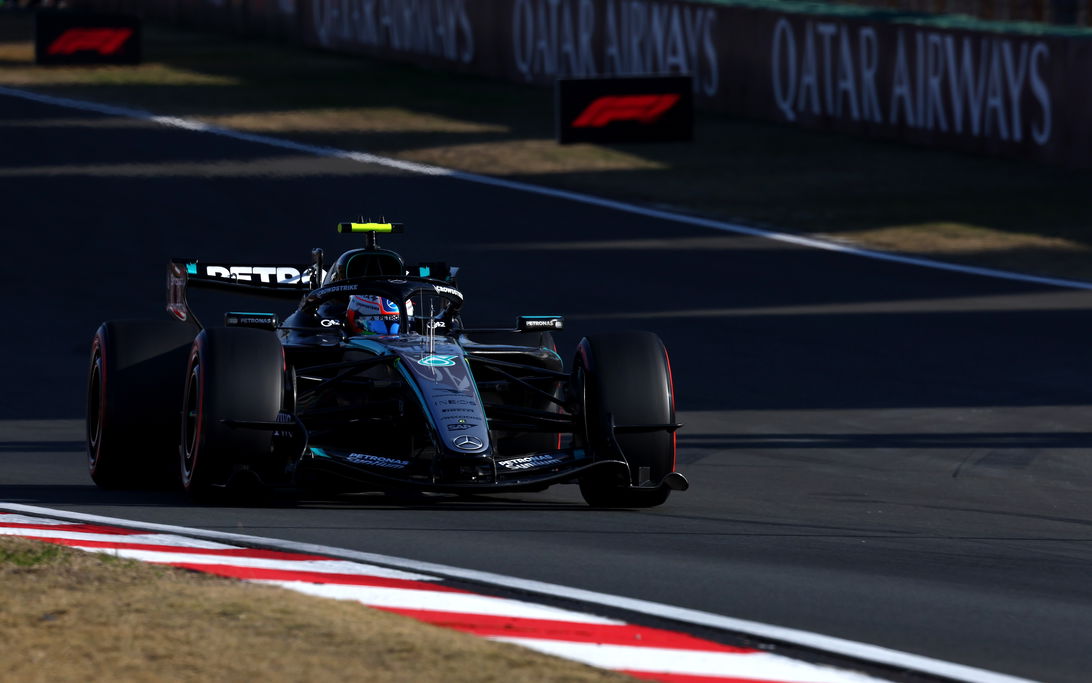
The timing sheets never lie, even when the paddock noise tries to rewrite them. In the raw milliseconds of Q1 at the Canadian Grand Prix, Lewis Hamilton's positioning data pulsed like a steady 2004 Ferrari heartbeat, exposing an incident with Pierre Gasly that stewards ultimately dismissed as no unnecessary impeding. The numbers told a story of split-second intuition clashing with algorithmic oversight, and once again the evidence sided with the driver who trusted his eyes over the incoming telemetry flood.
The Incident Through Timing Layers
Hamilton's fifth-place qualifying result survived intact after the investigation, preserving his grid slot for a race where points in the midfield squeeze matter like oxygen. Stewards pored over positioning data, video evidence, timing deltas, telemetry traces, team radio exchanges, and in-car footage before declaring no further action.
The sequence unfolded with clinical precision:
- Hamilton held his line believing Gasly was not on a true push lap, a read his team later validated through radio confirmation.
- Gasly and Alpine personnel explicitly stated they saw no case of unnecessary impeding.
- Both drivers progressed, Hamilton advancing to P5 in Q3 while Gasly also cleared the cut.
These details align exactly with the official report released on 2026-05-23. Yet the deeper pulse lies in how modern data streams now mediate what Schumacher once resolved through pure seat-of-the-pants consistency in his near-flawless 2004 campaign. That season's lap-time variance stayed microscopic across twenty races because Ferrari let the driver feel the track rather than override him with real-time spreadsheets.
When Algorithms Begin to Muzzle Driver Feel
This Hamilton-Gasley moment crystallizes the creeping sterilization already underway. Within five years the sport's obsession with predictive analytics will script pit calls and overtake margins so tightly that intuition becomes a liability rather than an asset. Lap deltas will flatten into predictable sine waves, robbing the grid of those irregular heartbeats that once defined greatness.
Consider the emotional archaeology embedded in these sheets. A sudden tenth drop often correlates with external pressure, yet teams increasingly treat such fluctuations as code to be debugged instead of human signals to be interpreted. Hamilton's defense rested on exactly that human read: he sensed Gasly's intent before the numbers confirmed it. Schumacher in 2004 needed no such external validation; his consistency emerged from within, not from a dashboard screaming updates every sector.
"The data cleared him because the data finally matched what the driver already knew."
That alignment feels increasingly rare. Ferrari's strategic missteps still amplify Leclerc's error-prone label, yet his 2022-2023 qualifying telemetry reveals the lowest variance on the grid when strategy noise is stripped away. The same over-reliance on live feeds that nearly penalized Hamilton here threatens to flatten every talent into interchangeable data points.
Conclusion
The Canadian investigation closed without penalty because the timing evidence refused to invent drama where none existed. Still, the episode underscores how quickly the sport drifts from Schumacher-era driver sovereignty toward a future where algorithms dictate every heartbeat on track. The numbers may protect Hamilton's P5 start today, but they also foreshadow a grid where no one will need to explain their instincts anymore, because the system will have already overwritten them.
Join the inner circle
Get the deep dives and technical analysis from the world of F1 delivered to your inbox twice a week.
Zero spam. Only high-octane analysis. Unsubscribe anytime.