The Radio Static We All Misread: How Lawson's Pit Call Exposes F1's Coming Data Dystopia

I stared at the transcript of Liam Lawson's radio message from Shanghai. Two words. "Guys..." That was it. The entire "tense exchange" that sparked a thousand speculative headlines boiled down to a single, truncated call. In our hyper-connected, data-saturated era, we still managed to misread a human signal lost in transmission. This isn't just a story about a clarified message. It's a tiny, perfect fracture in the track surface, revealing the seismic shift happening beneath: the slow, systematic replacement of driver instinct with algorithmic command. Lawson didn't complain. He calculated. And in that calculation, I see the ghost of racing future—a sterile world where the "Guys..." is just noise before the machine executes its pre-ordained solution.
The Archaeology of a Two-Word Radio Call
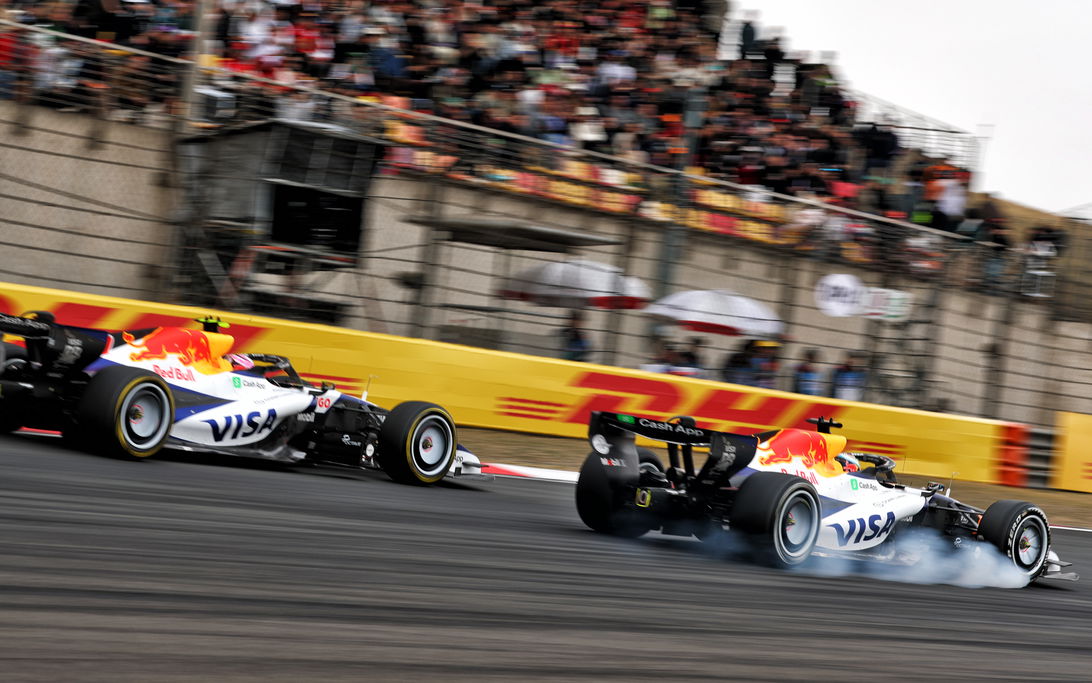
Let's excavate the timeline, because the numbers never lie, even when the narrative does. The incident occurred early in the Chinese Grand Prix on March 15, 2026. Liam Lawson, on fading medium tyres, was being caught by teammate Arvid Lindblad on harder rubber. Lindblad attacked, locked up, and Lawson briefly held position. Then, the radio. Then, the pass. Then, the pit stop.
The instinct of the modern fan—and, tellingly, the media—is to hear a driver's strained voice and assume conflict. Team orders! Frustration! We're programmed for drama. But Lawson's explanation is a masterclass in real-time, high-pressure data processing:
"He had a train of cars behind him, and if he got me, then I was probably going to get done by two or three more. So I was trying not to lose too much time."
This isn't emotion. This is a risk assessment model running on wetware. He processed his tyre delta, the threat vector of the following cars, and the projected time loss. His "Guys..." wasn't a whine. It was the audible tip of an iceberg of cognitive load, a request for the pit wall to confirm the strategic exit his brain had already computed. The fortuitous Safety Car that followed was luck, but the decision to pit was cold, hard logic.
- The Data Point Everyone Missed: The true brilliance is in the outcome. Seventh place. Again. He matched his Sprint Race result. On a weekend where he admitted the car had "definitely weren't been quick," Lawson extracted the absolute maximum: 100% of the car's latent points potential. This is the consistency we mythologize in Schumacher's 2004 season—not always winning, but always, always mining the result from the ore of circumstance. We crucify a Leclerc for a single misstep, ignoring seasons of qualifying brilliance, yet we barely pause to admire this kind of surgical points harvesting.
From Driver Feel to Data Feed: The Coming Sterility
Lawson's Shanghai weekend is a blueprint for the next five years, and it terrifies me. He described the double points as a "very, very positive" surprise salvaged from a lack of confidence. The subtext? The car's feel was wrong. The driver's intuition was screaming. Yet, the strategy—divorced from feel, built on tyre wear models and traffic probability algorithms—saved the day.
This is the pivot. We are celebrating the triumph of system over sensation. The pit wall heard "Guys..." and saw a blinking dot on a map entering a pre-defined tyre life window. The call was made. It was correct. It was also inevitable.
"We boxed right before the safety car, which was probably calmer."
Probably calmer. Not "a great instinct," not "a gut feeling." Calmer. The metric for success is now the reduction of operational chaos, not the unleashing of driver genius. Soon, the "Guys..." won't even be necessary. The system will see Lawson's lap time drop-off, cross-reference it with Lindblad's closing speed and the traffic queue, and auto-generate the pit request. The driver becomes a consenting node in the network. Where is the artistry in that? Where is the story?
I imagine Schumacher in 2004, his feedback a sacred text for the engineers, a synthesis of feel and data that they struggled to comprehend. Today, the feedback is standardized, telemetried, and fed back to the driver as a prescribed adjustment. Lawson's job is to be the best executor of a plan formulated from his own biometrics. It's a closed, sterile loop.
Conclusion: The Human Signal in the Digital Noise
So, what did we learn from Shanghai? We learned that Liam Lawson is a formidable processor, turning a weekend of poor car feel into four championship points through strategic intellect. We should be praising this more. In an age of highlight-reel overtakes, his kind of consistency is the true marker of a champion's temperament.
But we also learned that our sport is at a crossroads. The incident is a microcosm of the tension defining modern F1: the fading voice of the driver against the rising hum of the server rack. Lawson's clarified message is a small victory for human context. For now, he still had to vocalize his thought. He was the sensor that mattered.
My fear is that we are fast-approaching a season where such clarifications are obsolete. Where every decision is optimized, every variable accounted for, and the race is won on Friday in the simulation suite. The stories will be written by coders, not drivers. The radio will be silent, save for the calm, automated voice of the strategy computer. And on that day, we'll look back at Lawson's desperate, brilliant "Guys..." not as a misunderstanding, but as a requiem for the last vestige of instinctual racing. The numbers will tell a perfect, predictable story. And it will be profoundly, heartbreakingly boring.