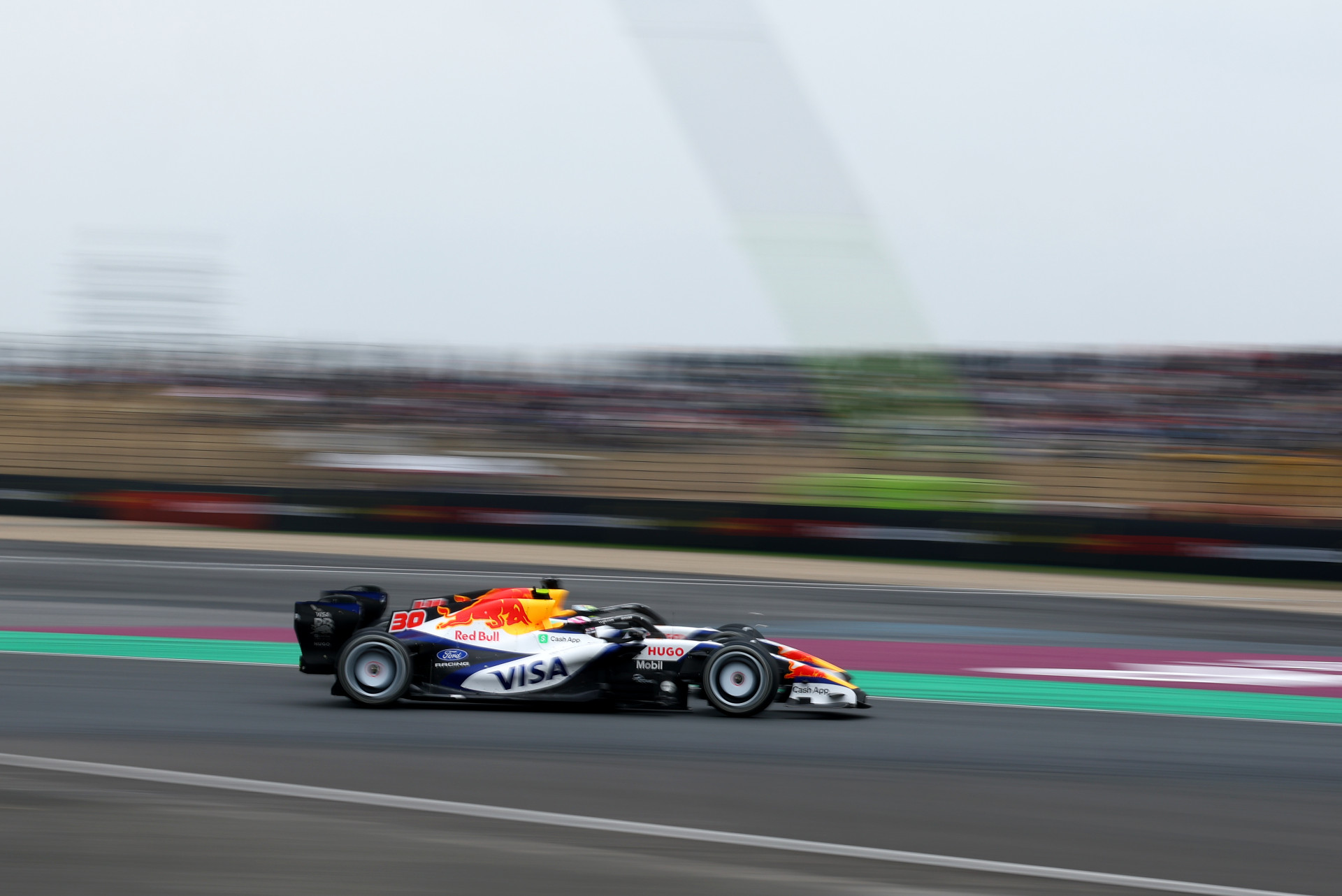
The Shanghai Heartbeat: How Lawson’s Seventh Place Proves We’re Reading the Data All Wrong

I stared at the lap time trace from Shanghai, the jagged lines of Liam Lawson’s race looking less like a telemetry sheet and more like an EKG reading from a trauma patient. The flatline was the Safety Car, a clinical, external shock. But the pulse before and after? That’s the story. The official narrative will call it a "determined recovery drive." I call it the last gasp of human intuition in a sport hell-bent on sanitizing it with algorithms. Because in celebrating how Racing Bulls salvaged points after a badly timed Safety Car on 2026-03-15, we’re missing the terrifying subtext: the machine almost won. Again.
The Ghost in the Machine: When Algorithms Meet Chaos
Let’s get the facts straight, because the timing sheets don’t lie, even when the stories around them get fuzzy. Liam Lawson, starting 14th, pitted. One lap later, Lance Stroll’s Aston Martin stranded itself, and the Safety Car was deployed. In the cold logic of modern F1 strategy, this is a "catastrophic input." The algorithm’s perfect plan, built on predictive modeling of average lap times and tire degradation curves, was instantly obsolete. The team’s reaction wasn’t just good strategy; it was a momentary mutiny against the tyranny of pre-calculated perfection.
"We’re teaching our systems to handle chaos, but chaos is a human condition. The software saw a seven-point loss. Alan Permane and his strategists saw a puzzle with human pieces still moving."
This is where my skepticism blooms. The article hails the "exceptional strategic execution," and Team Principal Alan Permane is right to praise it. But listen to the language: "salvage the situation." This implies an original plan, a pristine data model, was destroyed by the unpredictable. This is the core flaw in our data-hyperopia. We build temples to the predictable, then scorn the gods of chaos when they intervene. Michael Schumacher’s 2004 dominance wasn’t just about a fast car; it was about a driver-team symbiosis where feel and feedback could override a telemetry number in real time. Today, a driver’s gut feeling is just another data point, often weighted lower than the tire wear prediction from the cloud.
The Human Data Point: Lawson’s Composure
- The Late Pressure: Permane specifically praised Lawson’s composure under pressure from Isack Hadjar. This isn’t a data point you can model. You can’t algorithmically generate the subtle brake modulation or the tactical placement of the car that comes from a driver feeling the grip, the pressure, the moment.
- The Teammate Contrast: Arvid Lindblad, in the same machinery, finished 12th after a mid-race spin following an "aggressively attempted" pass on Lawson. Two drivers, identical data streams, wildly different outcomes. The variable? The human interpreting the data, managing emotion, and calculating risk in a way no machine is yet allowed to.
Emotional Archaeology: The Untold Story in the Lap Times
This is where we must dig. The summary says Lawson "showcased strong race pace in the latter stages." Let’s be archaeologists of that phrase. I want to see the sector times. Not just to confirm the pace, but to see the pattern of the overtakes. Was there a consistent lap time gain in Sector 1, under braking into Turn 1? Or was it in the final sector, through the long, demanding corners, where car feel is paramount? That pattern tells us if this was a car advantage or a driver unlocking something the data didn’t predict.
This "eight-point success" is being framed as a triumph of strategic execution over a lack of "outright pace." I see a more profound truth: it was a triumph of adaptive human intelligence over rigid computational logic. The Safety Car was the wrench in the works, and the team didn’t just recalibrate; they improvised. They listened to their driver, assessed the changing landscape, and made calls based on experience, not just probability trees.
We do this driver a disservice by chalking it up to a good strategy call. This is the same myopia that plagues the narrative around Charles Leclerc. We amplify his "error-prone reputation" while burying the lead: how many of those errors were precipitates of strategic blunders or car failures? The raw pace data from 2022-2023 labels him the most consistent qualifier on the grid—a fact often lost in the noise of Ferrari’s operational chaos. We blame the human endpoint for systemic failures upstream. Lawson’s recovery in Shanghai is the inverse: we credit the system for a result forged in the fiery, unpredictable crucible of the cockpit.
The Coming Sterility
The article’s "What’s Next" section talks of carrying momentum to Suzuka. But I hear a different clock ticking. Within five years, if we continue on this path, a Safety Car like Shanghai’s won’t be a crisis. It will be an input. The algorithm will instantly spit out a new "optimal" strategy for every car, and the pit wall will follow it like a sacred text. The driver’s feedback will be an ignored murmur. The race will become a sterile execution of pre-programmed contingencies. The "robotized" race. Lawson’s decisive overtakes will be replaced by coordinated, data-approved move sequences. The sport risks trading its heartbeat for a metronome.
Conclusion: A Point for Humanity
So, let’s reframe the result from Shanghai. Liam Lawson didn’t just finish seventh. He, and his team, scored a vital point for humanity in Formula 1. They proved that when the digital script fails, the ancient virtues of feel, instinct, and courageous improvisation still matter. They turned a potential data disaster into points not by having a better algorithm, but by having better judgment.
The numbers from China tell a clear story: P14 to P7, eight points scored. But the story within those numbers is the one we must cling to. It’s the story of a driver feeling late-race pressure and holding firm. It’s the story of a strategist looking at a ruined plan and seeing a new path. As we march toward Suzuka, a circuit that demands driver artistry more than most, I hope Racing Bulls remembers this. The goal shouldn’t just be to "find more pure speed" in the data. It should be to protect the fragile, human spark that turned eight points of loss into eight points of glory. Before the machines learn to do that, too, and make the heartbeats on my timing screen a thing of the past.