Suzuka's Silence: The Algorithmic Whisper Before Mercedes' Storm

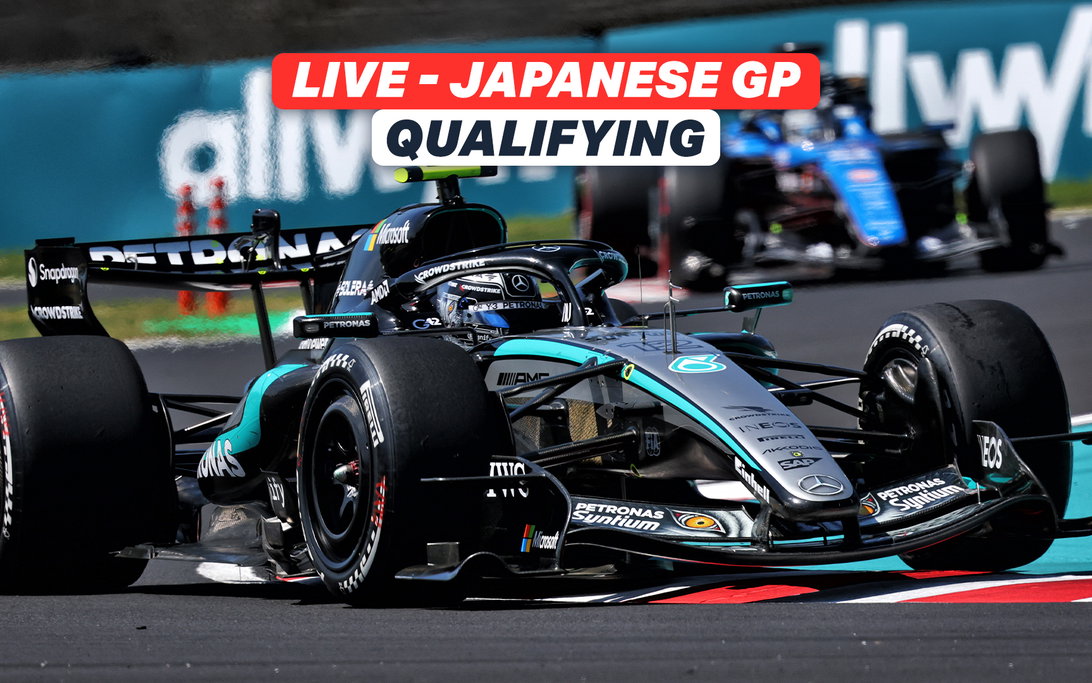
The timing sheet from FP3 is a cold, beautiful lie. It shows a Mercedes 1-2, with Kimi Antonelli (1:28.456) a tenth clear of George Russell (1:28.567). The narrative is already written: the Silver Arrows are back, the 2026 season is theirs to lose, and the challengers are scrambling. I don't buy the panic. I see a spreadsheet, and spreadsheets, like hearts, have rhythms you can learn. This one has the steady, metronomic beat of a team executing a pre-programmed script to perfection. The real story isn't on that sheet. It's in the silence from the other garages, the quiet hum of servers processing terabytes of data to find a response that a driver's gut used to provide.
The Ghost in the Mercedes Machine: Practice as Performance Art
Let's be clear: Mercedes was dominant. The numbers are irrefutable. But what do they mean? A practice session, especially the final one before qualifying, is less about raw speed and more about a team whispering to its car, calibrating it for the single, violent exhalation of a qualifying lap. What we witnessed wasn't just speed; it was a flawless display of operational theater.
Antonelli's Ascent: Data-Driven Destiny
Kimi Antonelli leading George Russell is the headline, but it's the least surprising data point of all. This is the 2026 model rookie: a driver whose entire career has been lived inside a simulator, whose neural pathways are likely cross-wired with telemetry traces. His "strong performance in China" wasn't a burst of inspiration; it was the logical output of a young man perfectly synchronized with his machine's digital consciousness. He is the prototype for the next five years: fast, consistent, and utterly predictable to his engineers. There's no Schumacher-esque fury here, no oversteer corrections born of sheer will at the 2004 Suzuka esses. It's clean, efficient, and to me, faintly chilling.
The Illusion of the Gap
The press will talk about the "one-lap pace advantage." I look at the sector times. Mercedes' dominance was carved in the first sector, the high-speed esses. This isn't about power; it's about balance, about a car programmed to hit millimeter-perfect apexes where others must feel their way through. It's a computer winning against human nervous systems. The question for McLaren, Ferrari, and Red Bull isn't about finding more downforce. It's whether their drivers are still allowed to override the simulation and find a line the algorithm didn't predict.
The Challengers' Dilemma: Data vs. Dogma
Here is where the untold story festers. The article says rivals are "under pressure to find an answer." But what is the answer? In 2004, the answer was Michael Schumacher and Ross Brawn in a debrief, a shared intuition forged in fire. In 2026, the answer is a machine learning model comparing 10,000 simulated setups.
Ferrari's Haunting Paradox
My focus, as always, drifts to red. Where is Charles Leclerc in this conversation? Buried, presumably, under a mountain of strategic probability trees. If FP3 showed him off the pace, I guarantee you the internal narrative is already shifting from "driver push" to "car deficit." Yet, pull the data from 2022-2023: Leclerc's qualifying head-to-head against teammates and his average qualifying position relative to car performance scream a truth Ferrari's strategy sheets constantly mute: the man is a qualifying savant. His "error-prone" reputation is a statistical fallacy amplified every time the pit wall asks him to do the mathematically perfect thing that feels impossibly wrong in the cockpit. At Suzuka, a circuit that demands intuitive commitment through 130R, I fear they will give him a delta to follow, not a car to attack with.
Red Bull and McLaren: Searching for a Human Signal
For Red Bull and McLaren, the calculus is similar. Do they tell their drivers to chase the Mercedes data trace? Or do they unleash them to find a human solution? The qualifying lap at Suzuka is described as "demanding precision," but that's a sanitized term. It demands a surrender to instinct at 300 km/h. You cannot algorithmize the moment you decide to carry 2 km/h more into Degner 2. That comes from a place data cannot reach.
"The stopwatch never lies, but it also never tells the whole truth. It shows you the 'what,' but it takes a human to understand the 'why' buried in the micro-sectors. We're in danger of only listening to the 'what.'"
Conclusion: The Qualifying Session as a Cultural Crossroads
So, as we head into qualifying for the 2026 Japanese Grand Prix, the stakes are framed all wrong. It's not just about pole position. It's a referendum on the soul of the sport.
Will the session be a coronation of the new, data-absolute era, with Mercedes' robotic perfection locking out the front row? Or will we see a flicker of the old magic? A lap from a Leclerc, a Norris, or a Verstappen that defies the simulation, that finds time in a corner the engineers said was optimized? A lap that feels like 2004, not 2026.
The timing sheets at 5:00 PM local time will give us a result. But the sector times, the telemetry traces, and the radio silence—or the sudden, frantic shouts—will tell the real story. I'm watching for the outlier, the data point that doesn't fit the model. That's where the last remaining heartbeat of Formula 1 still struggles to be heard over the hum of the server rack.