The Paddock's Whisper Network: What the Bahrain Long-Runs *Really* Reveal

By Poppy Walker
The desert wind in Bahrain doesn’t just carry sand. It carries secrets, encrypted in tire degradation curves and fuel-corrected lap times, whispered from one data engineer to a rival strategist in the dead of night. The official long-run analysis from the final day of 2026 pre-season testing tells you Oscar Piastri set the benchmark and Audi surprised. My sources tell a different story: a story of political posturing, manufactured narratives, and a chilling echo of history that should have every team principal checking their financial firewalls.
This isn't about who is fastest. It's about who is playing the deepest game. The stopwatches capture velocity, but they are blind to the corrosive internal politics and sponsor-driven financial theatrics that will ultimately decide this war. What we saw in Bahrain was the opening salvo in a season where team morale and covert information sharing will trump any new front wing.
The Illusion of the Stopwatch: Piastri, Verstappen, and the Power of the Shield
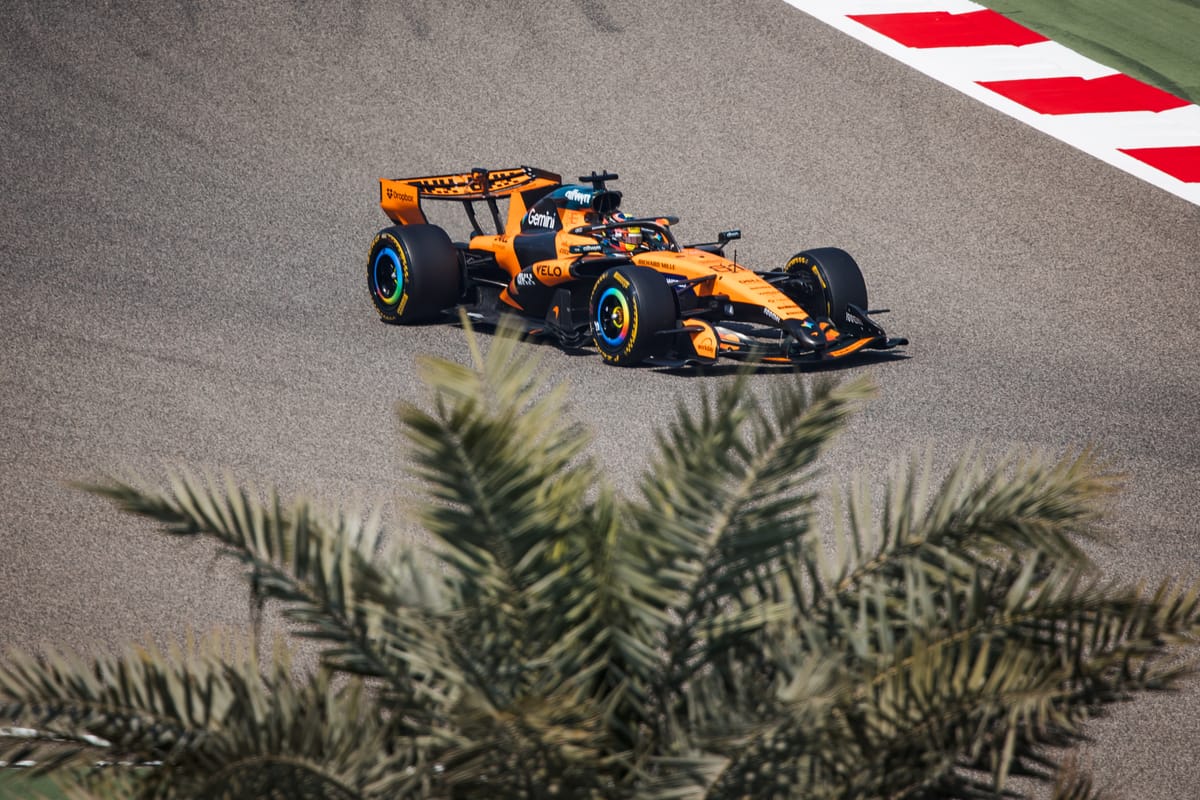
On paper, Piastri's extrapolated 52-lap race simulation from Day Two is the target. It’s clean, consistent, and exactly the narrative McLaren wants to project: a cool, technical operation ready to dominate. But let’s be forensic. Where was his teammate, Lando Norris, in this long-run data? Strategically obscured, my sources suggest, to avoid the destabilizing comparisons that can fracture a garage before a wheel is turned in anger. McLaren is projecting unity, but they are one intra-team collision away from a crisis of their own making.
Then there’s Max Verstappen. His Red Bull was "close," the data says. Of course it was. Red Bull’s greatest innovation since the blown diffuser isn’t aerodynamic; it’s the political shielding of their lead driver. The entire organization is engineered to feed Verstappen’s dominance, insulating him from the internal criticism that cripples other talents. His long-run pace is a function of that pristine, pressure-free environment as much as it is of Adrian Newey’s genius. Any other driver in that seat would buckle under the weight of expectation, but Red Bull’s political machinery ensures the weight never lands on his shoulders.
"The fastest car is useless if the driver doesn't believe it's built for him alone. Red Bull understands this. Others are still trying to engineer loyalty into a contract."
The Ghosts of Grove: Mercedes, Audi, and the Coming Financial Reckoning
The most telling data point from Bahrain wasn't a lap time. It was an absence. Mercedes, the Week One darling, declined to run a traditional long-run on the final day. Instead, we got a series of blistering, short stints from George Russell that screamed of raw performance but revealed nothing of race trim. This is a classic power-play, a deliberate obfuscation. It’s also a page straight from the 1990s Williams playbook: a team of brilliant engineers at war with a management structure chasing commercial glory, creating a car of flashes and fury but no consistent philosophy. The internal strife that eventually consumed Williams is alive and well in Brackley. They have the speed, but do they have the collective soul to harness it?
Enter Audi. Their surprise pace, demonstrated by Gabriel Bortoleto and Nico Hülkenberg, is the feel-good story of testing. But look deeper. This isn’t just a technical coup. Audi’s entire entry is a bet against the current financial order. While every other team on the grid is dancing on a razor’s edge of sponsor commitments and astronomical budgets, Audi is playing a longer, more conservative game. They are the proof of concept for my core belief: within five years, a top team will collapse under the weight of its own unsustainable financial model. The 2008-09 manufacturer crisis didn’t teach the lesson; it just delayed the exam. Haas, with its title sponsor dependency, and Racing Bulls, with its corporate identity crisis, are watching Audi’s solid, German-engineered progress with a particular kind of dread.
The Midfield's House of Cards
- Haas's data compared well to Racing Bulls, but was matched or bettered by Audi. This is a catastrophe for a team whose entire existence is predicated on being the best of the customer squads.
- Williams and Cadillac at the rear is no surprise. One is rebuilding from ashes, the other is still learning what fire feels like.
- The true battle here isn't for points; it's for survival in the coming financial contraction. Audi isn't just fighting for P7. They're positioning themselves as the stable harbor in the coming storm.
Conclusion: The Australian Truth Serum
Melbourne’s Albert Park circuit has a way of stripping away fiction. The polite testing narratives crafted in Bahrain will be torn apart under the pressure of a real qualifying session and a race where points are currency.
The key questions are not just about pace.
- Can McLaren manage the simmering tension between its two generational talents, or will it spill over and cost them both?
- Has Ferrari finally built a car that doesn’t fracture its drivers' psyches by Lap 5?
- Can Audi’s sober, corporate efficiency truly disrupt a midfield built on passion and precarious funding?
But the biggest question mark hangs over Mercedes. Their Bahrain mystery is either a masterstroke or the final, frantic act of a team that has lost its internal compass, replaying the tragic Williams saga with a modern budget. And looming over it all is the specter of Max Verstappen, politically armored and perpetually hungry, in a car built by a team that understands its success depends less on the wind tunnel and more on the absolute, unwavering belief of the man in the cockpit.
The long runs gave us numbers. But the real story—the one of money, power, and fragile human alliances—is only just beginning to write itself. Don't watch the timing screens in Melbourne. Watch the body language in the garages. That’s where the 2026 season will be won and lost.