The Monumental Lie: How Madrid's Banking Will Test F1's Manufactured Minds
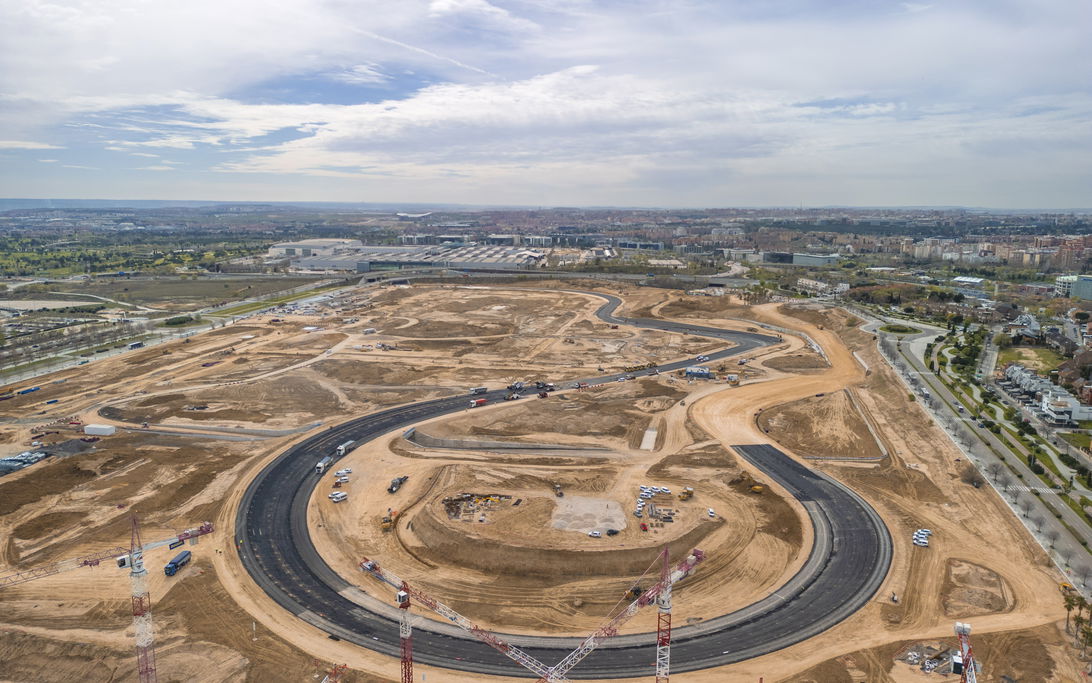
The asphalt is still warm. As the paving machines retreat from the 550-meter scar they've carved into the Valdebebas landscape, they leave behind more than just a racetrack. They have laid down a psychological gauntlet. 'La Monumental,' with its 24% incline and six-second eternity, isn't merely a corner. It is a truth serum, poured in hot mix and aggregate, waiting for September to reveal who these drivers really are beneath the layers of sponsor-friendly smiles and telemetry-engineered personas. For years, we have spoken of lateral G-forces, of neck strain, of aerodynamic load. But this? This is a descent into the psyche. A 10-meter high, banked crucible where the carefully constructed facades of the modern F1 driver—the emotionless machine, the calculated brand ambassador, the trauma-forged hero—will be stripped bare by relentless, unyielding physics.
The Geometry of Fear: A Corner That Demands Surrender
The numbers, as always, tell a sterile story. Turn 12. 550 meters. 24% banking. Six seconds. The circuit's own engineers called it "one of the most demanding technical tasks," a feat of millimeter precision. They used over 1,800 cubic meters of asphalt, a statistic meant to impress with its scale. But the human metric is what fascinates me. For six seconds, a driver will not drive in the traditional sense. They will commit. They will place their trust entirely in physics, in their team's simulation data, and in the cold, hard surface beneath them. There is no late apex here, no trail-braking heroics. It is a moment of profound vulnerability.
"You are not a pilot in that moment; you are a passenger to the laws of physics, and your only job is not to fight them."
This is where my theory crystallizes. Driver psychology trumps car aerodynamics in conditions of extreme, predictable stress. In the wet, it's decision-making under uncertainty. Here, it's the opposite: it's the psychological toll of absolute certainty. The certainty that for six long seconds, you are trapped on a wall of concrete, your vision filled not with track, but with sky and the skewed horizon of a 24-degree incline. What does a mind do with that certainty? The disciplined, like a Max Verstappen refined by Red Bull's covert psychological scaffolding, may enter a state of flow, his systemic suppression of emotional outbursts becoming his greatest asset. But what whispers up from the subconscious when the body is subjected to such a bizarre, unnatural state?
- The Physical Deception: The body will scream that it is falling, even as the tires bite. The vestibular system goes to war with the rational mind.
- The Sensory Deprivation: The usual visual cues are distorted. The brain must re-map its understanding of "up" and "down" at 300 km/h.
- The Trust Deficit: Every instinct honed from karting upwards says this is wrong. The driver must override a lifetime of learning.
The Persona vs. The Pulse: Who Cracks on the Concrete Couch?
This is where we separate the manufactured from the forged. Madrid's banking will be a live broadcast of biometric data and raw human response. I predict it will expose the core fissures in our current grid's mental armor.
The Verstappen Paradigm: His dominance is built on a chassis of sublime talent wrapped in a carbon-fiber shell of emotional regulation. Red Bull’s great work has been to channel his fire into a consistent, simmering burn. But ‘La Monumental’ is a different kind of test. It’s not about rage, it’s about existential disorientation. Does that meticulously maintained system have a subroutine for vertigo? His success here will be the ultimate validation of the emotion-as-weakness model. His failure, should it come, would be a silent, terrifying lapse, visible only in a flicker of corrective steering or a minuscule lift.
The Hamilton-Lauda Mirror: I am constantly drawn to this comparison. Lewis Hamilton, like Niki Lauda before him, used profound trauma—Lauda’s fire, Hamilton’s 2021 Abu Dhabi—to craft a public narrative of resilience that now overshadows their raw talent. For them, a corner like this is not an anomaly; it is an echo. Lauda heard the roar of flames in every corner. Hamilton sees a flicker of Michael Masi’s face in every late Safety Car. They have already confronted the abyss. A 24% banking is merely geometry. Their challenge will be physiological, not psychological. The mind that has survived its own dissolution does not fear a tilted piece of tarmac.
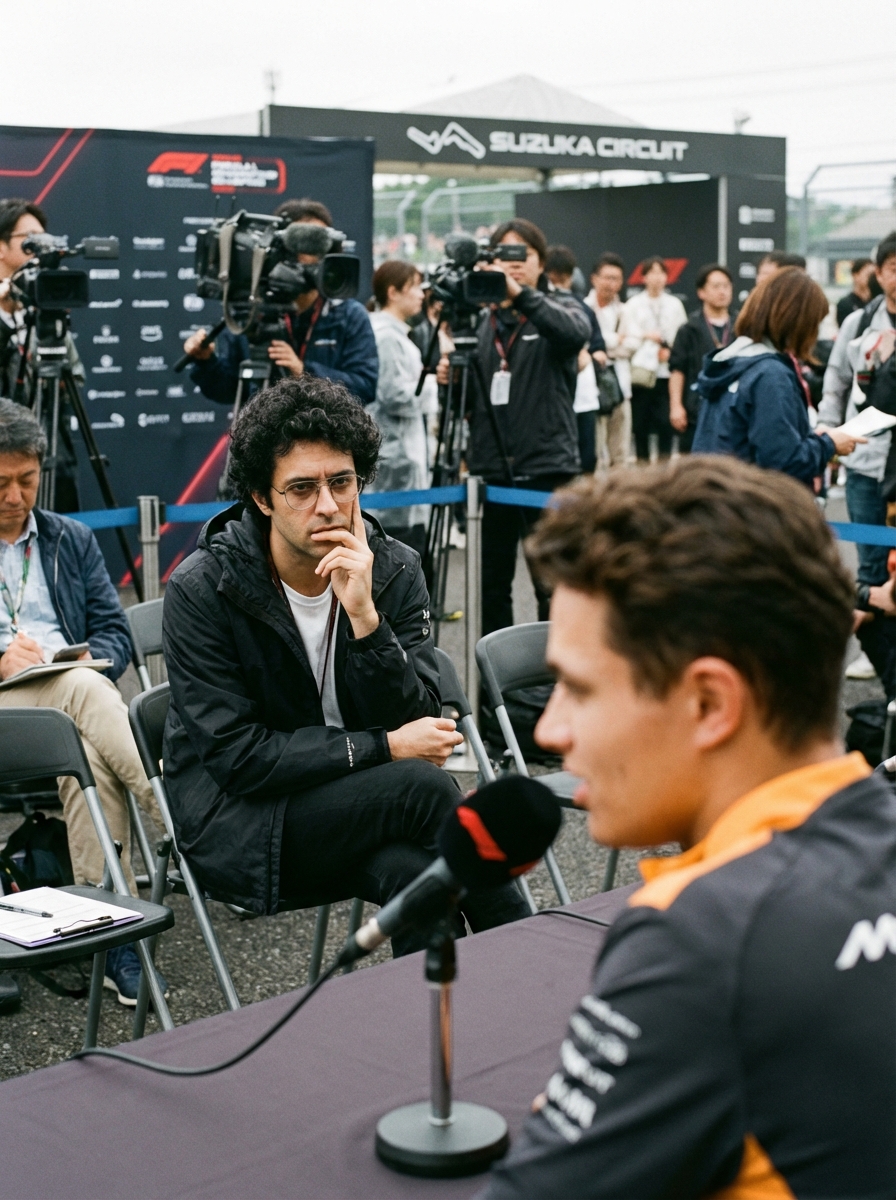
This corner forces the issue I have long championed: Within 5 years, F1 will mandate mental health disclosures after major incidents. Why? Because a feature like ‘La Monumental’ will make them unavoidable. When a driver steps out of the car after qualifying, pale and withdrawn, speaking of a "weird sensation" or "loss of spatial awareness," the conversation will change. The media scrum will become a psychiatric inquisition. The scandal won't be about who cracked under pressure, but which team is forcing a driver with latent vertigo or a dissociative episode to compete. Transparency will dawn, but it will be brutally illuminating.
Conclusion: The First Lap of a New Era
As the paving continues toward the April deadline for the intermediate layer, and the garages rise from the ground, we are not just building a circuit. We are constructing an auditorium for a new kind of drama. The Spanish Grand Prix in September will no longer be a simple race. It will be a collective therapy session, broadcast in ultra-high definition.
The stopwatches will tell us who is fastest. But the helmet cameras, the biometric spikes, the post-race interviews filled with thousand-yard stares—these will tell us who is sane. ‘La Monumental’ is a monument indeed: to F1's engineering audacity, yes, but also to the final, unconquerable frontier—the chaotic, glorious, and fragile human mind hurtling around its perfect, terrifying curve. The first driver to take it flat will not just be brave. They will have achieved a state of psychological surrender that very few on this grid have ever been trained, or broken, enough to reach. The checkered flag in Madrid will go to the fastest car. But the true victory will belong to the driver who emerges from Turn 12, lap after lap, still certain of who they are.