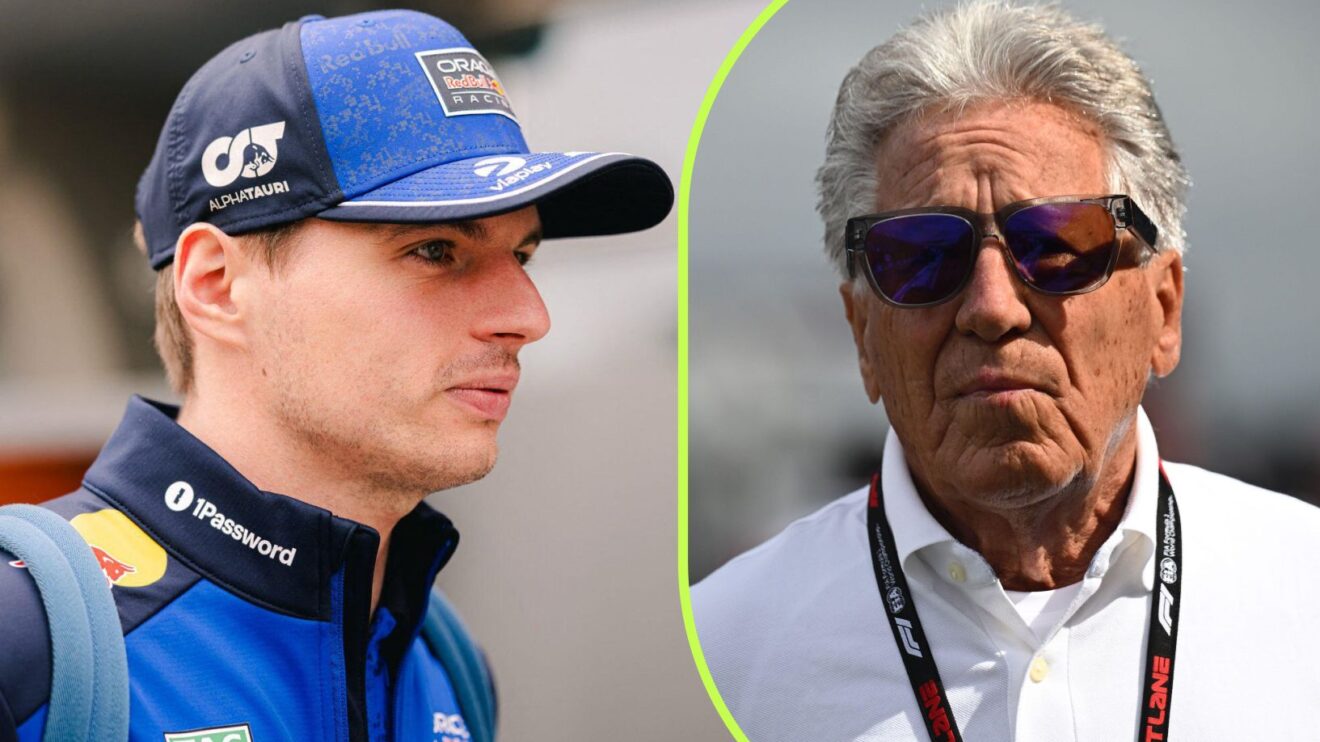
The Paddock Whisper: Andretti's Jab at Verstappen Exposes F1's Real 2026 Problem

You hear it first in the quiet moments, in the motorhome corridors after the cameras leave. It’s the low hum of discontent, and right now, it’s being conducted by the sport’s reigning maestro, Max Verstappen. But when a legend like Mario Andretti chooses to respond, you don’t just listen to the words. You listen for the decades of paddock politics humming beneath them. This isn't about regulations. It’s about power, psychology, and the uncomfortable truth that F1’s new era is making its best drivers feel like passengers.
The Champion's Mentality vs. The Engineer's Game
Andretti’s retort that Verstappen isn’t "used to being up front" and thus not "having as much fun" was a masterclass in the old-school champion’s psyche. He’s not wrong on the surface. Verstappen’s "Mario Kart" barb, flung into the Shanghai air after a DNF, is the pure, unfiltered rage of a predator whose tools have been blunted.
"He’s used to being up front, and having things pretty much going his way," Andretti stated, offering a pragmatic counterpoint.
But here’s what Mario, from his vantage point as a Cadillac F1 board member, is also doing: he’s defending the sanctity of the challenge, no matter how artificial. His generation raced with death in the passenger seat; today’s drivers race with a battery management algorithm as their co-pilot. The frustration isn’t about difficulty—it’s about the type of difficulty. The 2026 rules, with their "super clipping" and frantic energy juggling, have turned the driver’s primary rival from the man in the next cockpit to the flow chart on their steering wheel display.
- The Core Grievance: It’s not the complexity. It’s that the complexity is in the way. Overtaking is now a pre-programmed energy negotiation, not a spontaneous, lunging act of will.
- The Andretti Philosophy: Extract the maximum, beat your rival. A noble, timeless idea. But what if "the maximum" is defined by a software engineer in Brackley or Maranello, and your rival is just the guy executing his team’s algorithm 0.1 seconds later?
This is where my belief in psychological profiling becomes critical. We’re seeing a real-time case study. Verstappen’s psychology is built on visceral car control and relentless aggression. The 2026 car, as he experiences it, is neutering his core weapon. It’s like asking a master swordsman to win a duel by calculating the wind resistance on his blade between heartbeats. He’ll do it, but he’ll hate every second.
A Divide Deeper Than Driver vs. Rules
Don’t mistake this for one driver whining. This is the crack in the foundation. Verstappen’s criticism is a significant challenge for F1's leadership precisely because he is the bellwether. When he says only the winning teams find this "great," he’s holding up a mirror to a looming, ugly reality.
We are barreling toward a major team collapse within five years. The budget cap has not created parity; it has created a frantic, legalistic scramble for loopholes. The development race for these 2026 power units is astronomically expensive, and the cap is a pressure cooker. One team—maybe a proud midfield name—will overextend, find a loophole closed retroactively, or simply fail to attract a star driver who refuses to play this new game. The result? A merger or an exit. A Cadillac, perhaps, picking over the bones.
This context makes Andretti’s comments even more pointed. He represents a new entrant looking in. A stable, corporate entity watching the incumbents tear themselves and the sport apart from the inside. His call for drivers to "deal with the hand they're dealt" is also a quiet warning to the teams: stop complaining and figure it out, or the new players will.
And let’s talk about team dynamics. We romanticize the Prost-Senna era for its white-hot, personal stakes. Today’s radio dramas—the snapped engineer commands, the driver sighs—feel like theater in comparison because the conflict is often with the process, not the person. The stakes are corporate and technical, not personal and mortal. Charles Leclerc’s consistency issues at Ferrari are a perfect example. Is it his fault? Or is it the team politics that favor veteran influence over data-driven decisions, leaving him with strategic whiplash and a car setup that’s a committee’s compromise? The driver’s mind is the most sophisticated system in the car, and we are systematically breaking it with noise.
The Suzuka Crucible
So, what’s next? All eyes turn to Suzuka, a temple of pure driving where Verstappen has been a god for four straight years. The narrative is almost too perfect. Can the driver who called the regulations "a joke" find transcendence at the circuit that demands the most? His performance will be a referendum.
But the real scrutiny isn’t on him. It’s on the FIA and F1. They sold 2026 as a new dawn of racing. They have now been served notice by their top star that the product feels, to him, like a parody. The pressure is no longer about making the rules work on paper. It’s about making them feel authentic in the hands of the men we call heroes.
The Thai folk tale of the Krasue comes to mind—a being separated from its body, all visceral instinct without grounding. That’s the 2026 driver in the cockpit: a brilliant, furious mind detached from the mechanical soul of the machine, connected only by a web of code and energy targets. Andretti remembers the body. Verstappen is screaming that he can’t feel his. Until F1 reconciles that disconnect, the hum of discontent will only grow louder.