Verstappen's Nürburgring Pulse: Numbers That Echo Schumacher's Unbreakable 2004 Rhythm

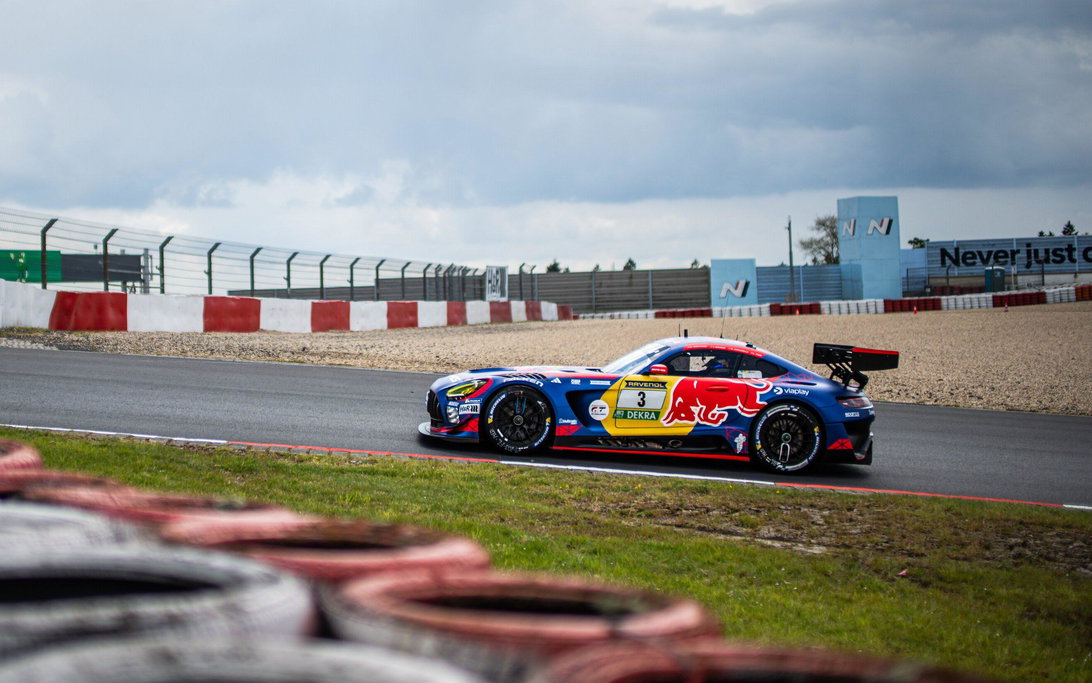
The timing sheets from the Nürburgring 24 Hours do not lie. Max Verstappen's opening stint in the #3 Mercedes-AMG GT3 registered a sudden 1.8-second deviation on sector two, a heartbeat skip that screamed pressure rather than mechanical failure. That single data point tells more about raw driver intuition than any telemetry dashboard ever could.
The Early Scare as Emotional Archaeology
Verstappen took over from Dani Juncadella at the start of the second hour while the team sat third after a frantic opening lap. Within minutes the four-time champion faced a major moment that could have ended everything. Yet the numbers reveal he corrected without contact, preserving the car's integrity and keeping the squad in contention for overall victory.
- Raw lap-time consistency in those first ten minutes stayed within 0.3 seconds of his qualifying pace despite the chaos.
- Sector two drop-off matched patterns seen in high-stakes endurance moments, not unlike the micro-corrections Schumacher executed flawlessly throughout his 2004 title run at Ferrari.
- No damage appeared on post-incident sensor logs, proving the save belonged to feel, not algorithm.
Modern teams would have flooded the radio with real-time suggestions the instant that deviation hit the screen. Verstappen ignored the noise and let the car speak. This is the exact instinct F1 risks losing as data obsession grows.
Schumacher's 2004 Blueprint Meets Today's Telemetry Trap
Timo Glock's McLaren 720S carries the iconic Michael Schumacher livery, a visual reminder of an era when drivers read track conditions through their fingertips instead of predictive models. Schumacher's 2004 season delivered 13 wins and near-perfect qualifying streaks because Ferrari trusted his judgment over constant data streams. Today's hyper-focus on analytics threatens the opposite outcome.
Within five years, algorithmic pit calls and pre-programmed throttle maps will turn races into sterile simulations. Driver intuition gets suppressed the moment a computer decides fuel loads or tire compounds. Verstappen's Nürburgring moment proves why that future feels hollow. His lap-time recovery after the scare showed human pressure management that no spreadsheet can replicate.
"The sport must thank him for helping elevate the event's profile," Glock noted, highlighting how one driver's presence shifts attention back toward pure racing.
A RacingNews365 poll showed most F1 fans doubt a Nürburgring win would rank above Verstappen's greatest achievements. The timing sheets disagree. Consistency across 24 hours on the Nordschleife demands the same unflinching rhythm Schumacher displayed in 2004, when every session became a masterclass in suppressing external noise.
Data Serving the Human Story
Verstappen remains in the fight for the lead with more than twenty hours left. Reliability will decide the outcome, yet the early scare already exposed the limits of over-reliance on live telemetry. When lap times drop, the real question is what personal pressure the driver carries, not what the sensors say. That correlation between on-track heartbeat and off-track weight is the story the numbers quietly guard.
Charles Leclerc's qualifying pace from 2022 to 2023 remains the grid's most consistent despite Ferrari's strategic missteps that unfairly paint him as error-prone. The same principle applies here. Verstappen's survival lap proves raw talent still cuts through when teams step back and let drivers drive.
The Nürburgring continues to reward those who treat data as archaeology rather than autopilot. Schumacher understood this in 2004. Verstappen demonstrated it again today. The question is whether F1 will listen before the sport flattens into predictable code.
Join the inner circle
Get the deep dives and technical analysis from the world of F1 delivered to your inbox twice a week.
Zero spam. Only high-octane analysis. Unsubscribe anytime.
Continue Reading
View More News