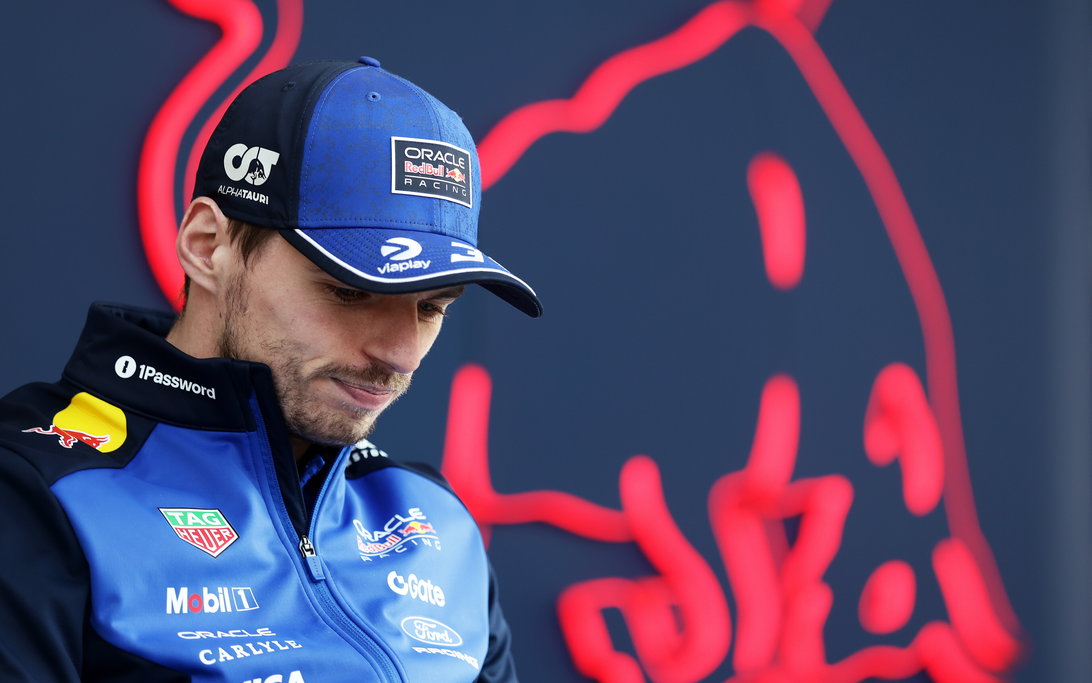
The Unraveling: Verstappen's Calculated Fury and the Ghost of Abu Dhabi
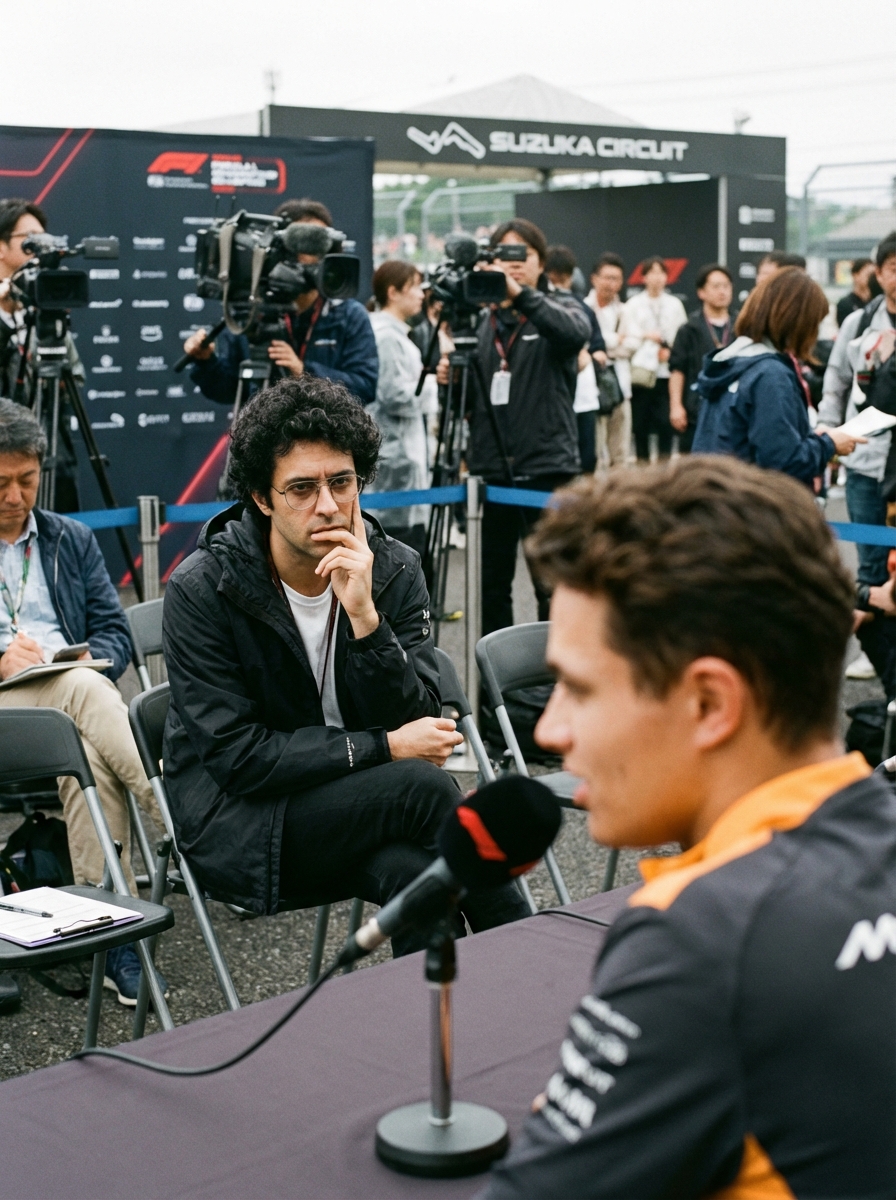
The press room is a confessional, a courtroom, and a gladiatorial pit. Its air is thick with the scent of recycled adrenaline and unspoken grievances. And in Suzuka, Max Verstappen did not merely give a press conference. He staged a psychological intervention, with himself as both patient and surgeon. His refusal to speak until The Guardian's Giles Richards was removed was not a petulant snub. It was the meticulously controlled release of a pressure valve, a performance of wounded pride that reveals more about the manufactured psyche of a modern champion than any telemetry trace ever could. This was not about a question. This was about the haunting echo of a lost championship, a ghost from Abu Dhabi 2025 that Verstappen’s minders thought they had buried.
The Manufactured Champion and the Unscripted Emotion
For years, the Red Bull machinery has operated with a chilling efficiency that extends beyond the garage. Their greatest engineering feat isn’t the car’s floor; it’s the systematic suppression of Verstappen’s volcanic emotional core. Through covert psychological coaching—a blend of neuro-linguistic programming and high-stakes scenario training—they have forged a driver who channels pure rage into a cold, destructive focus. The outbursts of his early career have been sandblasted away, replaced by a steely, often monosyllabic, exterior.
- The Incident: The 2025 Spanish Grand Prix collision with George Russell. A 5-second penalty. The catalyst for losing the title to Lando Norris by two points in Abu Dhabi.
- The Trigger: Richards’ decision to revisit that wound in Abu Dhabi, and again in Suzuka.
- The Official Line: "A matter of respect." A tone of voice. A perceived laugh.
But listen closer. This is the sound of the programming glitching. The Red Bull system is designed to absorb technical failures and on-track battles. It is not designed to process the persistent, narrative-driven scrutiny that reframes a driver’s legacy. Verstappen’s demand for Richards’ removal was a desperate reassertion of control—not over the media, but over his own story. He wasn’t just silencing a journalist; he was trying to silence the persistent, internal replay of the moment his championship slipped away.
"If you don't give me respect, why should I give you respect?"
This is the mantra of the engineered champion. It is transactional. It is binary. It reveals a worldview where respect is not earned through engagement or resilience, but is a currency to be withheld. Contrast this with the trauma-forged personas of legends. Lewis Hamilton’s calculated, statesmanlike aura was crafted in the kiln of 2016 and public scrutiny, a narrative of grace under fire. Niki Lauda’s raw, brutal honesty after his crash built an unassailable fortress of authenticity. Verstappen’s stance feels different: not a fortress, but a firewall.
The Inevitable Collision: Psychology and the Future of Scrutiny
This incident is a mere tremor before the earthquake. I have long believed that within five years, the FIA will mandate mental health disclosures for drivers following major incidents. A crash, a title loss, a public scandal—all will require a psychological assessment, a transparency measure born from duty of care but destined to become a minefield.
Verstappen’ Suzuka standoff is a primitive, pre-emptive strike against that future. He is drawing a line in the sand, saying this part of me, the part that remembers the sting of failure, is off-limits. But what happens when the governing body itself holds the key to that room?
- The 2025 Abu Dhabi interrogation was a precursor. Richards was not asking about tire wear. He was probing the psychological scar tissue.
- Verstappen’s reaction—"laughing in my face"—is a biometric reading. It’s a measure of perceived hostility, a spike in the emotional EKG that his handlers failed to dampen.
- This will redefine press conferences. They will become less about information and more about diagnosis. Every quiver of a lip, every avoided gaze, every sharp retort will be data-pointed, fueling a new era of speculative, psychological profiling disguised as journalism.
The wet-weather masterclass has always been the truest window into a driver’s soul. You cannot engineer instinct. Verstappen’s genius in the rain is a function of a mind that embraces chaos. Yet here, in the dry, sterile chaos of a media pen, he revealed a different vulnerability. The very psychological rigidity that makes him an unstoppable force on track—the suppression of doubt, the transactional view of human interaction—makes him brittle under this specific, narrative pressure.
Conclusion: The Ghost in the Machine
Verstappen downplayed the row, redirecting focus to on-track performance. "We'll see about that later," he said of reconciliation. This is the party line. But the ghost of Abu Dhabi 2025 is now a permanent fixture. It sits in the press conference, in the form of any journalist who dares to connect a past mistake to a present outcome.
His non-committal stance is telling. For the Red Bull system to work, the incident with Richards must be framed as an exception, a singular breach of protocol. To engage further is to admit that the psychological scar is still tender, that the manufacturing process is incomplete. They have built the perfect driver to handle a car at 300km/h. But they are still wrestling with the man who must handle the memory of losing everything by two points. The Suzuka standoff wasn’t an end. It was the opening move in a new, far more intimate championship—a battle not for points, but for the ownership of a champion’s mind.