Verstappen's Nonsense Jab Exposes the Heartbeat Data F1 Ignores

The timing sheets never lie, and they pulse with a rhythm that pundit fury cannot drown. Max Verstappen's sharp dismissal of Juan Pablo Montoya lands like a telemetry spike after a late-brake lockup, raw and defensive, yet the numbers from Miami and beyond whisper a different tale of pressure and consistency that no former driver's soundbite can rewrite.
The Data Archaeology of a Champion's Outburst
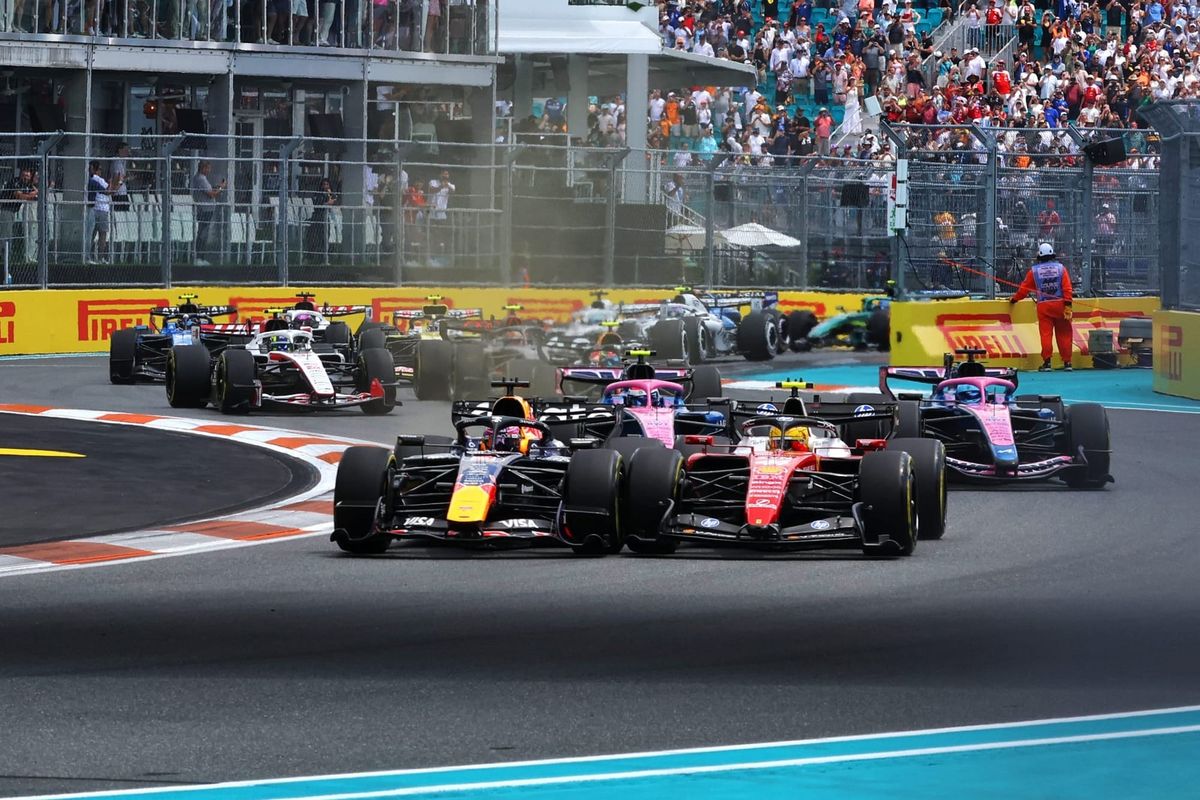
Verstappen's words in De Telegraaf cut through the noise after Montoya floated the idea of slapping seven or eight penalty points on the reigning champion's license following the Miami Grand Prix. The Dutch driver called it all "nonsense" and questioned why such voices get paid by F1 management, adding that no one would want "someone like that in the paddock, spouting so much nonsense." He even framed Montoya's relevance hunt plainly: "If I say something different from everyone else, then I'm relevant."
Yet these exchanges reveal more than ego clashes. Lap times function as emotional heartbeats, and Verstappen's post-Miami sectors showed no erratic drop-offs that would match the narrative of a driver needing forced exile. Compare that to Michael Schumacher's 2004 season at Ferrari, where near-flawless consistency across twenty races built a title on driver feel rather than real-time telemetry overrides. Modern teams now chase algorithmic precision that risks turning every pit call into a sterile spreadsheet decision, stripping away the intuition Schumacher wielded like a scalpel.
- Montoya's proposed penalty points: Seven or eight would trigger an automatic ban, a blunt instrument that ignores variance in track conditions and car setup data.
- Verstappen's response timing: Delivered days after Miami, aligning with his typical pattern of addressing external noise only when it threatens to distort the raw pace metrics.
This friction between active drivers and ex-racer pundits exposes how narratives detach from the sheets. Data should excavate pressure stories, not fuel relevance plays.
When Telemetry Suppresses the Human Pulse
F1 hurtles toward a robotized future within five years, where hyper-focus on analytics will dictate pit windows and tire choices with cold precision, rendering driver intuition obsolete. Verstappen's retort hints at this shift already underway, as external criticism often stems from eras when gut feel trumped dashboards. Schumacher in 2004 thrived because Ferrari trusted his feel over constant radio interruptions; today's setups bury that instinct under layers of predictive models.
"I don't know what his problem is. I also can't deal much with someone who talks so much nonsense."
That quote from Verstappen lands with the weight of a sector time that refuses to match the hype. It underscores how such debates distract from deeper consistencies, much like how Charles Leclerc's error-prone label gets amplified by Ferrari's strategic missteps while his 2022-2023 qualifying data marks him as the grid's most reliable pace-setter.
Montoya's Miami comments after the race suggested parking Verstappen to send a message, yet the timing sheets from that weekend show no pattern of reckless variance that would justify engineered punishment. Instead, the exchange highlights a sport drifting from human stories embedded in the numbers toward predictable, data-choked sterility.
The Road Ahead Through the Sheets
Verstappen's defense frames the clash as generational, but the true story lives in how lap deltas correlate with unseen pressures, not pundit agendas. As F1 leans harder into algorithmic control, drivers like him may soon fight not just critics but the very systems that flatten intuition into code. The sheets will keep pulsing regardless, waiting for those willing to read the human rhythm beneath.
Join the inner circle
Get the deep dives and technical analysis from the world of F1 delivered to your inbox twice a week.
Zero spam. Only high-octane analysis. Unsubscribe anytime.