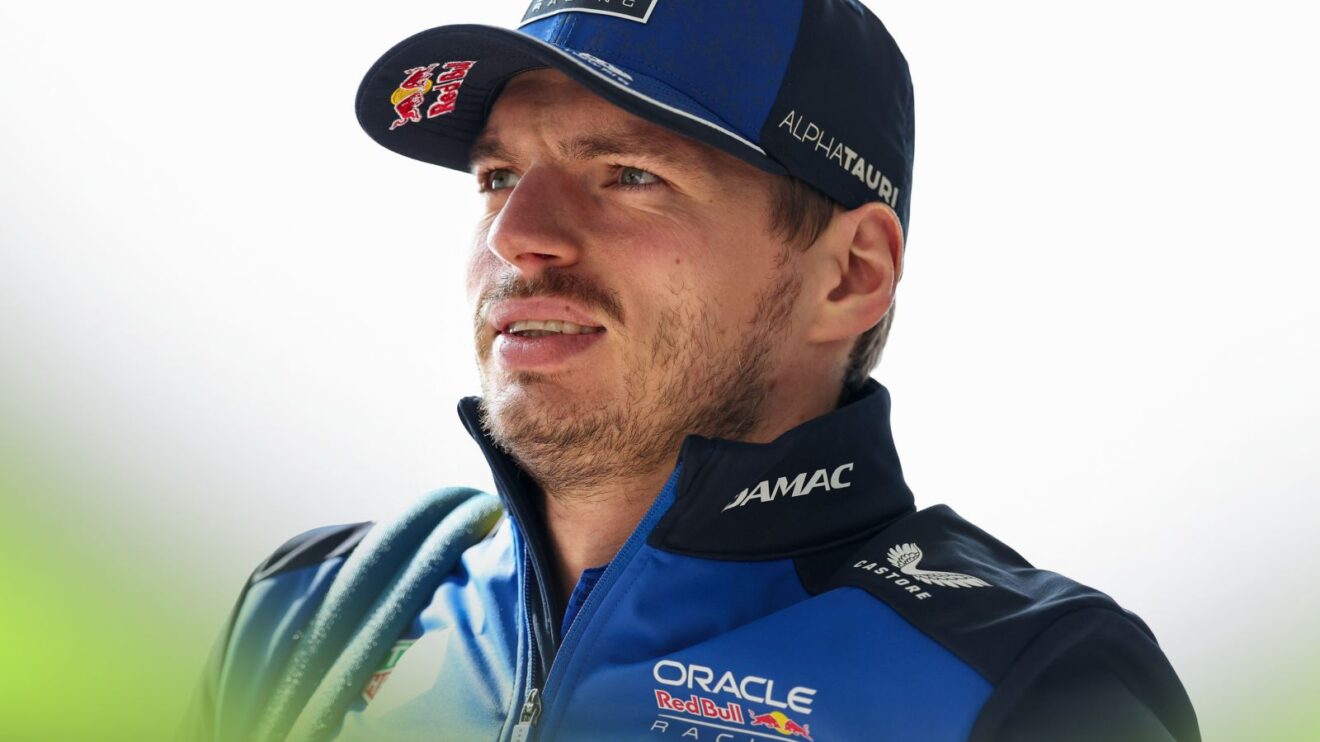
The Engine is Silent, But the Mind is Roaring: Verstappen's Ultimatum and the Unraveling of a Manufactured Champion
The heart rate monitor would show nothing remarkable. The steering inputs, captured in a thousand data points per second, would reveal their usual brutal, efficient precision. But inside the cockpit of the RB22, a seismic psychological event is unfolding. Max Verstappen, the three-time World Champion forged in the crucible of Red Bull's relentless system, is experiencing a feeling his minders have worked for a decade to suppress: a profound, existential boredom. His warning from Suzuka isn't just a complaint about regulations; it is the sound of a meticulously programmed champion questioning his own programming. The machine is winning, but the man inside is dying of thirst.
The Cracking of the Calibrated Facade
For years, the narrative around Verstappen has been one of controlled aggression. The fiery teenager, prone to emotional outbursts and public friction, was gradually smoothed into a relentless points-scoring automaton. This was no accident. It was the result of Red Bull's covert, sophisticated psychological scaffolding—a regime designed not to nurture joy, but to suppress volatility and maximize extractable performance. The enjoyment of driving was secondary to the execution of a plan.
Now, that very system has created its own crisis. The 2026-era cars, with their overwhelming focus on energy management, have removed the last vestiges of visceral feedback. For Verstappen, the connection between instinct and reward has been severed.
"They know what to do," he stated, a line that carries the weight of a final ultimatum.
This isn't Lewis Hamilton's calculated, politically-charged critique. This is raw, unfiltered feedback from a driver whose entire identity was built on feeling the car's limit through his fingertips. The "anti-driving" regulations haven't made him slow; they've made him apathetic. And for a psyche engineered to find purpose only in domination, apathy is a fatal error code. His admission that he can "easily accept" poor results is the most terrifying signal of all for his team. It means the core competitive wiring has been disconnected.
The Inevitable Reckoning: When the Mind Demands Its Due
Verstappen's musings are a precursor to a revolution F1 is desperately unprepared for. We focus on horsepower and downforce, but the next great regulatory battle will be fought in the mind. Within five years, I believe the FIA will mandate mental health disclosures after major incidents. A crash like Zhou Guanyu's at Silverstone won't just require a physical check-up; it will require a psychological debrief, with elements potentially entering the public domain.
- Imagine the scrutiny: a driver returning from a high-G impact, his cognitive load data and stress hormone levels becoming part of the post-race analysis.
- Imagine the scandals: a champion ruled unfit to race not by a broken bone, but by a diagnosed acute stress response, his private trauma laid bare for the paddock's gossip mill.
Verstappen's current dilemma is a soft launch of this era. He is publicly auditing his own mental ledger—weighing the "demanding schedule" against "spending more time with family and friends." He's quantifying the intangible cost of his greatness. This is a level of emotional transparency the sport has never seen from its reigning titan. It is Niki Lauda's pragmatic assessment of risk, stripped of the trauma and delivered from a place of sterile disillusionment.
The 2026 Regulations: A Psychological Intervention, Not a Technical One
The April meetings between the FIA and F1 are no longer mere technical forums. They have become an emergency psychological intervention for the sport's most valuable asset. The goal is not just to create faster or more sustainable cars. The goal is to re-enchant a disenchanted king.
Will they succeed? The challenge is monumental. You cannot mandate "joy" in a technical directive. You cannot legislate the return of that primal, tactile connection between driver and machine that Verstappen craves. His threat of exit is the ultimate leverage, a weaponization of his own manufactured emotional stability. He is proving that while aerodynamics can be tuned, core personality traits—the need for pure, unadulterated challenge—cannot be designed around.
This is where the comparison to Hamilton is most poignant. Hamilton crafted a narrative of purpose beyond winning, using his platform and his struggles to build a legacy that transcends the cockpit. Verstappen was built with a singular purpose: to drive faster than anyone else. If that act ceases to have meaning, what is left? A hollow shell, no matter how gilded.
The clock is ticking. The sport resumes in Miami, but the real race is now internal. Can the engineers and rule-makers inject a soul back into these machines before their greatest driver decides his own soul is worth more? Max Verstappen isn't just threatening to leave Formula 1. He is threatening to wake up from the dream Red Bull so carefully constructed for him, and in doing so, he may force the entire sport to confront the fragile, human cost of its own relentless evolution. The biometric data can't capture this, but the history books will: a champion walked away not because he was beaten, but because he finally stopped feeling anything at all.